HCN Channel

HCN channel blockers act on pacemaker ion channels that open when the cell membrane hyperpolarizes. Hyperpolarization-activated cyclic nucleotide-gated (HCN) channels carry the funny current in the sinoatrial node and the related Ih current in neurons. In 1991 cyclic adenosine monophosphate (cAMP) was shown to activate cardiac pacemaker channels directly from the inside of the membrane. The genes were cloned in 1998, and mammals have four isoforms, HCN1 to HCN4. Blockers are used to study heart rate, neuronal excitability, dendritic integration and pain. Ivabradine HCl, zatebradine and cilobradine hydrochloride belong to the bradine group of pore blockers. ZD7288 is widely used in brain slices, and RO-275 and HCN2-IN-3 are aimed at HCN1 and HCN2.

1 Item

  • VUANT1
    Cat. No.
    A67045

    VUANT1

    Synonyms: VU0183254

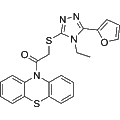
    VUANT1 (VU0183254) is an allosteric antagonist targeting HCN channels, specifically inhibiting insect odorant receptor ion channels. This compound effectively disrupts insect odorant receptor signaling through allosteric modulation, providing insights into the molecular mechanisms underlying insect olfactory processes. While its application in pest control may be limited, VUANT1 serves as a valuable pharmacological tool for researchers exploring olfactory signaling pathways in insects.

    5 mg
    $25.00
    10 mg
    $40.00
    All 5 sizes

1 Item

Added to your cart

View Cart Checkout

    Loading...