Chloride Channels

Chloride channel blockers and activators act on anion channels that control cell volume, secretion and excitability. The main families are the chloride channel (ClC) family, calcium-activated chloride channels (CaCCs) and the cystic fibrosis transmembrane conductance regulator (CFTR). Expression cloning from the Torpedo electric organ in 1990 identified ClC-0, the first ClC channel. In 2008 three groups identified transmembrane protein 16A (TMEM16A, anoctamin 1) as a CaCC. T16Ainh-A01 and CaCCinh-A01 inhibit this conductance, and lubiprostone activates ClC-2 channels. Ivacaftor increases CFTR channel opening, whereas PPQ-102 blocks the CFTR channel. Chlorotoxin, a scorpion venom peptide, is used to study chloride currents and glioma cell binding.

4 Items

  • Fluxametamide
    Cat. No.
    A19815

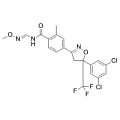
    Fluxametamide

    Fluxametamide is an insecticide with wide spectrum, acts as an antagonist of GABA- and glutamate-gated chloride channels, with IC50 of 1.95 nM and 225 nM for M. domestica GABACls and GluCls.

    1 mg
    $25.00
    5 mg
    $65.00
    All 7 sizes
  • Spiperone hydrochloride
    Cat. No.
    A45873

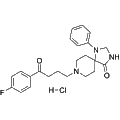
    Spiperone hydrochloride

    Synonyms: Spiroperidol hydrochloride

    Spiperone hydrochloride is a potent antagonist of dopamine D2 and 5-HT2A receptors, exhibiting Ki values of 0.06 nM and 1 nM, respectively. In addition, it selectively antagonizes the α1B-adrenoceptor and activates calcium-activated chloride channels (CaCC). This compound has demonstrated significant antipsychotic and anti-inflammatory properties, making it a valuable tool for research in neuropharmacology and inflammation studies.

    5 mg
    $40.00
    10 mg
    $65.00
    All 2 sizes
  • Umifoxolaner
    Cat. No.
    A52396

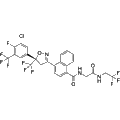
    Umifoxolaner

    Synonyms: ML-878

    Umifoxolaner is a γ-aminobutyric acid (GABA) regulated chloride channel antagonist with potent anti-parasitic properties. This compound is primarily utilized in research applications targeting parasitic infections, showcasing its potential in controlling and managing various parasitic diseases. The mechanism of action involves interference with chloride ion flow, contributing to the disruption of parasitic neuronal signaling.

    1 mg
    $550.00
    5 mg
    $840.00
    All 4 sizes
  • ML077
    Cat. No.
    A67760

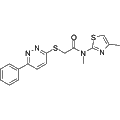
    ML077

    ML077 is a selective antagonist of the potassium-chloride co-transporter 2 (KCC2), with an IC50 of 537 nM for KCC2, while exhibiting minimal activity on KCC1 (IC50 > 50 μM). By inhibiting the chloride ion excretion function of KCC2, ML077 increases intracellular chloride concentrations, resulting in enhanced depolarization through chloride channels. This compound has demonstrated the ability to promote glucose-stimulated insulin secretion (GSIS) independent of KATP channels and is valuable for studying the physiological processes related to pain, epilepsy, and insulin secretion.

    25 mg
    $1,275.00
    50 mg
    $1,625.00
    All 3 sizes

4 Items

Added to your cart

View Cart Checkout

    Loading...