
- Cat. No.
- A11934
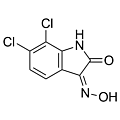
NS 309
NS 309 is a positive modulator of small- and intermediate- conductance Ca2+-activated K+ channels (KCa2 and KCa3.1 channels).
In stock
View Details
Search by product name, CAS, target or catalog number. Press Down Arrow to reach product suggestions, Tab to move between links, and Escape to close suggestions.
Potassium channel blockers and openers target the largest and most diverse family of ion channels. Potassium (K+) channels set the resting membrane potential and shape action potentials, hormone secretion and immune cell activation. The 1998 crystal structure of the potassium channel from Streptomyces lividans (KcsA) showed how a narrow selectivity filter passes K+ ions but excludes sodium ions. Major families include voltage-gated (Kv), calcium-activated (KCa) and inward-rectifier (Kir) channels. Adenosine triphosphate (ATP)-sensitive K+ (KATP) channels pair a Kir6.2 pore with a sulfonylurea receptor (SUR) subunit. The sulfonylureas glimepiride and glyburide close KATP channels, whereas minoxidil is studied as a channel opener. TRAM-34 blocks the intermediate-conductance KCa3.1 channel, and PAP-1 blocks Kv1.3, two channels studied in T lymphocyte activation.
NS 309 is a positive modulator of small- and intermediate- conductance Ca2+-activated K+ channels (KCa2 and KCa3.1 channels).
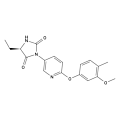
AUT1 is a Kv3 potassium channel modulator with pEC50s of 5.33 and 5.31 for human recombinant Kv3.1b and Kv3.2a, respectively, exhibits 10-fold lower potency at human recombinant Kv3.3 channel (pEC50, 4.5).
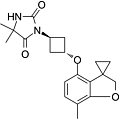
Kv3 modulator 4 is a Kv3.1 (pEC50=5.45) and Kv3.2 modulator extracted from patent WO2018020263A1, Cyclobutyl structure.
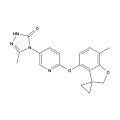
Kv3 modulator 3 (Compound 4) is a selective modulator of Kv3.1 and/or Kv3.2 and/or Kv3.3 channels extracted from patent WO2017098254A1, compound 4, has analgesic activity for use in the prophylaxis o or treatment of pain.
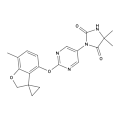
Kv3 modulator 1 is a Kv3 voltage-gated potassium channel modulator extracted from patent WO2018020263A1, Compound X. Kv3 modulator 1 can be used to treat inflammatory pain.
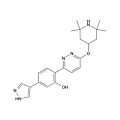
Synonyms: LMI070; NVS-SM1
Branaplam (LMI070) is a highly potent, selective and orally active small molecule SMN2 splicing modulator.
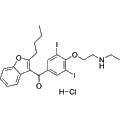
Synonyms: N-desethylamiodarone hydrochloride; LB 33020 hydrochloride
Desethylamiodarone hydrochloride is a significant active metabolite of Amiodarone, primarily functioning as an autophagy inducer. It is produced through the action of CYP3A isoenzymes and plays a critical role in cellular processes affecting autophagy. This compound is utilized in research applications focusing on cardiovascular pharmacology and cellular stress responses, due to its influence on potassium channels and potential therapeutic implications in arrhythmias.
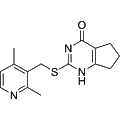
KCC2 potentiators-1 is a selective potentiator of the Potassium chloride cotransporter-2 (KCC2). This compound enhances KCC2 activity, contributing to the regulation of chloride homeostasis in neurons. KCC2 potentiators-1 is primarily utilized in research targeting neurological disorders, making it a valuable tool for studies focused on synaptic transmission and excitability in the central nervous system.
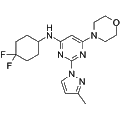
Synonyms: CAD-1883
Rimtuzalcap is a selective positive allosteric modulator targeting small-conductance calcium-activated potassium channels (SK channels). This compound exhibits key biological activity as a potassium channel opener, which may facilitate neuronal hyperpolarization and reduce excitability. Rimtuzalcap is primarily utilized in research focused on movement disorders, such as essential tremor (ET) and spinocerebellar ataxia (SCA), providing insights into potential therapeutic avenues for these conditions.
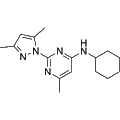
CyPPA is a positive modulator of human small conductance potassium channels hSK2 and hSK3, exhibiting EC50 values of 14 μM and 5.6 μM, respectively. This compound does not activate hSK1 or hIK channels, making it selective for its target. CyPPA is utilized in research to investigate the physiological roles and therapeutic potential of small conductance potassium channels in various biological processes.
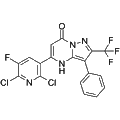
QO 58 is a potent modulator of K(v)7 channels, specifically enhancing current amplitudes and shifting the voltage-dependent activation curve in a more negative direction. Additionally, it effectively slows the deactivation of K(v)7.2/K(v)7.3 currents. This compound is valuable for studying diseases linked to neuronal hyperexcitability, providing insights for potential therapeutic applications.
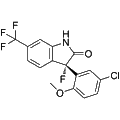
Synonyms: BMS-204352
Flindokalner is a potassium channel modulator that positively influences all neuronal Kv7 channel subtypes expressed in HEK293 cells, alongside acting as a positive modulator of large conductance calcium-activated potassium channels (BKca). It exhibits negative modulatory activity at Kv7.1 channels with a Ki of 3.7 μM and also negatively modulates GABAA receptors. In vivo studies demonstrate its anxiolytic efficacy, making it a valuable reagent for research in neuropharmacology and the study of ion channel function.
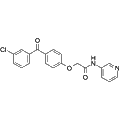
LUF7244 is a selective allosteric modulator of Kv11.1 channels, acting by inhibiting early afterdepolarizations. This compound is valuable for anti-arrhythmia research, providing insights into the modulation of cardiac activity and potential therapeutic interventions for arrhythmias. Its specificity for Kv11.1 channels makes it an essential tool for studying ion channel regulation in cardiology.
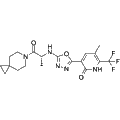
TMEM175 Modulator 1 is a selective modulator of the lysosomal potassium ion channel TMEM175. This compound exhibits significant activity in regulating ion transport, making it a valuable tool for investigating neurodegenerative diseases such as Parkinson's disease, dementia, and Alzheimer's disease. Additionally, it may be useful in studying L-DOPA-induced dyskinesia, providing insights into the underlying mechanisms of these conditions.
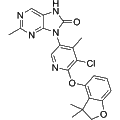
Kv3.1 modulator 2 is a selective modulator of Kv3.1 ion channels, exhibiting an EC50 value of 68 nM. This compound enhances the activity of Kv3.1 channels, which are crucial for neuronal action potential firing and synaptic transmission. It serves as a valuable tool for research exploring excitability in neuronal systems and the role of Kv3.1 channels in neurological conditions.
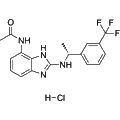
AP14145 hydrochloride is a selective negative allosteric modulator of KCa2 channels, exhibiting an IC50 of 1.1 μM for both KCa2.2 (SK2) and KCa2.3 (SK3) channels. Its inhibitory action is significantly influenced by specific amino acids S508 and A533 within the channel structure. In preclinical models, AP14145 hydrochloride has been shown to prolong the atrial effective refractory period (AERP) in rats and demonstrates antiarrhythmic properties in a Vernakalant-resistant porcine model of atrial fibrillation, making it a valuable tool for studying cardiac electrophysiology and arrhythmia mechanisms.
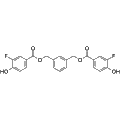
RA-2 is a negative-gating modulator of KCa2/3 channels, exhibiting an IC50 of 17 nM. This compound effectively inhibits bradykinin-induced endothelium-derived hyperpolarization (EDH)-type relaxation in U46619-precontracted vascular rings. RA-2 serves as a valuable tool for investigating the physiological and pathophysiological roles of KCa2/3 channels in the vasculature, central nervous system, and inflammatory processes.
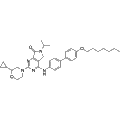
KCC2 Modulator-2 is a specific modulator of the KCC2 transporter, exhibiting an EC50 of 0.215 μM. This compound is valuable in the investigation of neurological disorders, as it influences chloride ion transport and neuronal excitability. KCC2 Modulator-2 is suitable for research aimed at understanding synaptic inhibition and associated pathophysiological conditions.
Out of stock
All 3 sizes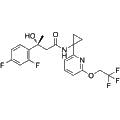
Kv7.2/Kv7.3 modulator-3 is a selective modulator of the Kv7.2 and Kv7.3 potassium channels, exhibiting an EC50 of 0.099 μM. This compound is valuable for research into neuronal excitability and modulation of action potentials. Its precise action on these ion channels supports studies in areas such as epilepsy and other neurological disorders, facilitating a better understanding of their physiological roles and potential therapeutic targets.
Out of stock
All 3 sizes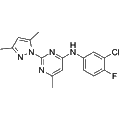
KCa2 Channel Modulator 1 is a potent subtype-selective positive modulator specifically targeting KCa2 channels. It enhances the activity of human KCa2.3 channels with an EC50 of 0.19 μM, and also exhibits activity on rat KCa2.2 channels with an EC50 of 0.99 μM. This compound is valuable for research applications focusing on calcium-activated potassium channels and their roles in various physiological processes.
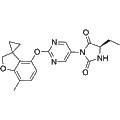
Kv3 modulator 5 is a selective modulator of the Kv3 channel, specifically enhancing Kv3.2 ion currents. This compound plays a significant role in the modulation of neuronal firing rates and has potential applications in the study of auditory processing and hearing disorders. Researchers can utilize Kv3 modulator 5 to investigate its effects on synaptic transmission and its therapeutic potential in auditory-related pathologies.
Out of stock
All 3 sizes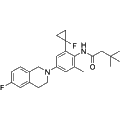
Kv7.2 modulator 2 is a selective modulator of the Kv7.2 potassium ion channel, primarily involved in neuronal excitability. This compound has demonstrated potential in the modulation of excitatory neurotransmission, making it valuable for research related to epilepsy and other neurological disorders. Its role in enhancing potassium ion flow may provide insights into therapeutic strategies for seizure management and neuronal stabilization.
Out of stock
All 3 sizes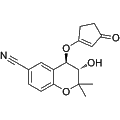
SDZ PCO 400 is a potassium channel modulator that targets and regulates potassium channels, leading to relaxation of airway smooth muscle. It has demonstrated efficacy in reversing airway obstruction induced by intravenous bronchospasmodics. This compound is of interest in research applications related to respiratory physiology and the treatment of airway hyperresponsiveness.
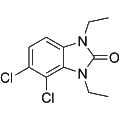
NS4591 is a modulator of calcium-activated potassium channels, specifically enhancing the activity of small conductance (SK) and intermediate conductance (IK) potassium channels. It significantly increases IK-mediated currents at approximately 45 nM and SK3-mediated currents at about 530 nM in whole-cell patch-clamp studies. NS4591 has been shown to inhibit action potentials induced by suprathreshold depolarizing pulses in acutely isolated bladder primary afferent neurons and reduces carbamylcholine-induced detrusor contraction in the rat bladder, indicating its sensitivity to apamin. This reagent is useful for studying the physiological roles of potassium channels in bladder function and neuronal excitability.
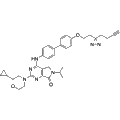
KCC2 Modulator-3 is a potent modulator of the KCC2 transporter, exhibiting an EC50 of 0.253 μM. This compound is valuable for research into neurological disorders, including epilepsy, neuropathic pain, and Rett syndrome. Its ability to influence chloride ion transport makes it a crucial tool for studying synaptic transmission and neuronal excitability.