
- Cat. No.
- A22472
WM 3835
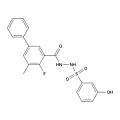
WM 3835 is a lysine acetyltransferase HBO1 (KAT7) inhibitor.
In stock
View Details
Search by product name, CAS, target or catalog number. Press Down Arrow to reach product suggestions, Tab to move between links, and Escape to close suggestions.
Apoptosis related compounds affect cell survival indirectly, through metabolism, stress responses or signaling. Unlike the target categories of the Apoptosis section, this mixed set groups compounds by a reported link to cell death rather than by one mechanism. Sodium oxamate, a pyruvate analog, inhibits lactate dehydrogenase (LDH) and is used to study glycolytic metabolism. Zinc protoporphyrin inhibits heme oxygenase 1 (HO-1), an enzyme induced by oxidative stress. Sulforaphane, an isothiocyanate from cruciferous vegetables, activates nuclear factor erythroid 2-related factor 2 (Nrf2) and has been reported to inhibit histone deacetylases. CASIN inhibits the small GTPase cell division cycle 42 (Cdc42). Drugs such as flurbiprofen and metronidazole are also included, so the list is broad.
WM 3835 is a lysine acetyltransferase HBO1 (KAT7) inhibitor.
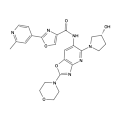
Synonyms: CA-4948
Emavusertib, also known as CA-4948 is a potent IRAK4/FLT3 inhibitor with anti-tumor activity. CA-4948 demonstrated good cellular activity in ABC DLBCL and AML cell lines. CA-4948 demonstrated moderate to high selectivity in a panel of 329 kinases as well as exhibited desirable ADME and PK profiles including good oral bioavailability in mice, rat, and dog and showed >90% tumor growth inhibition in relevant tumor models with excellent correlation with in vivo PD modulation.
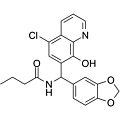
YUM70 is a potent inhibitor of GRP78 (Glucose-regulated protein, 78 kDa).
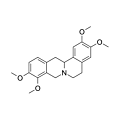
Synonyms: DL-Tetrahydropalmatine
Tetrahydropalmatine, an active component isolated from corydalis, possesses analgesic effects. Tetrahydropalmatine acts through inhibition of amygdaloid release of dopamine to inhibit an epileptic attack in rats.
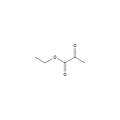
Ethyl pyruvate is a simple derivative of the endogenous metabolite, pyruvic acid. Ethyl pyruvate is an anti-inflammatory agent.
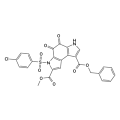
F5446 (Compound 1) is a selective small-molecule inhibitor of the histone methyltransferase SUV39H1. By reducing H3K9 trimethylation (H3K9me3) at the Fas promoter, F5446 upregulates Fas expression and enhances the sensitivity of colorectal carcinoma cells to Fas ligand (FasL)-induced apoptosis in vitro. In vivo, F5446 effectively suppresses the growth of human colorectal tumor xenografts, highlighting its potential as an epigenetic therapeutic agent in cancer treatment.
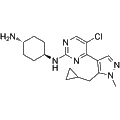
BTX-A51 (Casein Kinase Inhibitor A51) is a potent, orally bioavailable inhibitor of casein kinase 1α (CK1α). It effectively induces apoptosis in leukemia cells and demonstrates strong anti-leukemic activity in preclinical models, making it a promising therapeutic candidate for hematologic malignancies.
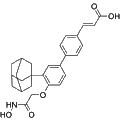
MIR002 is a potent, orally bioavailable dual inhibitor targeting DNA polymerase α (POLA1) and histone deacetylase 11 (HDAC11). It induces p53 acetylation, upregulates p21 expression, and triggers G1/S cell cycle arrest followed by apoptosis. MIR002 demonstrates significant antitumor efficacy in vivo, highlighting its potential as a therapeutic agent for cancers driven by POLA1 and HDAC11 dysregulation.
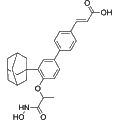
GEM144 is a potent and orally bioavailable dual inhibitor of DNA polymerase α (POLA1) and histone deacetylase 11 (HDAC11). It promotes p53 acetylation, induces p21 activation, and triggers G1/S cell cycle arrest followed by apoptosis. GEM144 exhibits significant antitumor efficacy in human orthotopic malignant pleural mesothelioma xenograft models, highlighting its potential as a targeted therapeutic agent for aggressive thoracic malignancies.
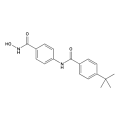
AES-350 is a potent and orally bioavailable histone deacetylase 6 (HDAC6) inhibitor, with an IC₅₀ of 0.0244 μM and a Kᵢ of 0.035 μM. It also exhibits inhibitory activity against HDAC3 and HDAC8, with IC₅₀ values of 0.187 μM and 0.245 μM, respectively. AES-350 induces apoptosis in acute myeloid leukemia (AML) cells through HDAC inhibition, making it a promising compound for AML research and the development of epigenetic-based cancer therapies.
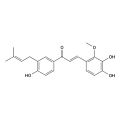
Licochalcone D is a naturally occurring flavonoid primarily found in the root of *Glycyrrhiza uralensis* (Chinese licorice). It functions as a potent and orally active inhibitor of the NF-κB p65 subunit, a key regulator of inflammation and cancer-related signaling pathways. Licochalcone D exhibits broad pharmacological properties, including antioxidant, anti-inflammatory, and anticancer activities, making it a promising candidate for research in inflammation-related diseases and oncology.
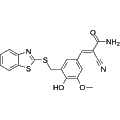
Synonyms: Tyrphostin AG-825
AG-825 is a selective, ATP-competitive inhibitor of ErbB2 (HER2) tyrosine kinase, with an IC₅₀ of 0.35 μM. It exhibits both anticancer and anti-inflammatory activities and has been shown to significantly accelerate apoptosis in human neutrophils. AG-825 also increases β₁-adrenergic receptor (β₁AR) density, suggesting potential cardiomodulatory effects. Due to its multifaceted biological activity, AG-825 is a valuable compound for research in oncology, inflammation, and cardiovascular disease.
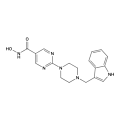
KH16 is a potent histone deacetylase (HDAC) inhibitor with low nanomolar activity, selectively targeting class I HDACs—HDAC1, HDAC2, and HDAC3—with IC₅₀ values ranging from 6 to 34 nM. It effectively induces apoptosis and exhibits broad-spectrum antitumor activity across cancer cells with diverse gene expression profiles, making it a promising candidate for epigenetic cancer therapy research.
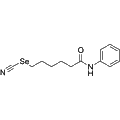
SelSA is a selective and orally active histone deacetylase 6 (HDAC6) inhibitor with an IC₅₀ of 56.9 nM. It also inhibits ERK1/2 phosphorylation, contributing to its anticancer effects. SelSA suppresses the proliferation of breast cancer and hepatocellular carcinoma cells with IC₅₀ values ranging from 0.58 to 2.6 μM, inhibits migration and invasion of Huh7 cells, and induces apoptosis. In vivo, SelSA demonstrates significant antitumor activity, supporting its potential as a therapeutic agent for solid tumors.
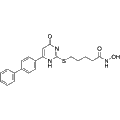
MC1742 is a potent pan-HDAC inhibitor with broad activity across multiple HDAC isoforms, exhibiting IC₅₀ values of 0.1 μM (HDAC1), 0.11 μM (HDAC2), 0.02 μM (HDAC3), 0.007 μM (HDAC6), 0.61 μM (HDAC8), 0.04 μM (HDAC10), and 0.1 μM (HDAC11). It effectively increases acetylation of histone H3 and α-tubulin, markers of HDAC inhibition. MC1742 inhibits the growth of cancer stem cells (CSCs), and induces growth arrest, apoptosis, and differentiation, particularly in sarcoma CSC models, making it a promising candidate for targeting therapy-resistant cancer cell populations.
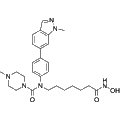
Synonyms: CKD-581
Alteminostat (CKD-581) is a potent, broad-spectrum histone deacetylase (HDAC) inhibitor that targets both class I and class II HDAC isoforms. It promotes histone H3 and α-tubulin acetylation, indicating effective inhibition of nuclear and cytoplasmic HDAC activity. Alteminostat is being investigated for its therapeutic potential in hematologic malignancies, including lymphoma and multiple myeloma, and serves as a valuable tool in epigenetic cancer research.
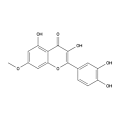
Rhamnetin is a naturally occurring flavonoid and quercetin derivative found in *Coriandrum sativum*. It functions as an inhibitor of secretory phospholipase A₂ and histone deacetylase 2 (HDAC2), contributing to its broad pharmacological profile. Rhamnetin exhibits notable antitumor, antioxidant, and anti-inflammatory activities, making it a promising compound for research in cancer, oxidative stress-related conditions, and inflammatory diseases.
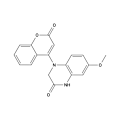
MY-673 is a colchicine binding site inhibitor (CBSI) that disrupts microtubule dynamics by inhibiting tubulin polymerization. In addition to its antimitotic effects, MY-673 suppresses the ERK signaling pathway, which leads to modulation of SMAD4 protein expression within the TGF-β/SMAD signaling axis. These combined actions result in potent inhibition of cancer cell proliferation and migration, and the induction of apoptosis, both in vitro and in vivo. MY-673 holds promise as a therapeutic candidate for targeting cancers driven by aberrant microtubule dynamics and dysregulated TGF-β/ERK signaling.
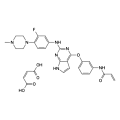
Synonyms: Abivertinib maleate; AC0010 maleate
Avitinib (Abivertinib) maleate is a third-generation, irreversible, and orally active selective EGFR inhibitor with IC50 values of 0.18 nM for both EGFR^L858R and EGFR^T790M, and 7.68 nM for wild-type EGFR. In addition to its EGFR-targeting activity, Avitinib maleate also inhibits BTK phosphorylation and induces apoptosis in mantle cell lymphoma models, demonstrating broad-spectrum anticancer efficacy.
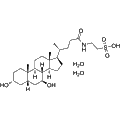
Synonyms: Tauroursodeoxycholic acid dihydrate; TUDCA dihydrate; UR 906 dihydrate
Tauroursodeoxycholate (Tauroursodeoxycholic acid; TDUCA) dihydrate is an inhibitor of endoplasmic reticulum (ER) stress that significantly downregulates pro-apoptotic molecules, including caspase-3 and caspase-12. Additionally, it suppresses ERK signaling, contributing to its cytoprotective and anti-apoptotic effects.
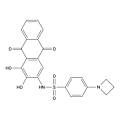
HKB99 is an allosteric inhibitor of phosphoglycerate mutase 1 (PGAM1) that induces apoptosis and suppresses cell migration by inhibiting the formation of invasive pseudopodia. It increases oxidative stress, activates the JNK/c-Jun pathway, and downregulates AKT and ERK signaling. HKB99 is a promising compound for the study of non-small cell lung cancer (NSCLC).
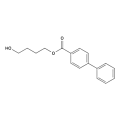
ABD56 is a bioactive compound that inhibits osteoclast formation and induces osteoclast apoptosis. Its mechanism of action involves suppression of the NFκB and ERK signaling pathways, making it a promising candidate for research in bone metabolism and osteolytic diseases.
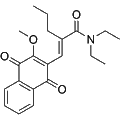
APX2009 is a specific inhibitor of APE1/REF-1 redox activity with demonstrated anticancer properties. It reduces the proliferation, migration, and invasion of breast cancer cells and induces apoptosis. APX2009 holds potential for targeted cancer therapy by disrupting redox-regulated transcription factors involved in tumor progression.
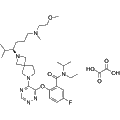
Synonyms: JNJ-75276617
Bleximenib (JNJ-75276617) oxalate is an orally active and highly selective inhibitor of the menin–KMT2A (MLL) interaction, with IC50 values of 0.1 nM in humans, 0.045 nM in mice, and ≤0.066 nM in dogs. It effectively inhibits tumor cell proliferation and induces apoptosis and differentiation, particularly in cancers driven by KMT2A rearrangements. Bleximenib oxalate is a promising candidate for research in leukemia and other menin–KMT2A-dependent malignancies.
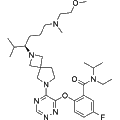
Synonyms: JNJ-75276617
Bleximenib (JNJ-75276617) is an orally active and highly selective menin–KMT2A (MLL) interaction inhibitor, with IC50 values of 0.1 nM in humans, 0.045 nM in mice, and ≤0.066 nM in dogs. It effectively inhibits the proliferation of tumor cells and induces apoptosis and differentiation, particularly in malignancies driven by KMT2A rearrangements. Bleximenib is a promising therapeutic candidate for the study and treatment of leukemia and other menin-dependent cancers.