- Cat. No.
- A11090
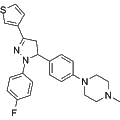
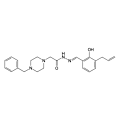
PAC-1
Synonyms: first procaspase activating compound
PAC-1 is an activator of procaspase-3 induces apoptosis in cancer cells with EC50 of 2.08 μM.
Search by product name, CAS, target or catalog number. Press Down Arrow to reach product suggestions, Tab to move between links, and Escape to close suggestions.
Caspase inhibitors and activators act on cysteine proteases that cleave their substrates after aspartate residues. Initiator caspases such as caspase-8 and caspase-9 activate executioner caspases, including caspase-3, to dismantle the cell during apoptosis. Caspase-1, the first family member, was identified in 1992 as the protease that processes interleukin-1β (IL-1β). Peptide fluoromethyl ketones (FMKs) are the classic inhibitor type, led by the pan-caspase inhibitor Z-VAD-FMK. Z-DEVD-FMK, Z-IETD-FMK and Z-LEHD-FMK prefer caspase-3, caspase-8 and caspase-9, respectively. Q-VD-OPh is a broad caspase inhibitor, and belnacasan inhibits the inflammatory caspases 1 and 4. PAC-1 works in the opposite direction, as a small molecule that activates procaspase-3.
Synonyms: first procaspase activating compound
PAC-1 is an activator of procaspase-3 induces apoptosis in cancer cells with EC50 of 2.08 μM.
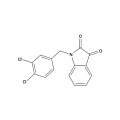
Apoptosis Activator 2 strongly induces caspase-3 activation, PARP cleavage, and DNA fragmentation which leads to the destruction of cells (Apaf-1 dependent) with IC50 of ~4 μM, inactive to HMEC, PREC, or MCF-10A cells
Synonyms: NSC144303
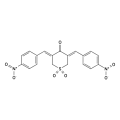
Ubiquitin Isopeptidase Inhibitor I, G5 (NSC 144303) is an apoptosome-independent caspase and apoptosis activator with IC50 values of 1.76 and 1.6 μM in E1A and E1A/C9DN cells, respectively.
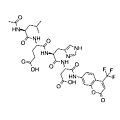
Ac-LEHD-AFC, fluorogenic caspase substrate. Analog of the caspase-9 substrate, LEHD-AFC.
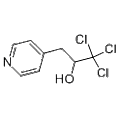
PETCM is an activator of caspase-3 and a stimulator of apoptosome formation in HeLa cell cytosols.
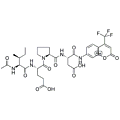
Ac-LEHD-AFC is a fluorogenic substrate for caspase-4, caspase-5, and caspase-9.
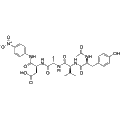
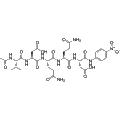
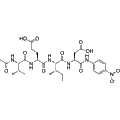
Ac-YVAD-pNA is a specific Caspase-1 substrate. Ac-YVAD-pNA can be used to detect Caspase-1 activity. Caspase-1 is a key mediator of inflammatory processes.
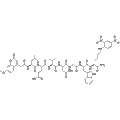
Ac-LEVDGWK(Dnp)-NH2 is a synthetic substrate for Caspase-3, designed to facilitate the measurement of Caspase-3 enzymatic activity. Its use in research enables the study of apoptosis and cellular signaling pathways, providing insights into the role of Caspase-3 in various biological processes. This substrate can be employed in assays to quantify Caspase-3 activity in different biological samples.
Out of stock
All 3 sizes
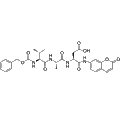
Z-VAD-AMC is a potent substrate for caspase-9, facilitating the study of apoptosis mechanisms. It exhibits high specificity for this caspase, enabling accurate monitoring of caspase activity in cellular assays. Researchers commonly utilize Z-VAD-AMC in studies focusing on programmed cell death, cellular stress responses, and therapeutic interventions targeting apoptotic pathways.
Out of stock
All 3 sizes
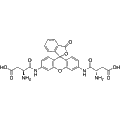
Synonyms: D2R; (D)2-Rhodamine 110
(Asp)2-Rhodamine 110 is a fluorescent substrate specifically designed for caspase activity detection. This compound is cleaved by active caspases, resulting in the release of a fluorescent signal that allows for real-time monitoring of apoptosis in various biological systems. It is widely utilized in research applications focused on cell death mechanisms and therapeutic interventions targeting apoptosis.
Out of stock
All 3 sizes
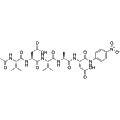
Ac-VDVAD-pNA is a specific substrate for caspase-2, designed to facilitate the assessment of caspase-2 activity in various biological samples. This reagent releases a chromogenic product upon cleavage by active caspase-2, making it useful for both in vitro and in vivo studies. It serves as a vital tool in research applications focused on apoptotic pathways and caspase-related signaling mechanisms.
Out of stock
All 3 sizes
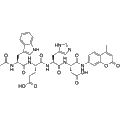
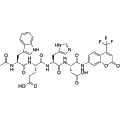
Synonyms: AC-WEHD-AMC
Ac-Trp-Glu-His-Asp-AMC is a specific fluorogenic substrate designed for caspase-1 detection and activity measurement. This compound exhibits high sensitivity and selectivity for caspase-1, enabling the quantitative assessment of apoptotic processes and inflammatory pathways. Its application in fluorescence assays facilitates the study of caspase-1's role in various biological contexts, including immune responses and cell death mechanisms.
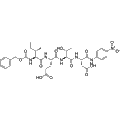
Synonyms: Z-Ile-Glu-Thr-Asp-pNA
Z-IETD-pNA is a specific substrate for caspase-8 and granzyme B, designed for colorimetric detection. Upon hydrolysis by caspase-8, this compound releases para-nitroaniline (pNA), facilitating the measurement of enzyme activity. It is widely utilized in research applications focusing on apoptosis and immune responses, enabling the study of cell death mechanisms and the role of granzyme B in cytotoxicity.
Out of stock
All 3 sizes
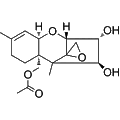
15-Acetoxyscirpenol is a potent caspase activator that induces apoptosis through the activation of multiple caspases, with effects that are independent of caspase-3. This mycotoxin significantly inhibits the growth of Jurkat T cells in a dose-dependent manner. Its ability to modulate apoptosis makes it a valuable tool for research in cancer biology and cell signaling pathways.
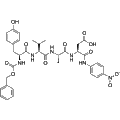
Synonyms: Z-Tyr-Val-Ala-Asp-pNA
Z-YVAD-pNA (Z-Tyr-Val-Ala-Asp-pNA) is a substrate specifically designed for caspase-1 activity. This compound is pivotal in studying inflammation and cell death pathways, as it is cleaved by caspase-1 during the activation of inflammatory caspases. Z-YVAD-pNA serves as an essential tool in research focused on apoptosis, pyroptosis, and other caspase-related signaling mechanisms. Its use can aid in the development of therapeutic strategies targeting inflammatory diseases.
Out of stock
All 3 sizes
Ac-WEHD-AFC is a fluorogenic substrate specifically designed for the detection of caspase-1 activity. This compound enables the quantitative measurement of caspase-1 enzymatic function, making it a valuable tool in studies related to tumorigenesis and inflammatory processes. Its sensitive fluorescence readout facilitates the assessment of caspase-1 involvement in various biological systems.
Out of stock
All 3 sizes
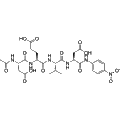
Ac-Asp-Glu-Val-Asp-pNA is a specific substrate for caspase-3/7, facilitating the study of apoptosis and cellular signaling pathways. This peptidic compound is cleaved by caspase-3/7, resulting in the release of p-nitroaniline (pNA), which can be quantitatively measured. Its use is critical in research applications focused on understanding programmed cell death and evaluating the activity of caspases in various biological contexts.
Ac-VDQQD-pNA is a selective substrate for Caspase 2, designed to facilitate the study of caspase activity. Upon cleavage by Caspase 2, it yields a yellow chromophore, p-nitroaniline (pNA), which can be quantitatively measured. This reagent is ideal for research applications focused on apoptosis, cell signaling, and the functional characterization of caspases.
Out of stock
All 3 sizes
Caspase-3 Activator 2 is a potent activator of caspase-3, a key executioner of apoptosis. This compound effectively induces apoptotic cell death in cancer cell lines, demonstrating cytotoxicity with IC50 values of 33.52 μM against HL-60 cells and 76.90 μM against K562 cells. Its applications are significant in cancer research, particularly in studies investigating apoptotic pathways and therapeutic interventions.
Out of stock
All 3 sizes
Mca-YVADAP-Lys(Dnp)-OH is a fluorogenic substrate designed for the characterization of caspase-1 and angiotensin-converting enzyme 2 (ACE2) activity. This compound enables the detection of enzymatic activity through fluorescence, making it valuable for studies focused on apoptosis and cardiovascular signaling pathways. It is suitable for use in various assays aimed at exploring the roles of these enzymes in cellular processes and disease states.
Caspase-3 Activator 4 is a potent activator of caspase-3 that effectively crosses the blood-brain barrier. This compound exhibits significant antiproliferative activity and induces apoptosis in various cell types. Additionally, Caspase-3 Activator 4 enhances the gene expression of TNF-α while reducing the protein expression of cleaved caspases 3, underscoring its potential in apoptosis-related research applications.
Out of stock
All 3 sizes
Ac-VEID-pNA serves as a substrate for caspase 6, specifically designed to facilitate the study of this protease's activity. By incorporating the VEID sequence, this synthetic peptide allows for the assessment of caspase 6-mediated cleavage events, particularly in the context of lamin A protein processing. It is valuable in research applications focusing on apoptosis and cell cycle regulation, contributing to a deeper understanding of cellular mechanisms and caspase involvement in various disease states.
Out of stock
All 3 sizes
Apoptosis Inducer 34 is a small molecule compound that functions as a caspase activator by directly stimulating the intrinsic apoptotic pathway. It facilitates the oligomerization of Apaf-1 to generate mature apoptosomes, leading to the activation of caspase-9 and caspase-3. This compound effectively enhances the cytochrome c-dependent apoptotic signaling in Jurkat cells, resulting in PARP cleavage and chromosomal DNA fragmentation. Additionally, Apoptosis Inducer 34 demonstrates low toxicity towards normal cells, indicating its potential for selective targeting of cancer cells and making it a valuable tool for researching apoptosis-related cancer mechanisms.
WF-210 is a potent activator of procaspase-3, exhibiting an EC50 value of 0.95 μM. This compound effectively induces apoptosis, making it a valuable tool for studying apoptotic pathways. Additionally, WF-210 demonstrates anti-tumor activity, supporting its application in cancer research and therapeutic investigations.
Procaspase-3/6 activator 1 is a highly selective activator of the executioner procaspases-3 and -6, exhibiting EC50 values of 2.4 ± 0.2 and 2.8 ± 0.3 μM, respectively. This compound does not activate procaspases-1 or -7, making it a valuable tool for investigating apoptotic processes. It is suitable for research applications focused on apoptosis, cell death mechanisms, and therapeutic development targeting caspase pathways.