
- Cat. No.
- A12413
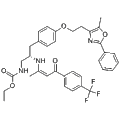
GW6471
GW6471 is a PPARα antagonist, shown to completely inhibit GW409544-induced activation of PPARα.
Search by product name, CAS, target or catalog number. Press Down Arrow to reach product suggestions, Tab to move between links, and Escape to close suggestions.
PPAR agonists and antagonists target peroxisome proliferator-activated receptors (PPARs), a nuclear receptor family. The first PPAR was identified in 1990 as a member of the steroid hormone receptor superfamily activated by peroxisome proliferators. The three subtypes, PPARα, PPARδ and PPARγ, act as ligand-activated transcription factors in tissues such as liver, muscle and fat. PPARγ promotes adipocyte differentiation, and thiazolidinediones were shown in 1995 to bind it with high affinity. Examples include rosiglitazone and troglitazone for PPARγ, fenofibrate for PPARα and GW 501516 for PPARδ. Elafibranor acts on PPARα and PPARδ, while T0070907 is a PPARγ antagonist for blocking studies.
GW6471 is a PPARα antagonist, shown to completely inhibit GW409544-induced activation of PPARα.
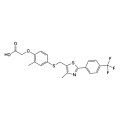
Synonyms: GW1516; GSK-516
GW501516 (GW1516 or GSK-516) is a drug that acts as a PPARδ modulator.
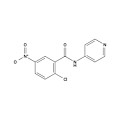
T0070907 was identified as a potent and selective PPARgamma antagonist. With an apparent binding affinity (concentration at 50% inhibition of [(3)H]rosiglitazone binding or IC(50)) of 1 nm, T0070907 covalently modifies PPARgamma on cysteine 313 in helix 3 of human PPARgamma2.
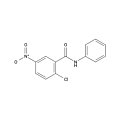
GW 9662 is a selective PPARγ antagonist (IC50 values are 3.3, 32 and 2000 nM for PPARγ, PPARα and PPARδ respectively).
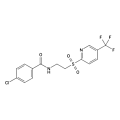
GSK-3787 is a potent and selective peroxisome proliferator-activated receptor δ (PPARδ) antagonist (pIC50 = 6.6).
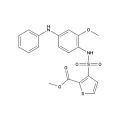
GSK 0660 is a selective PPARβ antagonist (IC50 values are 0.155, > 10 and ??? 10 μM at PPARβ, PPARα and PPARγ respectively).
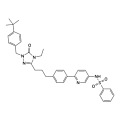
NXT629 is a potent, selective, and competitive PPAR-α antagonist, with an IC50 of 77 nM for human PPARα, shows high selectivity over other nuclear hormone receptor, such as PPARδ, PPARγ, ERβ, GR and TRβ, IC50s are 6.0, 15, 15.2, 32.5 and >100 μM, respectively.
Out of stock
All 7 sizes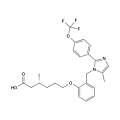
MA-0204 is a potent, highly selective and orally available peroxisome proliferator activated receptor δ (PPARδ) modulator with EC50s of 0.4 nM, 7.9 nM and 10 nM for human, mouse and rat PPARδ, respectively. Potential treatment for Duchene Muscular Dystrophy (DMD).
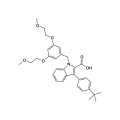
GSK376501A is a selective peroxisome proliferator-activated receptor gamma (PPARγ) modulator for the treatment of type 2 diabetes mellitus.
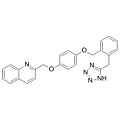
Synonyms: NID 525
RG-12525 is a a specific, competitive and orally effective antagonist of the peptidoleukotrienes, LTC4, LTD4 and LTE4, inhibiting LTC4-, LTD4- and LTE4-inducd guinea pig parenchymal strips contractions, with IC50s of 2.6 nM, 2.5 nM and 7 nM, respectively; RG-12525 is also a peroxisome proliferator-activated receptor gamma (PPAR-gamma) agonist with IC50 of appr 60 nM and a potent inhibitor of CYP3A4, with a Ki value of 0.5 µM.
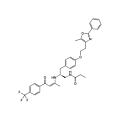
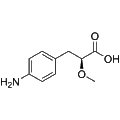
GED 0507-34-Levo is an orally active modulator of PPARγ. This compound effectively downregulates the expression of TGF-β, Smad3, IL-13, and CTGF in colon tissue. GED 0507-34-Levo has demonstrated therapeutic potential in improving symptoms of DSS-induced chronic colitis and associated fibrosis, making it a valuable tool for research in inflammatory bowel diseases and fibrotic disorders.
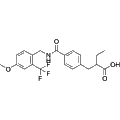
RB394 is a potent dual soluble epoxide hydrolase (sEH) and peroxisome proliferator-activated receptor gamma (PPARγ) modulator. This compound promotes adipocyte browning and demonstrates significant cardioprotective effects. RB394 is an invaluable tool for researchers studying metabolic syndrome and related metabolic disorders.
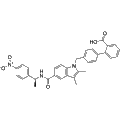
SR1664 is a potent antagonist of peroxisome proliferator-activated receptor gamma (PPARγ). It effectively binds to PPARγ and inhibits Cdk5-mediated phosphorylation of the receptor, demonstrating an IC50 value of 80 nM and a Ki of 28.67 nM. This compound has valuable applications in research focused on metabolic regulation and the development of therapeutic strategies for conditions such as obesity and diabetes.
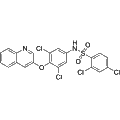
Synonyms: INT131
AMG131 is a selective peroxisome proliferator-activated receptor γ (PPARγ) modulator, functioning as a potent non-thiazolidinedione (TZD) agonist. It binds to PPARγ in the same pocket as TZDs, yet interacts with the receptor at unique contact points, potentially leading to differential biological effects. This compound has significant potential for research applications related to type-2 diabetes mellitus and metabolic disorders.
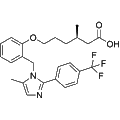
Synonyms: ASP0367; MA-0211
Bocidelpar is a selective PPAR-δ modulator that activates the PPAR-δ downstream signaling pathway, leading to the upregulation of target genes such as ABCA1 and ACAA2. This compound promotes fatty acid oxidation and enhances mitochondrial biogenesis, ultimately improving mitochondrial dysfunction. Bocidelpar is particularly useful in researching diseases associated with mitochondrial dysfunction, including primary mitochondrial myopathy (PMM) and Duchenne muscular dystrophy (DMD).
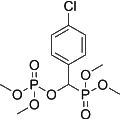
Synonyms: SR-202
Mifobate is a potent antagonist of peroxisome proliferator-activated receptor gamma (PPARγ), selectively inhibiting thiazolidinedione (TZD)-induced transcriptional activity with an IC50 of 140 μM. This compound does not affect the basal or ligand-stimulated transcriptional activity of PPARα, PPARβ, or the farnesoid X receptor (FXR). Mifobate demonstrates significant antiobesity and antidiabetic effects, making it valuable for research applications aimed at exploring metabolic disorders and therapeutic interventions for related conditions.
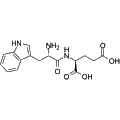
Synonyms: G3335
H-Trp-Glu-OH is a selective and reversible antagonist of peroxisome proliferator-activated receptor gamma (PPARγ), with a dissociation constant (Kd) of approximately 8 µM. This compound has demonstrated cell permeability and presents potential as a lead compound in diabetes research. Its role in modulating PPARγ activity makes it an important tool for studying metabolic disorders and associated therapeutic pathways.
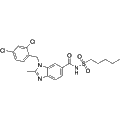
FK614 is a selective PPARγ modulator (SPPARM) that functions as a PPARγ agonist with significant anti-diabetic properties. This compound exhibits distinct effects on PPARγ activation throughout various stages of adipocyte differentiation. FK614 is utilized in research focused on hyperglycemia, hypertriglyceridemia, glucose intolerance, and type 2 diabetes, making it a valuable tool for understanding metabolic disorders.
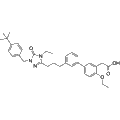
Synonyms: TPST-1120
Amezalpat is a selective antagonist of PPARα, exhibiting an IC50 value of 58 nM. This compound demonstrates notable antineoplastic activity, making it a valuable tool for research in cancer biology and therapeutic applications targeting metabolic regulation and lipid homeostasis. Its use in scientific studies may help elucidate the role of PPARα in tumor progression and treatment resistance.
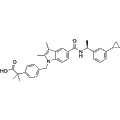
SR 11023 is a potent orally active antagonist of PPARγ, exhibiting an IC50 value of 109 nM. This compound is significant in the study of metabolic disorders, particularly in diabetes research, where PPARγ modulation can impact insulin sensitivity and adipocyte differentiation. Researchers can utilize SR 11023 to investigate the therapeutic potential of targeting PPARγ in various metabolic pathways.
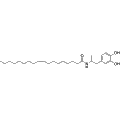
OLHHA is a dual CB1 receptor antagonist and PPARα agonist. This compound demonstrates notable activity in inhibiting alcohol intake with an EC50 value of 0.2 mg/kg. Additionally, OLHHA effectively reduces hepatic lipid accumulation and circulating triglyceride levels, exhibiting anti-steatotic properties. Its mechanism and effects make it a valuable tool for research into non-alcoholic fatty liver disease (NAFLD).
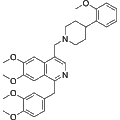
PA-082 is a selective modulator of peroxisome proliferator-activated receptor gamma (PPAR-γ) functioning as a partial agonist. It promotes the partial recruitment of coactivators SRC1, TIF2, and SRC3, while fully recruiting PGC1-α to the PPAR-γ ligand-binding domain. PA-082 effectively inhibits triglyceride accumulation during de novo adipogenesis and counteracts lipid buildup induced by Rosiglitazone. Furthermore, this compound enhances insulin-stimulated glucose uptake in adipocytes and provides protection against TNFα-induced insulin resistance, making it a valuable tool for research into type 2 diabetes.
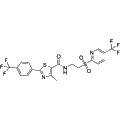
CC618 is a selective antagonist of the peroxisome proliferator-activated receptor beta/delta (PPARβ/δ). This compound exhibits its antagonistic effects by covalently binding to PPARβ/δ receptors, modulating their activity. As a result, CC618 is valuable for exploring the roles of PPARβ/δ in various biological processes and disease states, making it a useful tool in metabolic research and studies related to inflammation and cancer.
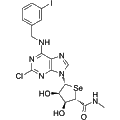
PPARγ/δ modulator 1 is a selective modulator of the peroxisome proliferator-activated receptors (PPARs), acting as an antagonist for PPARδ and a partial agonist for PPARγ. It exhibits Ki values of 14.4 nM for PPARδ and 5.31 μM for PPARγ, indicating strong binding affinity. This compound demonstrates biological activities with an EC50 of 7.3 μM for PPARδ corepression and 12.6 μM for the stimulation of adiponectin production. Its modulation capabilities make it a valuable tool for research on metabolic disorders and related pathways.
Out of stock
All 3 sizes