
- Cat. No.
- A19708
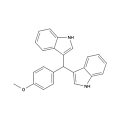
DIM-C-pPhOCH3
DIM-C-pPhOCH3 is a Nur77 agonist. Nerve growth factor-induced Bα (NGFI-Bα, Nur77) is an orphan nuclear receptor.
In stock
View Details
Search by product name, CAS, target or catalog number. Press Down Arrow to reach product suggestions, Tab to move between links, and Escape to close suggestions.
Nur77 agonists, antagonists and modulators act on Nur77, an orphan receptor of the nuclear receptor family. Its gene is named nuclear receptor subfamily 4 group A member 1 (NR4A1). Nur77 is an immediate early gene product induced by growth factors, stress and T-cell receptor signaling. Besides acting as a transcription factor, Nur77 can move to mitochondria, where it triggers cytochrome c release and apoptosis. A 2008 study identified the fungal metabolite cytosporone B as a Nur77 agonist that binds the ligand-binding domain. The listed compounds include the diindolylmethane analogs DIM-C-pPhOH and DIM-C-pPhCO2Me, which act as NR4A1 antagonists, and the ligand-binding domain antagonist TMPA.
DIM-C-pPhOCH3 is a Nur77 agonist. Nerve growth factor-induced Bα (NGFI-Bα, Nur77) is an orphan nuclear receptor.
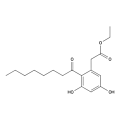
Synonyms: Csn-B; Dothiorelone G
Cytosporone B (Csn-B; Dothiorelone G) is a naturally occurring nuclear orphan receptor Nur77/NR4A1 agonist with an EC50 of 0.278 nM.
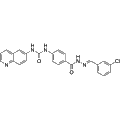
Nur77 agonist-1 is a selective agonist targeting the Nur77 receptor, promoting ferroptosis through the upregulation of Nur77 protein expression. This compound significantly elevates levels of reactive oxygen species (ROS) and lipid peroxidation while diminishing GPX4 protein expression. With a binding affinity of 13.80 μM to the ligand binding domain of Nur77, Nur77 agonist-1 demonstrates potent antiproliferative effects against various breast cancer cell lines (IC50: 2.15-3.26 μM) while exhibiting low toxicity to normal cells. It is a valuable tool for research focused on breast cancer therapies.
Out of stock
All 3 sizes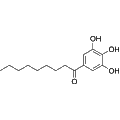
THPN is a potent Nur77 agonist that selectively binds to the ligand-binding domain (LBD) of Nur77 (TR3) with a Kd of 270 nM, without affecting retinoic acid receptor α or PPARγ. By facilitating the translocation of Nur77 to the mitochondria, THPN promotes autophagic cell death specifically in melanoma cells. This compound serves as a valuable tool for research on Nur77 signaling pathways and its implications in cancer therapy.
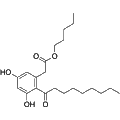
Amoitone B is a selective agonist of NR4A1, a nuclear receptor involved in various cellular processes, including apoptosis and differentiation. This compound demonstrates significant anticancer activity, making it a valuable tool for studying the role of NR4A1 in cancer biology. It is suitable for research applications focusing on therapeutic developments and mechanistic investigations in cancer therapeutics.
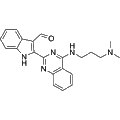
NR4A1 Agonist 1 is a selective agonist of the NR4A1 receptor, exhibiting a Ki value of 2.96 μM. It demonstrates significant lipid-lowering effects in 3T3-L1 adipocytes, with an EC50 of 0.13 μM, leading to reduced triglyceride and lipid droplet accumulation. This compound is valuable for research applications focused on obesity and metabolic disorders.
Out of stock
All 3 sizes