
- Cat. No.
- A19467
CITCO
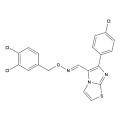
CITCO, an imidazothiazole derivative, is a selective Constitutive androstane receptor (CAR) agonist.
In stock
View Details
Search by product name, CAS, target or catalog number. Press Down Arrow to reach product suggestions, Tab to move between links, and Escape to close suggestions.
Orphan nuclear receptor ligands act on nuclear receptors cloned before a natural ligand was known. The term dates from 1988, when estrogen-related receptors were identified by sequence similarity to the estrogen receptor. Many further superfamily members were found this way, as a 1995 review of the second decade of nuclear receptor research describes. Liver receptor homolog 1 (LRH-1, NR5A2) regulates development, metabolism and steroidogenesis. ML-180 is an LRH-1 inverse agonist, LRH-1 agonist-2 activates the receptor, and RJW100 activates LRH-1 together with steroidogenic factor 1 (SF-1). MI-883 activates and CINPA1 inhibits the constitutive androstane receptor (CAR). The set is mixed and also lists compounds for unrelated targets, such as splicing factor 3B subunit 1 (SF3B1).
CITCO, an imidazothiazole derivative, is a selective Constitutive androstane receptor (CAR) agonist.
Synonyms: SR1848
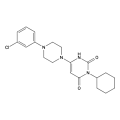
ML-180 (SR1848) is a potent orphan nuclear receptor liver receptor homolog 1 (LRH-1; NR5A2) inverse agonist with an IC50 of 3.7 µM.
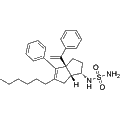
LRH-1 agonist-2 is a selective full agonist of liver receptor homolog-1 (LRH-1) with an EC50 of 15.7 nM. This compound engages the Thr352 and His390 residues within the LRH-1 binding pocket, facilitating allosteric signaling that stabilizes the activation function surface and enhances coactivator recruitment. LRH-1 agonist-2 promotes the secretion of the anti-inflammatory cytokine IL-10 while reducing levels of pro-inflammatory cytokines IL-1β and TNFα. It is particularly useful in research focused on inflammatory bowel disease and related anti-inflammatory processes.
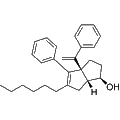
RJW100 is a potent agonist for liver receptor homolog 1 (LRH-1, NR5A2) and steroidogenic factor-1 (SF-1, NR5A1), exhibiting pEC50 values of 6.6 and 7.5, respectively. This compound promotes strong activation of the miR-200c promoter, making it a valuable tool for researchers investigating gene regulation and steroidogenesis. Its targeted mechanisms make RJW100 suitable for studies in endocrine signaling and metabolic research.
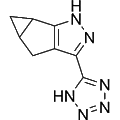
FCH-2296413 is a selective agonist of the hydroxycarboxylic acid receptor (HCAR), demonstrating an EC50 range of 4.4-8.6 nM. This compound exhibits notable analgesic activity, making it a valuable reagent for the study of peripheral pain-related disorders. Its mechanism of action allows researchers to explore therapeutic pathways associated with pain modulation and related biological processes.
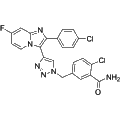
MI-883 is an orally active agonist of the Constitutive Androstane Receptor (CAR) with an EC50 of 73 nM and functions as an antagonist for the Pregnane X Receptor (PXR) with an IC50 of 0.1 µM. This compound promotes the assembly of the CAR ligand-binding domain (LBD) and activates the CAR3 variant, inducing CYP2B6 mRNA expression in HepaRG and primary human hepatocytes. Additionally, MI-883 inhibits basal PXR activity and blocks CYP3A4 mRNA expression in HepG2 cells, impacting cholesterol metabolism and bile acid excretion, and shows potential in improving hypercholesterolemia in mouse models.
Out of stock
All 3 sizes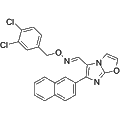
DL5050 is a selective and potent agonist of the human constitutive androstane receptor (hCAR), with minimal activation of the pregnane X receptor (PXR). It preferentially enhances the expression of CYP2B6 over CYP3A4 at both mRNA and protein levels. DL5050 is valuable in research related to cancer and metabolic diseases, including diabetes, enabling insights into the modulation of drug metabolism and potential therapeutic pathways.
Out of stock
All 3 sizes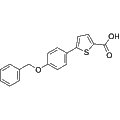
Nurr1 Agonist 2 is an effective Nurr1 agonist with an EC50 of 0.07 μM, demonstrating high affinity for the recombinant Nurr1 ligand binding domain with a Kd of 0.14 μM. This compound enhances the expression of Nurr1-regulated genes, specifically increasing mRNA levels of tyrosine hydroxylase (TH) and vesicular amino acid transporter 2 (VMAT2). It serves as a valuable tool for research applications focused on neurobiology and the study of dopaminergic signaling pathways.
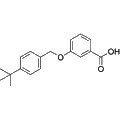
Nurr1 agonist 7 is a potent agonist of the Nurr1 receptor, exhibiting an EC50 value of 0.12 μM. This compound is instrumental in research focused on neurodevelopment and neuroprotection, making it valuable for studies related to neurodegenerative diseases and dopaminergic neuron differentiation. Its ability to selectively activate Nurr1 underscores its potential utility in therapeutic applications targeting neurological disorders.
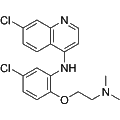
Nurr1 Agonist 6 is a selective agonist of the nuclear receptor Nurr1, exhibiting a Kd value of 1.5 μM and an EC50 of 3 μM. This compound is of interest for research in neurodegenerative diseases, particularly in the context of modulating dopamine signaling and promoting neuronal survival. Its activation of Nurr1 may provide insights into therapeutic strategies for conditions such as Parkinson's disease and may also be valuable in exploring the role of Nurr1 in development and immune response.
Out of stock
All 3 sizes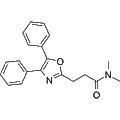
Nurr1 agonist 11 is a selective and potent agonist of the Nurr1 receptor, exhibiting an IC50 of 26 µM. This compound demonstrates the capability to penetrate the blood-brain barrier, making it suitable for investigations into central nervous system disorders. It is particularly relevant for research focusing on neurodegenerative diseases and the modulation of dopaminergic pathways.
Out of stock
All 3 sizes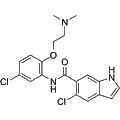
Nurr1 Agonist 5 is a selective agonist of the neuroprotective transcription factor Nurr1, exhibiting a Kd of 0.5 μM and an EC50 of 3 μM. This compound is instrumental in modulating neuroinflammatory responses and promoting the survival of dopaminergic neurons. Research applications include studies on neurodegenerative diseases and the exploration of therapeutic strategies targeting Nurr1 pathways.
Out of stock
All 3 sizes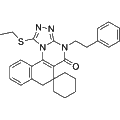
NR2F1 agonist 1 is a selective agonist of the nuclear receptor NR2F1, designed to activate dormancy programs in malignant cells. This compound up-regulates NR2F1 and its downstream target genes, leading to neural crest-like differentiation and growth suppression in head and neck squamous cell carcinoma (HNSCC). Additionally, NR2F1 agonist 1 has demonstrated the ability to inhibit tumor growth in preclinical mouse models, making it a valuable tool for research into cancer dormancy and therapeutic strategies.
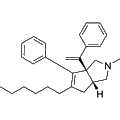
RJW103 is an acid-stable agonist of SF-1 (NR5A1) and LRH-1, demonstrating pEC50 values of 6.5 and 5.9, respectively. This compound effectively activates SF-1- and LRH-1-mediated transcription of endogenous target genes. Research applications include investigations in cancer biology, endocrinology, and metabolic diseases, particularly in the context of adrenocortical tumors.
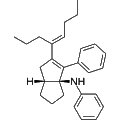
GSK8470 is a potent LRH-1 and SF-1 agonist, with EC50 values of 0.43 μM and 0.054 μM, respectively. This compound enhances the expression of small heterodimer chaperones (SHPs), a critical target gene regulated by LRH-1, in hepatocytes. GSK8470 is valuable for research applications involving the modulation of nuclear hormone receptor signaling pathways and related metabolic processes.
Out of stock
All 3 sizes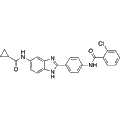
NR2E3 Agonist 1 is a small molecule specifically designed to activate the photoreceptor-specific nuclear receptor NR2E3, demonstrating an EC50 value of less than 200 nM. This compound plays a critical role in research focused on retinal diseases, particularly retinitis pigmentosa, by modulating NR2E3 activity to explore its effects on photoreceptor development and function.
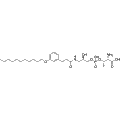
LysoPalloT-NH-amide-C3-ph-m-O-C11 is a potent agonist of GPR174, exhibiting an EC50 of 34 nM. This compound is utilized in research to elucidate the role of GPR174 in various biological processes, including immune modulation and potential therapeutic applications in autoimmune diseases. It serves as a valuable tool for studying GPR174 signaling pathways and their impact on cellular responses.
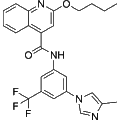
TLX Agonist 3 is a potent and selective agonist of the tailless homolog (TLX, NR2E1) that exhibits an EC50 of 0.25 μM and a Kd of 1.6 μM. This compound demonstrates high specificity for TLX over related nuclear receptors and promotes TLX oligomerization with an EC50 of 5.0 μM. TLX Agonist 3 is utilized in research focused on neurodegenerative diseases, providing insights into the role of TLX in neuronal function and disease mechanisms.
Out of stock
All 3 sizes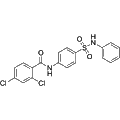
GPR27 Agonist-1 is a selective agonist of the GPR27 receptor, exhibiting a pEC50 of 6.34. This compound is valuable for investigating the role of GPR27 in various biological processes and its potential implications in metabolic disorders. Its specific activation of GPR27 makes it an essential tool for research in receptor biology and pharmacology.
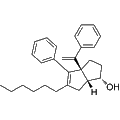
Iso-RJW100 is a dual agonist of liver receptor homologue-1 (LRH-1) and steroidogenic factor-1 (SF-1), demonstrating pEC50 values of 6.4 and 7.2, respectively. This compound significantly modulates the activity of LRH-1 and SF-1, key regulators in steroidogenesis and metabolic processes. Iso-RJW100 is valuable for research in endocrine signaling, metabolic regulation, and associated disease models.