Vitamin D Receptors

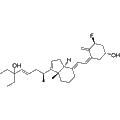
Vitamin D receptor ligands include calcitriol analogs and labeled vitamin D reference compounds. The vitamin D receptor (VDR) was cloned in 1988 and belongs to the nuclear receptor superfamily, binding DNA as a heterodimer with the retinoid X receptor. Its natural ligand, 1,25-dihydroxyvitamin D3, is formed from vitamin D by sequential hydroxylation in liver and kidney. Eldecalcitol, falecalcitriol and seocalcitol are synthetic analogs of that hormone and are used to compare receptor activation and gene induction. Vitamin D2 serves as a precursor form in such comparisons, and deuterated material such as Calcitriol D6 supports mass spectrometric measurement of vitamin D metabolites.

10 Items

  • Inecalcitol
    Cat. No.
    A30316

    Inecalcitol

    Synonyms: TX 522

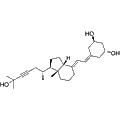
    Inecalcitol is a potent vitamin D receptor (VDR) agonist with a dissociation constant (Kd) of 0.53 nM, demonstrating a strong affinity for VDR. This unique vitamin D3 analog induces apoptotic pathways and exhibits significant anticancer activities. Additionally, Inecalcitol features an alkyne group, enabling its application in click chemistry through copper-catalyzed azide-alkyne cycloaddition (CuAAc) with azide-containing molecules, making it valuable for diverse biochemical studies and research applications.

    5 mg
    $105.00
    10 mg
    $185.00
    All 5 sizes
  • Elocalcitol
    Cat. No.
    A31167

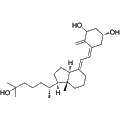
    Elocalcitol

    Synonyms: BXL-628; Ro-26-9228

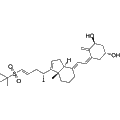
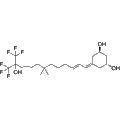
    Elocalcitol is a selective vitamin D receptor (VDR) agonist that demonstrates oral bioactivity. It exhibits significant anti-inflammatory properties and has been shown to inhibit the growth of prostate cancer cells. This compound serves as a valuable tool for research applications focused on the modulation of VDR activity and the exploration of novel therapeutic strategies for prostate cancer and inflammatory diseases.

    1 mg
    $215.00
    5 mg
    $1,540.00
    All 2 sizes
  • LG190155
    Cat. No.
    A36096

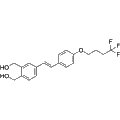
    LG190155

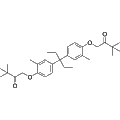
    LG190155 is a nonsteroidal agonist of the vitamin D receptor (VDR). It activates VDR in mesenchymal stem cells, leading to the upregulation of the BMP6-IL6 autocrine signaling axis. This enhancement significantly promotes the differentiation of acute myeloid leukemia (AML) cells from mesenchymal stem cells while avoiding hypercalcemia. LG190155 is a valuable tool for research into AML and its treatment mechanisms.

    25 mg
    $1,275.00
    50 mg
    $1,625.00
    All 3 sizes
  • 25-Hydroxytachysterol3
    Cat. No.
    A39923

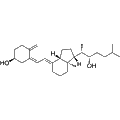
    25-Hydroxytachysterol3

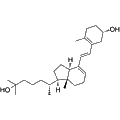
    25-Hydroxytachysterol3 is a potent Vitamin D receptor (VDR) agonist. This metabolite of Vitamin D3 exhibits significant inhibitory effects on the proliferation of epidermal keratinocytes and dermal fibroblasts while stimulating the expression of genes associated with differentiation and antioxidant response in keratinocytes. Additionally, it activates aryl hydrocarbon receptor (AhR), liver X receptors α/β (LXR α/β), and peroxisome proliferator-activated receptor γ (PPARγ), promoting the expression of CYP24A1. These characteristics make it valuable for research in skin biology and related therapeutic applications.

    1 mg
    $425.00
    5 mg
    $1,095.00
    All 6 sizes
  • Lunacalcipol
    Cat. No.
    A69888

    Lunacalcipol

    Synonyms: CTA-018

    Lunacalcipol is a vitamin D receptor agonist that acts through the modulation of vitamin D signaling pathways. It demonstrates dual functionality in chronic kidney disease (CKD) by enhancing the activity of the vitamin D receptor (VDR) and inhibiting the cytochrome P450 enzyme 24-hydroxylase. By binding to VDR, Lunacalcipol influences various aspects of its transcriptional activity, including ligand affinity and coactivator recruitment. This compound is particularly relevant for research focused on CKD and secondary hyperparathyroidism (sHPT).

    25 mg
    $3,420.00
    50 mg
    $4,410.00
    All 3 sizes
  • Calcitroic acid
    Cat. No.
    A70217

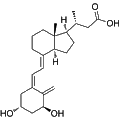
    Calcitroic acid

    Calcitroic acid is a potent vitamin D receptor (VDR) agonist that effectively activates VDR-mediated transcriptional processes. As the primary metabolite of 1,25-dihydroxyvitamin D3, it is predominantly found in the liver and mucosa of mice, exhibiting metabolic stability and minimal toxicity. This compound is valuable for research applications focusing on VDR signaling pathways and the physiological effects of vitamin D metabolites.

    1 mg
    $600.00
    All 1 sizes
  • (1R,5Z)-Calcitriol
    Cat. No.
    A85529

    (1R,5Z)-Calcitriol

    Synonyms: (1R,5Z)-1,25-Dihydroxyvitamin D3

    (1R,5Z)-Calcitriol is an isomer of calcitriol, the most biologically active metabolite of vitamin D. This compound functions as a vitamin D receptor (VDR) agonist, influencing calcium metabolism and bone health. Its biological activity makes it valuable in research focused on bone disorders, immunomodulation, and calcium signaling pathways.

    Out of stock

    All 3 sizes
  • VDR agonist 2
    Cat. No.
    A85530

    VDR agonist 2

    VDR Agonist 2 is a potent compound that acts as an agonist for the vitamin D receptor (VDR). This reagent effectively inhibits the TGF-β1-induced activation of hepatic stellate cells (HSC), demonstrating significant anti-hepatic fibrosis effects in both in vitro and in vivo studies. It is suitable for research applications focused on liver fibrosis and the mechanistic understanding of VDR-mediated pathways.

    Out of stock

    All 3 sizes
  • 22-Hydroxyvitamin D3
    Cat. No.
    A85531

    22-Hydroxyvitamin D3

    22-Hydroxyvitamin D3 is a novel vitamin D analog that lacks agonist activity in both intestinal and bone tissues. Its unique profile makes it a valuable tool for research into vitamin D metabolism and signaling pathways. This compound can be utilized in studies investigating the modulation of calcium homeostasis and potential therapeutic applications in vitamin D-related disorders.

    Out of stock

    All 3 sizes
  • Ro-65-2299
    Cat. No.
    A85544

    Ro-65-2299

    Ro-65-2299 is an orally active vitamin D analogue that functions as a potential agonist of the vitamin D receptor (VDR), with an effective dose (ED50) of 180 nM. It promotes thickening of the epidermis and demonstrates antipsoriatic activity in hairless mice, with an ED50 of 7.5 mg/kg. This compound is suitable for research into inflammation and immunology, particularly in the context of psoriasis and related skin disorders.

    Out of stock

    All 3 sizes

10 Items

Added to your cart

View Cart Checkout

    Loading...