- Cat. No.
- A12407
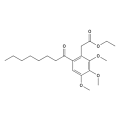
TMPA
TMPA is a novel small molecule that binds to orphan Nuclear Receptor Nur77 with high affinity (Kd = 1.45 ± 0.35 μM), and interferes with the Nur77-LKB1 interaction.
Search by product name, CAS, target or catalog number. Press Down Arrow to reach product suggestions, Tab to move between links, and Escape to close suggestions.
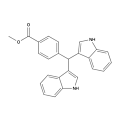
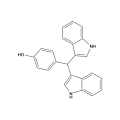
Nur77 agonists, antagonists and modulators act on Nur77, an orphan receptor of the nuclear receptor family. Its gene is named nuclear receptor subfamily 4 group A member 1 (NR4A1). Nur77 is an immediate early gene product induced by growth factors, stress and T-cell receptor signaling. Besides acting as a transcription factor, Nur77 can move to mitochondria, where it triggers cytochrome c release and apoptosis. A 2008 study identified the fungal metabolite cytosporone B as a Nur77 agonist that binds the ligand-binding domain. The listed compounds include the diindolylmethane analogs DIM-C-pPhOH and DIM-C-pPhCO2Me, which act as NR4A1 antagonists, and the ligand-binding domain antagonist TMPA.
TMPA is a novel small molecule that binds to orphan Nuclear Receptor Nur77 with high affinity (Kd = 1.45 ± 0.35 μM), and interferes with the Nur77-LKB1 interaction.
DIM-C-pPhCO2Me is a nuclear receptor 4A1 (NR4A1) antagonist. Antineoplastic activity.
DIM-C-pPhOH is a nuclear receptor 4A1 (NR4A1) antagonist.
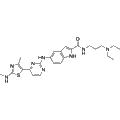
Nur77 Antagonist 1 is a selective antagonist of the Nur77 receptor, with a binding affinity of KDSPR Nur77 = 91 nM. This compound has demonstrated the ability to induce apoptosis in cancer cells, showcasing significant antitumor activity against triple-negative breast cancer (TNBC) cells. It serves as a valuable tool for research in cancer biology and therapeutic development targeting Nur77 pathways.
Out of stock
All 3 sizes