
- Cat. No.
- A12905
AR7
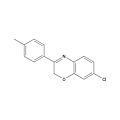
AR7 was developed as a highly potent and selective enhancer of the chaperone-mediated autophagy (CMA) through antagonizing RARα.
In stock
View Details
Search by product name, CAS, target or catalog number. Press Down Arrow to reach product suggestions, Tab to move between links, and Escape to close suggestions.
Retinoid receptor ligands act on retinoic acid receptors (RARs) and retinoid X receptors (RXRs). Both are nuclear receptors with α, β and γ subtypes that bind DNA as RAR-RXR heterodimers and regulate gene transcription. A receptor for the morphogen retinoic acid was identified in 1987 as a member of the nuclear receptor family. In 1990 a second receptor responding to retinoic acid, later named RXRα, revealed a distinct retinoid pathway. Tretinoin, the all-trans form of retinoic acid, activates RARs, while tamibarotene and AM 580 favor RARα and CD 437 favors RARγ. Adapalene, tazarotene, acitretin and fenretinide are synthetic retinoids, whereas bexarotene is a ligand selective for RXRs.
AR7 was developed as a highly potent and selective enhancer of the chaperone-mediated autophagy (CMA) through antagonizing RARα.
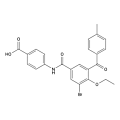
AGN 196996 is a potent and selective RARα antagonist with Ki value of 2 nM; little binding affinity for RARβ(Ki=1087 nM) and RARγ(Ki=8523 nM).
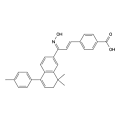
AGN 205728 is a potent and selective RARγ antagonist with Ki/IC95 values of 3 nM/ 0.6 nM; no inhibiton on RARα and RARβ.

Synonyms: D'Orenone
β-Apo-13-carotenone (D'Orenone) is a naturally occurring β-apocarotenoid functioned as an antagonist of RXRα.
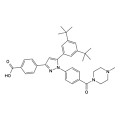
LY2955303 is a potent and selective retinoic acid receptor gamma (RARγ) antagonist with a Ki of 1.09 nM.
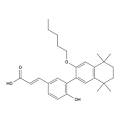
UVI 3003 is a highly selective antagonist of retinoid X receptor (RXR), and inhibits xenopus and human RXRα in Cos7 cells, with IC50s of 0.22 and 0.24 μM, respectively.
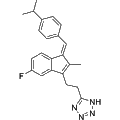
K-8012 is a potent RXRa antagonist, with an IC50 of approximately 9.2 μM for inhibiting 9-cis-retinoic acid-induced Gal4-RXRa-LBD trans-activation. This compound demonstrates enhanced anticancer activity compared to sulindac in an RXRa-dependent manner. K-8012 effectively inhibits the tRXRa-mediated PI3K/AKT signaling pathway, promoting apoptosis and suppressing AKT activation by disrupting the interaction between tRXRa and p85α. These properties make K-8012 valuable for research in cancer biology and signaling pathways.
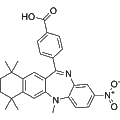
HX531 is an orally active antagonist of the retinoid X receptor (RXR), demonstrating an IC50 of 18 nM. This compound effectively upregulates the p53-p21Cip1 pathway while counteracting the anti-apoptotic effects of trans-retinoic acid (t-RA). HX531 is characterized by its potential applications in anti-obesity, anti-diabetic, and anti-melanoma research, making it a valuable tool for investigating metabolic and cancer-related pathways.
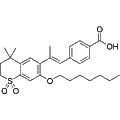
Ro 41-5253 is a selective antagonist of the retinoic acid receptor alpha (RARα). It effectively binds to RARα without promoting transcriptional activity or influencing RAR/RXR heterodimerization and DNA binding. This compound demonstrates significant inhibition of cancer cell proliferation and can induce apoptosis, highlighting its potential as an antitumor agent in cancer research applications.
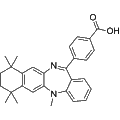
LE135 is a selective antagonist of retinoic acid receptors RARα and RARβ, exhibiting a Ki of 1.4 μM for RARα and a significantly higher affinity of 220 nM for RARβ. This compound demonstrates high specificity for these targets, with minimal interaction with RARγ and RXR isoforms. Additionally, LE135 acts as a potent activator of TRPV1 and TRPA1 receptors, with EC50 values of 2.5 μM and 20 μM, respectively, making it a valuable tool for studying pathways involving these ion channels in various biological contexts.
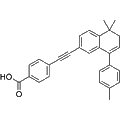
AGN 193109 is a potent retinoic acid receptor (RAR) antagonist, exhibiting binding affinities of 2 nM, 2 nM, and 3 nM for RARα, RARβ, and RARγ, respectively. This compound is utilized in research to investigate RAR signaling and its implications in various biological processes. Additionally, AGN 193109 contains an alkyne group that enables its use in click chemistry applications through copper-catalyzed azide-alkyne cycloaddition (CuAAc). Its therapeutic potential includes serving as an antidote for retinoic acidosis, alleviating skin and mucosal toxicity associated with excess retinoic acid.
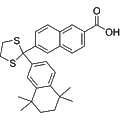
MM11253 is a potent and selective antagonist of Retinoic Acid Receptor gamma (RARγ) with an IC50 of 44 nM. It exhibits minimal activity against RARα, RARβ, and RXRα. This compound effectively inhibits the growth-promoting effects of RARγ-selective agonists, making it a valuable tool for research focused on cancer biology and metabolism involving RARγ signaling pathways.
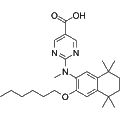
PA452 is a specific antagonist of the retinoic X receptor (RXR). It effectively inhibits the actions of retinoic acid (RA) on the differentiation of Th1 and Th2 cells. This compound is relevant for research focusing on immune response modulation and the therapeutic potential in various inflammatory and autoimmune conditions.
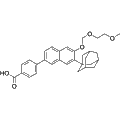
CD2665 is a selective antagonist of retinoic acid receptors RAR-β and RAR-γ, exhibiting Kd values of 306 nM and 110 nM for each receptor, respectively. This compound is beneficial for studying the modulation of retinoic acid signaling pathways implicated in various biological processes. CD2665 is suitable for applications in cancer research, developmental biology, and pharmacological studies involving retinoid signaling.
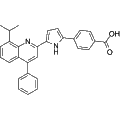
ER 50891 is a RARα antagonist that counteracts the inhibitory effects of all-trans retinoic acid (ATRA) on metabolic activity and proliferation in MC3T3-E1 preosteoblasts. This compound effectively rescues ATRA-reduced osteocalcin (OCN) expression and enhances extracellular matrix mineralization, while simultaneously suppressing alkaline phosphatase (ALP) activity. ER 50891 is applicable for research focused on osteoporosis and the mechanisms of ATRA-induced inhibition of osteoblastogenesis.
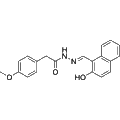
XS-060 is a potent RXRα antagonist that functions by disrupting the interaction between phosphorylated RXRα (pRXRα) and PLK1, leading to RXRα-dependent mitotic arrest. This compound specifically targets the centrosomal interaction of p-RXRα and PLK1 without interfering with RXRα heterodimerization with RARγ. XS-060 is primarily utilized in cancer research to explore mechanisms of mitotic regulation and potential therapeutic applications in oncology.
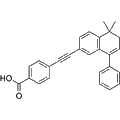
AGN 192870 is a selective RAR neutral antagonist that demonstrates binding affinities (Kd) of 147 nM for RARα, 33 nM for RARβ, and 42 nM for RARγ. It exhibits inhibitory concentrations (IC50) of 87 nM for RARα and 32 nM for RARγ while showcasing partial agonism at RARβ. Additionally, AGN 192870 features an alkyne group, facilitating its use as a click chemistry reagent through copper-catalyzed azide-alkyne cycloaddition (CuAAc) with azide-containing molecules, providing utility in various chemical biology applications.

RARα antagonist 1 is a selective antagonist of the retinoic acid receptor α (RARα), functioning at an IC50 of 4.6 nM. This compound disrupts RARα-mediated signaling, making it a valuable tool for studying the role of this receptor in various biological processes. Its applications extend to cancer research, developmental biology, and investigations of metabolic disorders, where modulation of retinoic acid signaling is crucial.
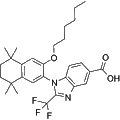
RXR Antagonist 2 is a potent antagonist of retinoid X receptors (RXR), exhibiting a Ki value of 0.391 μM and a Kd of 0.281 μM. This compound is valuable for investigating RXR-related biological processes and diseases, making it a useful tool in molecular biology and pharmacological research. Its ability to inhibit RXR activity allows for studies on its role in various signaling pathways and therapeutic interventions.
Out of stock
All 3 sizes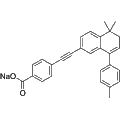
AGN 193109 sodium is a potent pan antagonist of retinoic acid receptors (RAR), specifically targeting RARα, RARβ, and RARγ with dissociation constants (Kd) of 2, 2, and 3 nM, respectively. This compound effectively reverses morphology changes induced by TTNPB and alleviates the proliferation suppression caused by all-trans retinoic acid, 9-cis RA, and 13-cis RA in ECE16-1 cells. Additionally, AGN 193109 sodium serves as an antidote for retinoic acidosis, mitigating skin and mucosal toxicity associated with retinoid treatment.
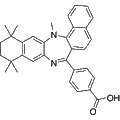
LE-540 is a selective antagonist of the retinoic acid receptor beta (RARβ), with a reported inhibition constant (Ki) of 0.22 μM. This compound demonstrates significant potential in cancer research, specifically in the study of breast cancer and lung cancer. Through its ability to modulate RARβ activity, LE-540 can provide valuable insights into retinoid signaling pathways and their implications in tumorigenesis.
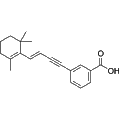
AGN 190727 is a structural isomer of AGN 190121 and serves as an antagonist of the retinoic acid receptors (RAR) and retinoid X receptors (RXR). Unlike its counterpart AGN 190121, AGN 190727 does not activate RAR/RXR pathways. This compound is relevant for research exploring RAR/RXR signaling modulation and investigating the physiological effects of receptor antagonism, particularly in studies related to dyslipidemia and metabolic disorders.
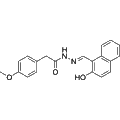
(E)-XS-060 is a selective RXRα antagonist that disrupts the interaction between pRXRα and PLK1. This compound induces RXRα-dependent mitotic arrest, thereby inhibiting cell proliferation. Its notable antitumor activity has been demonstrated in various cancer models, including breast cancer, lung adenocarcinoma, and liver cancer, making it a valuable tool for cancer research and therapeutic development.
Out of stock
All 3 sizes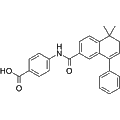
BMS-185411 is a selective antagonist of the retinoic acid receptor alpha (RARα), exhibiting an IC50 value of 140 nM. This compound is instrumental in research focusing on the modulation of retinoic acid signaling pathways, particularly in the context of cellular differentiation, development, and cancer biology. Its ability to inhibit RARα activity makes it valuable for studies investigating the role of retinoic acid receptors in various biological processes.