Histone Demethylases

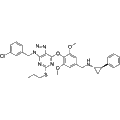
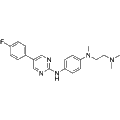
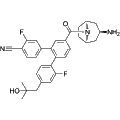
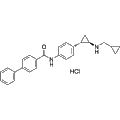
Histone demethylase inhibitors block the enzymes that remove methyl groups from lysine residues on histones. Lysine-specific demethylase 1 (LSD1) is a flavin-dependent amine oxidase that demethylates mono- and dimethylated lysine 4 of histone H3 (H3K4). The larger Jumonji C (JmjC) domain family uses iron and 2-oxoglutarate as cofactors, and some members also remove trimethyl marks. SP2509 and GSK2879552 are inhibitors of LSD1 used in chromatin and differentiation studies. GSK J1 targets two demethylases of lysine 27 on histone H3 (H3K27), Jumonji domain-containing protein 3 (JMJD3) and ubiquitously transcribed X-chromosome tetratricopeptide repeat protein (UTX). GSK-J4 is its cell-permeable ester, used for studies in intact cells. JIB-04 acts on several JmjC demethylases, and YUKA1 inhibits lysine-specific demethylase 5A (KDM5A).

Items 151-170 of 170

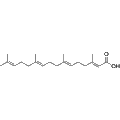
  • Geranylgeranoic acid
    Cat. No.
    A31306

    Geranylgeranoic acid

    Geranylgeranoic acid is a Lysine-specific demethylase 1 (LSD1) inhibitor, exhibiting an IC50 value of 46.97 µM. This isoprenoid compound has demonstrated significant apoptosis-inducing properties through the disruption of mitochondrial membrane potential and the activation of caspase pathways, specifically interleukin-1β-converting enzyme (ICE) and cysteine protease precursor 32 (CPP32). Geranylgeranoic acid is applicable in cancer research and is derived from S. chinensis, highlighting its potential as an anticancer agent in studies involving human hepatoma cells and mouse hepatocytes.

    Out of stock

    All 3 sizes
  • JMJD3/HDAC-IN-1
    Cat. No.
    A31809

    JMJD3/HDAC-IN-1

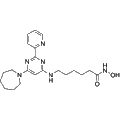
    JMJD3/HDAC-IN-1 is a dual inhibitor targeting both Jumonji domain-containing protein demethylase 3 (JMJD3) and histone deacetylases HDAC1 and HDAC6. With an IC50 value of 16 nM for HDAC1, this compound induces hypermethylation of histone H3K27 and hyperacetylation of H3K9, promoting apoptosis through cleavage of caspase-7 and PARP. JMJD3/HDAC-IN-1 demonstrates significant anti-cancer activity by inhibiting cell cloning, migration, and invasion, making it valuable in cancer research and therapeutic studies.

    25 mg
    $1,275.00
    50 mg
    $1,625.00
    All 3 sizes
  • LSD1/HDAC-IN-2
    Cat. No.
    A32131

    LSD1/HDAC-IN-2

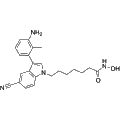
    LSD1/HDAC-IN-2 is a potent inhibitor of lysine-specific demethylase 1 (LSD1) and several histone deacetylases (HDAC1, HDAC2, HDAC3, HDAC6, and HDAC8), with IC50 values ranging from 1.0 to 39.0 nM. This compound demonstrates significant biological activity by inhibiting the proliferation of colorectal cancer cells, inducing apoptosis, and causing G2/M cell cycle arrest. Additionally, LSD1/HDAC-IN-2 reduces cell migration and displays antitumor efficacy in mouse models, making it a valuable tool for cancer research and therapeutic development.

    Out of stock

    All 3 sizes
  • LSD1-IN-25
    Cat. No.
    A32339

    LSD1-IN-25

    LSD1-IN-25 is a potent and selective inhibitor of lysine-specific demethylase 1 (LSD1), demonstrating an IC50 of 46 nM and a Ki of 30.3 nM. This compound effectively induces apoptosis in cancer cells, making it a valuable tool for investigating the role of LSD1 in cancer biology and therapeutic applications. Its oral bioavailability further supports its use in preclinical studies aimed at targeting epigenetic regulation in malignancies.

    Out of stock

    All 3 sizes
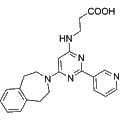
  • PROTAC KDM4 degrader-1
    Cat. No.
    A32503

    PROTAC KDM4 degrader-1

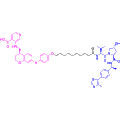
    PROTAC KDM4 Degrader-1 is a potent proteolysis targeting chimera (PROTAC) designed to selectively degrade KDM4A-C while sparing KDM4D. This compound demonstrates significant antiproliferative effects in esophageal cancer cells, inducing apoptosis and cell cycle arrest. Additionally, PROTAC KDM4 Degrader-1 effectively inhibits histone H3 lysine demethylation, making it a valuable tool for research into cancer biology and epigenetic regulation.

    Out of stock

    All 3 sizes
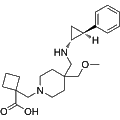
  • LSD1-IN-14
    Cat. No.
    A32507

    LSD1-IN-14

    LSD1-IN-14 is a potent and selective inhibitor of Lysine-specific demethylase 1 (LSD1), exhibiting an IC50 of 0.89 μM. This compound effectively inhibits the proliferation of A549 lung cancer cells and THP-1 monocytic cells, while also inducing apoptosis in tumor cell lines. LSD1-IN-14 is valuable for research applications focused on understanding the role of LSD1 in cancer biology and developing potential therapeutic strategies targeting epigenetic regulation.

    25 mg
    $1,275.00
    50 mg
    $1,625.00
    All 3 sizes
  • TPC-144
    Cat. No.
    A32737

    TPC-144

    TPC-144 is an inhibitor of LSD1/KDM1A, targeting the demethylation process by reducing DNMT1 protein levels, resulting in decreased methylation of LINE-1 elements. This compound has shown promising synergistic effects with Decitabine, enhancing DNA demethylation, which promotes differentiation and apoptosis in leukemia cells. Furthermore, TPC-144 has demonstrated anti-tumor activity in acute myeloid leukemia (AML) models, making it a valuable tool for AML research and therapeutic studies.

    25 mg
    $1,530.00
    50 mg
    $1,950.00
    All 3 sizes
  • KDM2B-IN-4
    Cat. No.
    A33213

    KDM2B-IN-4

    KDM2B-IN-4 is a potent inhibitor of the histone demethylase KDM2B, exhibiting an IC50 of 1.12 nM. This compound plays a crucial role in the modulation of histone methylation, making it valuable for research on hyperproliferative conditions, including various types of cancer. Its ability to inhibit KDM2B provides insights into epigenetic regulation and potential therapeutic strategies for tumorigenesis.

    5 mg
    $665.00
    10 mg
    $1,090.00
    All 5 sizes
  • JQKD82 trihydrochloride
    Cat. No.
    A33214

    JQKD82 trihydrochloride

    Synonyms: JADA82 trihydrochloride; PCK82 trihydrochloride

    JQKD82 trihydrochloride is a selective inhibitor of the lysine-specific demethylase KDM5A. By inhibiting KDM5A, JQKD82 trihydrochloride effectively increases levels of trimethylated histone H3 at lysine 4 (H3K4me3), making it a valuable tool for studying epigenetic regulation. This compound is particularly relevant for research applications focused on multiple myeloma and other cancers driven by alterations in histone methylation patterns.

    5 mg
    $255.00
    10 mg
    $430.00
    All 5 sizes
  • KDM4-IN-3
    Cat. No.
    A33215

    KDM4-IN-3

    KDM4-IN-3 is a selective inhibitor of the KDM4 family of lysine demethylases, with an IC50 of 871 nM. This compound demonstrates enhanced potency in biochemical assays and is cell-permeable, effectively inducing cytotoxicity in prostate cancer cell lines at low micromolar concentrations. KDM4-IN-3 inhibits cell growth while increasing the levels of trimethylated histone H3 at lysine 9 (H3K9me3), making it a valuable tool for research focused on prostate cancer biology and epigenetic regulation.

    2 mg
    $65.00
    5 mg
    $100.00
    All 6 sizes
  • KDM2B-IN-1
    Cat. No.
    A33218

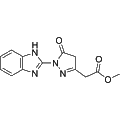
    KDM2B-IN-1

    KDM2B-IN-1 is a potent inhibitor of the histone demethylase KDM2B, exhibiting an IC50 of 0.016 nM. This compound is valuable for investigating hyperproliferative diseases, as it modulates epigenetic regulation and gene expression. Its ability to inhibit KDM2B provides essential insights into potential therapeutic strategies targeting cellular growth and transformation.

    5 mg
    $130.00
    10 mg
    $210.00
    All 5 sizes
  • Arborinine
    Cat. No.
    A33219

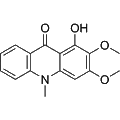
    Arborinine

    Arborinine is a potent inhibitor of lysine-specific demethylase 1 (LSD1), known for its capacity to modulate histone methylation marks, specifically increasing H3K4me1/2 and H3K9me1/2 levels while decreasing UBE2O protein expression. This compound effectively induces cell cycle arrest at the S phase and demonstrates significant antitumor activity. Arborinine serves as a valuable tool for research in cancer biology and epigenetic regulation.

    5 mg
    $80.00
    10 mg
    $125.00
    All 6 sizes
  • P3FI-63
    Cat. No.
    A33220

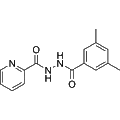
    P3FI-63

    P3FI-63 is a selective inhibitor of the lysine demethylase KDM3B, with an IC50 value of 7 μM. This compound demonstrates notable antitumor activity, making it a valuable tool for cancer research. Its specificity for KDM3B allows for the exploration of its role in histone methylation dynamics and potential therapeutic applications in oncology.

    5 mg
    $25.00
    10 mg
    $35.00
    All 5 sizes
  • GSK-J2
    Cat. No.
    A33221

    GSK-J2

    GSK-J2 is an inactive isomer of the potent H3K27me3/me2-demethylase inhibitor GSK-J1, which targets JMJD3/KDM6B and UTX/KDM6A. While GSK-J1 effectively modulates histone methylation and can influence gene expression in various biological contexts, GSK-J2 serves as a control compound in research applications requiring differentiation between active and inactive forms. The specificity of GSK-J1 for its target enzymes facilitates the investigation of histone modification pathways and their implications in epigenetic regulation.

    1 mg
    $25.00
    5 mg
    $55.00
    All 7 sizes
  • N-Benzylideneaniline
    Cat. No.
    A33222

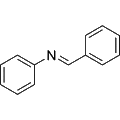
    N-Benzylideneaniline

    Synonyms: N-Benzalaniline; N-Phenylbenzylimine

    N-Benzylideneaniline is a selective inhibitor of xylinostilbene-α,β-dioxygenase (LSD), a key enzyme involved in the oxidative degradation of lignin. This compound exhibits significant biological activity in influencing lignin metabolism, making it valuable for studies on lignocellulosic biomass conversion. Its applications extend to research focusing on environmental biochemistry and the enzymatic processes governing plant biomass degradation.

    5 mg
    $20.00
    10 mg
    $25.00
    All 9 sizes
  • INCB059872
    Cat. No.
    A33223

    INCB059872

    INCB059872 is a potent and selective irreversible inhibitor of Lysine-Specific Demethylase 1 (LSD1). This compound demonstrates strong biological activity in the modulation of histone methylation, making it a valuable tool for investigating epigenetic regulation. INCB059872 is particularly relevant for research applications focused on myeloid leukemia and other hematological malignancies, providing insights into therapeutic strategies targeting LSD1-dependent pathways.

    1 mg
    $110.00
    5 mg
    $230.00
    All 4 sizes
  • LSD1-IN-49
    Cat. No.
    A57744

    LSD1-IN-49

    LSD1-IN-49 is a potent inhibitor of Lysine-specific demethylase 1 (LSD1/KDM1A), exhibiting an IC50 of 29 nM in human cells. This compound irreversibly inhibits LSD1 activity by forming a stable adduct with the flavin adenine dinucleotide (FAD) cofactor, which is essential for its enzymatic function. LSD1-IN-49 serves as a valuable lead compound for the design of LSD1-targeted PET imaging agents, facilitating research in neurobiology and epigenetic regulation.

    Out of stock

    All 3 sizes
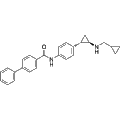
  • KDM5B-IN-4
    Cat. No.
    A57745

    KDM5B-IN-4

    KDM5B-IN-4 is a potent inhibitor of lysine demethylase 5B (KDM5B), exhibiting an IC50 of 0.025 μM. This compound effectively increases the levels of histone substrates H3K4me1, H3K4me2, and H3K4me3 in PC-3 cells by targeting KDM5B. Additionally, KDM5B-IN-4 is shown to downregulate the PI3K/AKT signaling pathway and has demonstrated the ability to reduce tumor volume in mouse models with minimal organ toxicity. Its efficacy in modulating histone methylation makes it a valuable tool for cancer research and studies of epigenetic regulation.

    5 mg
    $155.00
    10 mg
    $260.00
    All 5 sizes
  • CBN209350
    Cat. No.
    A57748

    CBN209350

    CBN209350 is a selective inhibitor of the lysine demethylase KDM4, exhibiting an IC50 of 4 μM. This compound demonstrates significant antiproliferative effects on prostate cancer cells, making it a valuable tool for investigating prostate cancer biology. CBN209350 is suitable for research applications aimed at understanding the role of KDM4 in cancer progression and therapeutic development.

    25 mg
    $1,275.00
    50 mg
    $1,625.00
    All 3 sizes
  • LSD1-IN-49 hydrochloride
    Cat. No.
    A57749

    LSD1-IN-49 hydrochloride

    LSD1-IN-49 hydrochloride is an irreversible inhibitor of LSD1/KDM1A, demonstrating an IC50 of 29 nM against human LSD1. This compound functions by forming a stable adduct with flavin adenine dinucleotide (FAD) within the binding pocket of the enzyme, effectively inhibiting its enzymatic activity. LSD1-IN-49 hydrochloride is particularly valuable for research involving neurological disorders, including schizophrenia, autism spectrum disorder, and Huntington's disease.

    Out of stock

    All 3 sizes
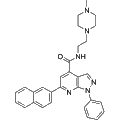
Items 151-170 of 170

Added to your cart

View Cart Checkout

    Loading...