Carbohydrates & Glycobiology

Carbohydrates for glycobiology research range from sugars and sugar alcohols to amino sugars and polysaccharides. Sugar alcohols such as D-Sorbitol and maltitol are used as osmotic agents, stabilizers and enzyme substrates. Among the sugars, lactulose is a synthetic disaccharide built from galactose and fructose. Glucosamine and its salts represent the amino sugars, which are building blocks of glycosaminoglycans and chitin. Polysaccharides include hyaluronic acid, a glycosaminoglycan of the extracellular matrix, and chitosan, the deacetylated form of chitin. Protected sugars such as D-Xylofuranose, 1,2,3,5-tetraacetate serve as starting materials for nucleoside synthesis. The category belongs to Biochemical Assay Reagents, next to Acyl-CoA & Cofactors and Chelators & Bifunctional Chelators.

Items 51-75 of 136

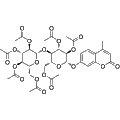
  • 4-Methylumbelliferyl-β-D-cellobiose heptaacetate
    Cat. No.
    A89717

    4-Methylumbelliferyl-β-D-cellobiose heptaacetate

    4-Methylumbelliferyl-β-D-cellobiose heptaacetate is a biochemical assay reagent that serves as a substrate for measuring the activity of β-glucosidases and related enzymes. Upon enzymatic cleavage, it releases a fluorescent product, facilitating the quantification of enzyme activity in various biological samples. This compound is utilized in enzymatic studies and is particularly valuable in carbohydrate metabolism research applications.

    Out of stock

    All 3 sizes
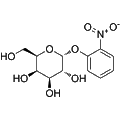
  • 2-Nitrophenyl α-D-galactopyranoside
    Cat. No.
    A89780

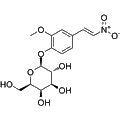
    2-Nitrophenyl α-D-galactopyranoside

    2-Nitrophenyl α-D-galactopyranoside is a substrate primarily used to evaluate the hydrolytic activity of glycosyl hydrolases. Its structure as a nitrophenyl derivative makes it suitable for various biochemical assays. This compound is essential for studying enzyme kinetics and the functionality of glycosyl hydrolases in carbohydrate metabolism and related research applications.

    Out of stock

    All 3 sizes
  • MNP-GAL
    Cat. No.
    A89792

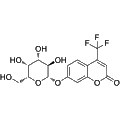
    MNP-GAL

    MNP-GAL is a substrate designed for β-Galactosidase assays. Coated with galactose, it is utilized to effectively measure the enzymatic activity of N-acetyl-β-D-glucosaminidase (NAG) and β-D-galactosidase. Its specific interaction with β-Galactosidase makes it a valuable tool in biochemical research and enzyme activity assays.

    Out of stock

    All 3 sizes
  • 4-Trifluoromethylumbelliferyl-ß-D-galactopyranoside
    Cat. No.
    A89851

    4-Trifluoromethylumbelliferyl-ß-D-galactopyranoside

    Synonyms: TFMU-Gal

    4-Trifluoromethylumbelliferyl-ß-D-galactopyranoside (TFMU-Gal) is a fluorogenic substrate primarily used in biochemical assays for the detection of ß-galactosidase activity. Upon enzymatic cleavage, TFMU-Gal releases a highly fluorescent product, making it a valuable tool in glycobiology research for studying glycosidase activity and carbohydrate metabolism. This compound is essential for understanding the role of glycosides in various biological processes.

    Out of stock

    All 3 sizes
  • 5-Bromo-4-chloro-3-indolyl β-L-fucopyranoside
    Cat. No.
    A89901

    5-Bromo-4-chloro-3-indolyl β-L-fucopyranoside

    5-Bromo-4-chloro-3-indolyl β-L-fucopyranoside is a fucose derivative that serves as a substrate for biochemical assays in glycobiology research. This compound facilitates the study of fucosylation processes and enzyme activity, contributing to a better understanding of glycan structures and their biological significance. It is valuable for applications requiring the analysis of glycan interactions and modifications.

    Out of stock

    All 3 sizes
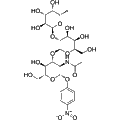
  • Fuc1-α-2Gal1-β-3GlcNAc-β-PNP
    Cat. No.
    A89918

    Fuc1-α-2Gal1-β-3GlcNAc-β-PNP

    Fuc1-α-2Gal1-β-3GlcNAc-β-PNP is a biochemical reagent that serves as a substrate for glycosidases in glycobiology research. It plays a crucial role in studying the enzymatic mechanisms of glycan synthesis and degradation, as well as protein-glycan interactions. This compound is essential for investigating the roles of glycans in biological systems and has applications in basic research, biomedicine, and biotechnology.

    1 mg
    $300.00
    5 mg
    $1,010.00
    All 3 sizes
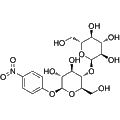
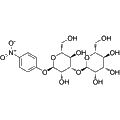
  • 4-Nitrophenyl β-D-maltoside
    Cat. No.
    A90071

    4-Nitrophenyl β-D-maltoside

    4-Nitrophenyl β-D-maltoside is a substrate for β-maltosidase, facilitating the study of enzymatic activity in biochemical assays. This compound plays a critical role in glycobiology research by allowing for the detection and quantification of β-maltosidase activity. Its use is instrumental in elucidating the mechanisms of carbohydrate metabolism and enzymatic function.

    5 mg
    $35.00
    10 mg
    $50.00
    All 5 sizes
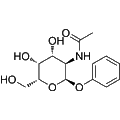
  • Phenyl N-acetyl-α-D-galactosaminide
    Cat. No.
    A90085

    Phenyl N-acetyl-α-D-galactosaminide

    Phenyl N-acetyl-α-D-galactosaminide is a biochemical assay reagent that serves as a substrate for the identification and characterization of galactosaminidase enzymes. This compound plays a significant role in glycobiology and can be utilized in various assays to evaluate enzyme activity and study carbohydrate metabolism. Its application in life sciences research facilitates the exploration of glycan structures and their biological implications.

    Out of stock

    All 3 sizes
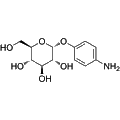
  • p-Aminophenyl α-D-glucopyranoside
    Cat. No.
    A90195

    p-Aminophenyl α-D-glucopyranoside

    p-Aminophenyl α-D-glucopyranoside serves as a substrate in glycobiology research targeting glycosidases and glycosyltransferases. This compound is utilized in biochemical assays to study carbohydrate enzymatic activity and to investigate the dynamics of glycan interactions. Its ability to release p-aminophenol upon enzymatic cleavage makes it an important tool for measuring enzyme kinetics and evaluating the effects of chemical inhibitors.

    10 mg
    $110.00
    25 mg
    $145.00
    All 4 sizes
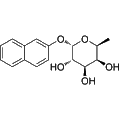
  • 2-Naphthalenyl 6-deoxy-α-L-galactopyranoside
    Cat. No.
    A90253

    2-Naphthalenyl 6-deoxy-α-L-galactopyranoside

    2-Naphthalenyl 6-deoxy-α-L-galactopyranoside is a biochemical assay reagent that serves as a glycosylation substrate. This compound is valuable in glycobiology research for studying glycan interactions and the role of carbohydrates in cellular processes. Its unique structure enables the investigation of glycan-mediated biological functions, making it a useful tool for researchers in the field.

    Out of stock

    All 3 sizes
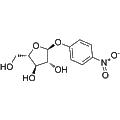
  • 4-Nitrophenyl α-L-arabinofuranoside
    Cat. No.
    A90264

    4-Nitrophenyl α-L-arabinofuranoside

    4-Nitrophenyl α-L-arabinofuranoside is a biochemical assay reagent that serves as a substrate for the enzymatic detection of arabinofuranosidases. This compound efficiently releases 4-nitrophenol upon hydrolysis, enabling the quantification of enzymatic activity in various biological samples. It is widely utilized in biochemical research and enzymology to study carbohydrate-active enzymes and their substrates.

    5 mg
    $100.00
    10 mg
    $185.00
    All 2 sizes
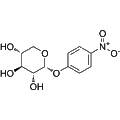
  • p-Nitrophenyl α-D-xylopyranoside
    Cat. No.
    A90294

    p-Nitrophenyl α-D-xylopyranoside

    Synonyms: p-Nitrophenyl alpha-D-xylopyranoside

    p-Nitrophenyl α-D-xylopyranoside serves as a chromogenic substrate for the enzyme α-xylosidase. Upon enzymatic cleavage, it releases p-nitrophenol, which can be quantitatively measured, providing a valuable tool for studying α-xylosidase activity. This reagent is widely used in enzyme assays and various research applications involving carbohydrate metabolism and glycoprotein synthesis.

    25 mg
    $145.00
    50 mg
    $215.00
    All 5 sizes
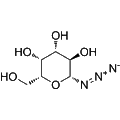
  • 1-Azido-1-deoxy-β-D-galactopyranoside, 97%
    Cat. No.
    A90314

    1-Azido-1-deoxy-β-D-galactopyranoside, 97%

    Synonyms: 1-Azido-1-deoxy-beta-D-galactopyranoside; 97%

    1-Azido-1-deoxy-β-D-galactopyranoside is a sugar analog that serves as a substrate in glycosylation studies and enzyme mechanism investigations. This compound is crucial for dissecting the roles of glycosylation in biological systems and can facilitate the profiling of glycosyltransferases. Its azido group enables further bioconjugation applications, enhancing its utility in chemical biology and glycobiology research.

    10 mg
    $25.00
    25 mg
    $50.00
    All 4 sizes
  • D-Glucose-6-phosphate dipotassium hydrate
    Cat. No.
    A90342

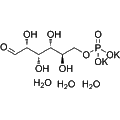
    D-Glucose-6-phosphate dipotassium hydrate

    D-Glucose-6-phosphate dipotassium hydrate is a biochemical assay reagent that serves as a vital substrate in glycobiology research. This compound plays a key role in the study of carbohydrate metabolism, glycan synthesis, and enzymatic pathways involved in glycan formation and degradation. It supports applications in various fields, including basic research, biomedicine, and biotechnology, facilitating investigations into protein-glycan interactions and the biological significance of glycans.

    100 mg
    $130.00
    250 mg
    $215.00
    All 3 sizes
  • 4-Nitrophenyl β-D-thiomannopyranoside
    Cat. No.
    A90372

    4-Nitrophenyl β-D-thiomannopyranoside

    4-Nitrophenyl β-D-thiomannopyranoside is a biochemical reagent known for its role as a substrate in glycosyltransferase assays. It serves as a reliable tool for studying carbohydrate metabolism and enzyme kinetics. This compound is particularly useful in the exploration of glycosidic bond formation and chemical glycosylation reactions in various research applications.

    Out of stock

    All 3 sizes
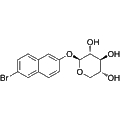
  • 6-Bromo-2-naphthyl β-D-xylopyranoside
    Cat. No.
    A90383

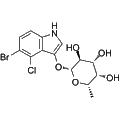
    6-Bromo-2-naphthyl β-D-xylopyranoside

    6-Bromo-2-naphthyl β-D-xylopyranoside is a biochemical assay reagent that serves as a substrate for the enzyme β-glycosidase. Its hydrolysis generates a fluorescent signal, facilitating the measurement of β-glycosidase activity in various biological samples. This compound is valuable in enzymatic assays and research applications focused on glycosidase characterization.

    Out of stock

    All 3 sizes
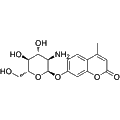
  • 4-Methylumbelliferyl 2-Amino-2-deoxy-α-D-glucopyranoside
    Cat. No.
    A90441

    4-Methylumbelliferyl 2-Amino-2-deoxy-α-D-glucopyranoside

    4-Methylumbelliferyl 2-Amino-2-deoxy-α-D-glucopyranoside serves as a sensitive substrate for enzymes that hydrolyze glycosidic bonds, specifically targeting glucosidases. Upon enzymatic cleavage, it releases a highly fluorescent compound, enabling quantification of enzymatic activity in various biological samples. This reagent is widely utilized in biochemical assays to study carbohydrate metabolism and enzyme kinetics.

    5 mg
    $225.00
    25 mg
    $440.00
    All 3 sizes
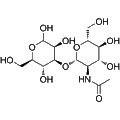
  • 3-O-[2-Acetamido-2-deoxy-β-D-glucopyranosyl]-D-mannopyranose
    Cat. No.
    A90468

    3-O-[2-Acetamido-2-deoxy-β-D-glucopyranosyl]-D-mannopyranose

    3-O-[2-Acetamido-2-deoxy-β-D-glucopyranosyl]-D-mannopyranose is a biochemical assay reagent that serves as a substrate for glycosyltransferase assays. This compound is utilized in studies exploring glycan biosynthesis and carbohydrate-mediated interactions in biological systems. Its role in assays can enhance the understanding of glycoprotein functions and the enzymatic mechanisms involved in carbohydrate metabolism.

    5 mg
    $305.00
    10 mg
    $505.00
    All 3 sizes
  • p-Nitrophenyl 3-O-α-D-mannopyranosyl-α-D-mannopyranoside
    Cat. No.
    A90485

    p-Nitrophenyl 3-O-α-D-mannopyranosyl-α-D-mannopyranoside

    p-Nitrophenyl 3-O-α-D-mannopyranosyl-α-D-mannopyranoside is a biochemical assay reagent that serves as a substrate for glycosidases. It exhibits substrate specificity, enabling the detection and quantification of enzyme activity related to glycosidic bond hydrolysis. This compound is widely utilized in research applications focused on carbohydrate metabolism and enzyme kinetics, providing valuable insights into enzymatic processes.

    1 mg
    $285.00
    5 mg
    $725.00
    All 3 sizes
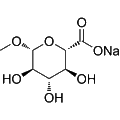
  • Methyl β-D-glucuronide sodium
    Cat. No.
    A90552

    Methyl β-D-glucuronide sodium

    Methyl β-D-glucuronide sodium is a biochemical assay reagent that serves as a substrate for glucuronidation processes. It plays a key role in enzymatic assays, particularly in studies involving uridine diphosphate glucuronosyltransferases (UGTs). This compound is valuable for investigating drug metabolism and the pharmacokinetics of glucuronide conjugates in various biological systems. Researchers utilize methyl β-D-glucuronide sodium for applications in toxicology, pharmacology, and metabolic pathway studies.

    Out of stock

    All 3 sizes
  • Mono-6-O-(p-toluenesulfonyl)-α-cyclodextrin
    Cat. No.
    A90567

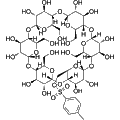
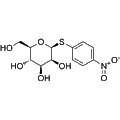
    Mono-6-O-(p-toluenesulfonyl)-α-cyclodextrin

    Synonyms: Mono-6-O-(p-toluenesulfonyl)-alpha-cyclodextrin

    Mono-6-O-(p-toluenesulfonyl)-α-cyclodextrin is a biochemical assay reagent known for its ability to form inclusion complexes with various substrates. This compound facilitates the study of interactions between small molecules and biological macromolecules. Its applications include enhancing the solubility of hydrophobic compounds and improving the sensitivity of analytical techniques in life science research.

    Out of stock

    All 3 sizes
  • 4-Nitrophenyl β-L-fucopyranoside
    Cat. No.
    A90683

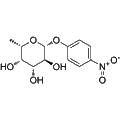
    4-Nitrophenyl β-L-fucopyranoside

    4-Nitrophenyl β-L-fucopyranoside is a biochemical reagent that serves as a substrate for fucosidases. It is hydrolyzed by these enzymes, producing a chromogenic product that can be quantitatively measured. This compound is commonly used in enzymatic assays to study fucosylation processes and to investigate the activity of fucosidases in various biological contexts.

    Out of stock

    All 3 sizes
  • 5-Bromo-4-chloro-1H-indol-3-yl β-D-xylopyranoside
    Cat. No.
    A90735

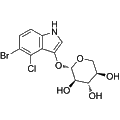
    5-Bromo-4-chloro-1H-indol-3-yl β-D-xylopyranoside

    5-Bromo-4-chloro-1H-indol-3-yl β-D-xylopyranoside is a biochemical assay reagent that serves as a substrate for glycosyltransferases. This compound is instrumental in glycobiology research, facilitating the study of glycoprotein synthesis and metabolic pathways. Its structural features make it a valuable tool for exploring carbohydrate-binding interactions and enzyme specificity in various biological systems.

    Out of stock

    All 3 sizes
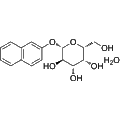
  • 2-Naphthyl-β-D-galactopyranoside hydrate
    Cat. No.
    A90775

    2-Naphthyl-β-D-galactopyranoside hydrate

    2-Naphthyl-β-D-galactopyranoside hydrate is a biochemical reagent targeting enzymatic glycosylation pathways, specifically as a substrate for β-galactosidase. This compound facilitates the study of glycan structure and function, making it valuable in glycobiology research. It is used to investigate the roles of carbohydrates in biological processes, including protein-glycan interactions, glycan synthesis, and degradation. Researchers employ this reagent in various applications, from fundamental studies to biotechnological advancements in glycosylation-related fields.

    Out of stock

    All 3 sizes
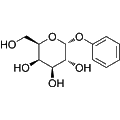
  • Phenyl α-D-galactopyranoside
    Cat. No.
    A90786

    Phenyl α-D-galactopyranoside

    Phenyl α-D-galactopyranoside is a biochemical assay reagent that serves as a substrate for galactosidases. This compound exhibits specific biological activity, facilitating the study of enzymatic activity in various biochemical assays. It is commonly used in research applications focused on carbohydrate metabolism and enzyme kinetics.

    Out of stock

    All 3 sizes
Items 51-75 of 136

Added to your cart

View Cart Checkout

    Loading...