BTK

Bruton's tyrosine kinase (BTK) inhibitors act on a cytoplasmic kinase that relays signals from the B cell receptor. In 1993 two groups linked defects in the BTK gene to X-linked agammaglobulinemia, in which mature B cells fail to develop. BTK belongs to the Tec kinase family and is also expressed in myeloid cells such as macrophages and mast cells. Ibrutinib, first described as PCI-32765, binds covalently to a cysteine in the BTK active site and blocks B cell activation. Spebrutinib, listed as AVL-292 and as spebrutinib besylate, is another covalent inhibitor, while CGI1746 and RN486 bind reversibly. Ibrutinib-biotin and the fluorescent analog PCI-33380 serve as probes for BTK active-site occupancy.

1 Item

  • Catadegbrutinib
    Cat. No.
    A34385

    Catadegbrutinib

    Synonyms: BGB-16673; BTK-IN-29

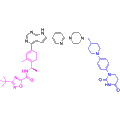
    Catadegbrutinib is a selective chimeric degradation activator compound targeting Bruton's tyrosine kinase (BTK), with an IC50 of 0.69 nM. By facilitating the recruitment of BTK to E3 ubiquitin ligase, Catadegbrutinib promotes polyubiquitination and subsequent proteasomal degradation of BTK, effectively reducing its activity. This compound is valuable for investigating B-cell malignancies, including chronic lymphocytic leukemia, small lymphocytic lymphoma, and mantle cell lymphoma.

    1 mg
    $50.00
    5 mg
    $130.00
    All 6 sizes

1 Item

Added to your cart

View Cart Checkout

    Loading...