Inducible Expression & Protein Degradation Tags

Inducible expression and protein degradation systems switch a gene or a protein on or off with a small molecule. In tetracycline-controlled (Tet-On) systems, doxycycline activates transcription of the target gene. 4-Hydroxytamoxifen activates Cre recombinase fused to a modified estrogen receptor (CreER), and isopropyl β-D-1-thiogalactopyranoside (IPTG) induces lac-controlled genes in bacteria. Chemical inducers of dimerization such as AP20187 and abscisic acid bring fusion proteins together on demand. Degron systems remove tagged proteins within hours, with dTAG-13 for FKBP12 F36V fusions and 5-Ph-IAA for the auxin-inducible degron 2 (AID2) system. Shield-1 offers a further switch, as it stabilizes proteins fused to a destabilizing domain.

Items 26-33 of 33

  • Doxycycline calcium
    Cat. No.
    A46581

    Doxycycline calcium

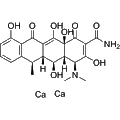
    Doxycycline calcium is a broad-spectrum antibiotic that serves as a metalloproteinase (MMP) inhibitor. This compound demonstrates antibacterial properties and inhibits cancer cell proliferation, making it valuable in cancer research. Additionally, doxycycline calcium can be utilized in constructing gene expression regulation models, providing insights into gene modulation and environmental response mechanisms.

    Out of stock

    All 3 sizes
  • 9-tert-Butyldoxycycline
    Cat. No.
    A48825

    9-tert-Butyldoxycycline

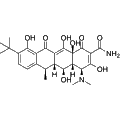
    9-tert-Butyldoxycycline acts as a Tet-On ligand, facilitating the control of gene expression in various biological models. It demonstrates immunomodulatory properties by influencing the polarization of polymorphonuclear neutrophils and mitigating inflammatory responses in ischemia-reperfusion injury scenarios. This compound is valuable for research applications involving gene regulation and the study of inflammatory processes.

    Out of stock

    All 3 sizes
  • (±)-Abscisic acid
    Cat. No.
    A65989

    (±)-Abscisic acid ((±)-ABA)

    Synonyms: (±)-ABA

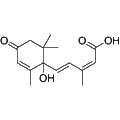
    (±)-Abscisic acid is a phytohormone primarily involved in plant stress responses and growth regulation. It plays a critical role in various biological processes, including the regulation of seed dormancy and the response to environmental stressors. In mammals, (±)-Abscisic acid has been shown to influence glycemia and may have potential implications in metabolic research. Its diverse applications make it valuable for studies in both plant biology and mammalian physiology.

    5 mg
    $20.00
    10 mg
    $25.00
    All 5 sizes
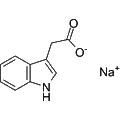
  • 3-Indoleacetic acid sodium
    Cat. No.
    A71185

    3-Indoleacetic acid sodium

    Synonyms: Indole-3-acetic acid sodium; 3-IAA sodium

    3-Indoleacetic acid sodium is a potent plant growth regulator that primarily targets auxin pathways to enhance plant development. It promotes various physiological processes including cell expansion, differentiation, morphogenesis, and organogenesis, facilitating improved nutritional growth in plants. This compound is widely used in agricultural research to study the effects of auxin on plant biology and development.

    100 mg
    $20.00
    500 mg
    $35.00
    All 3 sizes
  • IPTG
    Cat. No.
    A86381

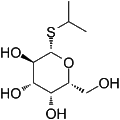
    IPTG

    Synonyms: Isopropyl β-D-thiogalactoside

    IPTG (Isopropyl β-D-1-thiogalactopyranoside) acts as a molecular mimic of allolactose and serves as an inducer of the lac operon. This compound effectively triggers transcription in systems where gene expression is regulated by the lac operator, enabling controlled protein expression in biological research. IPTG is widely utilized in molecular biology and recombinant protein studies to regulate the activity of target genes within prokaryotic expression systems.

    500 mg
    $35.00
    1 g
    $40.00
    All 5 sizes
  • HaXS8
    Cat. No.
    A86646

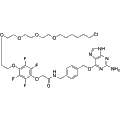
    HaXS8

    HaXS8 is a chemical dimerizer that facilitates covalent and irreversible intracellular dimerization of proteins tagged with HaloTag and SNAP-tag. This compound effectively promotes the interaction of these tag-specific proteins without disrupting PI3K/mTOR signaling pathways, making it valuable for studies involving protein interactions and cellular localization. Research applications include investigating protein functionality, signal transduction, and the development of synthetic biology tools.

    1 mg
    $210.00
    2 mg
    $320.00
    All 4 sizes
  • IPTG hemidioxane
    Cat. No.
    A91745

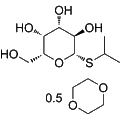
    IPTG hemidioxane

    Synonyms: β-D-1-thiogalactopyranoside hemidioxane

    IPTG hemidioxane, also known as β-D-1-thiogalactopyranoside hemidioxane, serves as a potent biochemical reagent primarily utilized as an inducer of the lac operon in molecular biology research. It effectively promotes the expression of proteins in bacterial systems, enhancing the study of gene function and protein production. This reagent is essential for assays requiring controlled gene expression and is widely used in recombinant protein technology.

    Out of stock

    All 3 sizes
  • GA3-AM
    Cat. No.
    B18068

    GA3-AM

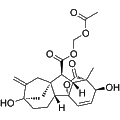
    GA3-AM is a cell-permeable analog of the plant hormone gibberellic acid, functioning as a chemical dimerizer or inducer of dimerization. This compound is valuable for studying gibberellic acid signaling pathways and investigating plant growth and developmental processes. Its ability to facilitate protein-protein interactions makes it a useful tool in biochemical and cellular research.

    1 mg
    $30.00
    5 mg
    $100.00
    All 6 sizes

Items 26-33 of 33

Added to your cart

View Cart Checkout

    Loading...