- Cat. No.
- A10457
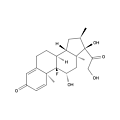
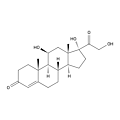
Hydrocortisone(Cortisol)
Hydrocortisone is a steroid hormone or glucocorticoid produced by the adrenal gland.
Search by product name, CAS, target or catalog number. Press Down Arrow to reach product suggestions, Tab to move between links, and Escape to close suggestions.
Cell culture and assay reagents support cell growth in vitro and the measurement of viability and proliferation. Serum-free media often add hormones such as insulin, hydrocortisone and liothyronine, the active thyroid hormone, together with L-glutamine as a nutrient. Enzymes such as trypsin and hyaluronidase help dissociate adherent cells and tissue fragments. Tetrazolium salts such as MTT and WST-8 report metabolic activity through the formation of a colored formazan. 5-Ethynyl-2'-deoxyuridine (EdU) and 5-bromo-2'-deoxyuridine (BrdU) label newly synthesized DNA in dividing cells. Calcein-AM and propidium iodide distinguish live from dead cells by esterase activity and membrane integrity.
Hydrocortisone is a steroid hormone or glucocorticoid produced by the adrenal gland.
Synonyms: Decadron
Dexamethasone is a potent synthetic member of the glucocorticoid class of steroid drugs. It acts as an anti-inflammatory and immunosuppressant. Its potency is about 20-30 times that of the naturally occurring hormone hydrocortisone and 4-5 times of prednisone.
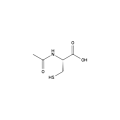
Synonyms: N-acetylcysteine; N-acetyl-L-cysteine; NAC; Acetadote
Acetylcysteine is a pharmaceutical drug and nutritional supplement used primarily as a mucolytic agent and in the management of paracetamol (acetaminophen) overdose. Oral acetylcysteine is also used for the prevention of radiocontrast-induced nephropathy (a form of acute renal failure).
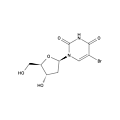
5-BrdU is a synthetic thymidine analog; incorporated into DNA during replication. Used in assays for cell proliferation.
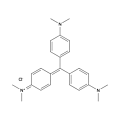
Synonyms: Gentian violet; Methyl Violet 10B; hexamethyl pararosaniline chloride; pyoctanin(e)
Crystal violet is a triarylmethane dye. The dye is used as a histological stain and in Gram’s method of classifying bacteria.
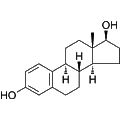
Synonyms: β-Estradiol; E2; 17β-Estradiol; 17β-Oestradiol
Estradiol (β-Estradiol) is a steroid hormone and the major female sex hormone. Estradiol can up-regulate the expression of neural markers of human endometrial stem cells (hEnSCs) and promote their neural differentiation. Estradiol can be used for the research of cancers, neurodegenerative diseases and neural tissue engineering.
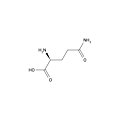
L-Glutamine is one of the 20 amino acids encoded by the standard genetic code.
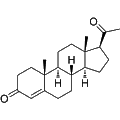
Synonyms: Pregn-4-ene-3,20-dione
Progesterone is a steroid hormone that acts as an endogenous metabolite, playing a vital role in regulating the menstrual cycle and maintaining pregnancy. It is involved in various biological processes, including the modulation of reproductive functions and the preparation of the uterine lining for implantation. Progesterone is widely utilized in reproductive health research, hormone therapy studies, and the investigation of various endocrine disorders.
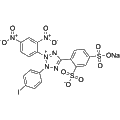
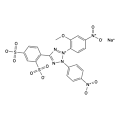
WST-3 is a water-soluble tetrazolium dye that serves as a fluorescent probe for cellular activity. Upon reduction by NADH in the presence of an electron mediator, WST-3 is converted to WST-3 formazan, which exhibits a maximum absorption at 433 nm. This dye is widely utilized in cell viability assays and metabolic activity studies, making it a valuable tool for various biological and pharmaceutical research applications.
WST-8 is a next generation tetrazolium reagent that serves as a sensitive chromogenic indicator for NADH.
Synonyms: Carboxyfluorescein succinimidyl ester; CFDA-SE
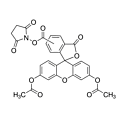
CFSE is a fluorescent cell staining dye. CFSE is cell permeable and covalently couples, via its succinimidyl group, to intracellular molecules, notably, to intracellular lysine residues and other amine sources.
Synonyms: EGP-437; Dex-Phos
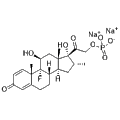
Dexamethasone Phosphate disodium is a is a water-soluble form of the synthetic glucocorticoid dexamethasone.
Synonyms: Triiodothyronine; 3,3',5-Triiodo-L-thyronine; T3
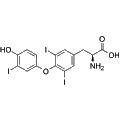
Liothyronine is an active form of thyroid hormone that primarily targets thyroid hormone receptors TRα and TRβ. It exhibits binding affinities of 2.33 nM and 2.29 nM for human TRα and TRβ, respectively. In addition, Liothyronine binds to PVR and effectively inhibits the interaction between TIGIT and PVR. This compound is useful in research applications related to thyroid hormone signaling and immune modulation studies.
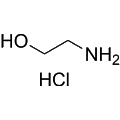
Synonyms: 2-Aminoethanol hydrochloride
Ethanolamine hydrochloride is a biochemical assay reagent that serves as an important compound in various research applications. This colorless solid is highly soluble in water and functions primarily as a buffer, aiding in the adjustment of pH in biochemical processes. It is widely utilized in the synthesis of pharmaceuticals and agrochemicals, as well as in the production of surfactants and detergents. Additionally, Ethanolamine hydrochloride plays a role in gas purification and corrosion inhibition due to its reactivity with acid gases, making it a versatile tool in the life sciences and industrial sectors.
Synonyms: Hyaluronate 4-glycanohydrolase; Hyaluronoglucosaminidase
Hyaluronidase (Hyaluronate 4-glycanohydrolase; Hyaluronoglucosaminidase) is a naturally occurring enzyme that depolymerizes hyaluronic acid by cleavage of glycosidic bonds and has been used as a local anesthetic additive.
Insulin (human) is a polypeptide hormone that regulates the level of glucose.
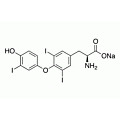
Liothyronine sodium is a thyroid hormone (T3) analog. It promotes adipogenic differentiation of MSCs.
Synonyms: Insulin from bovine pancreas
Insulin cattle (Insulin from bovine pancreas) is a two-chain polypeptide hormone produced in vivo in the pancreatic β cells. Insulin cattle has often been used as growth supplement in culturing cells.
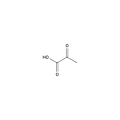
Synonyms: Acetylformic acid
Pyruvic acid (Acetylformic acid) is an important organic chemical intermediate that plays a role in cardiomyocyte pathophysiology and therapy.
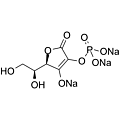
Synonyms: L-Ascorbic acid 2-phosphate trisodium
2-Phospho-L-ascorbic acid trisodium acts as an antioxidant and a stimulator of hepatocyte growth factor (HGF) production.
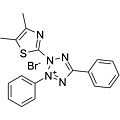
Synonyms: MTT; Thiazolyl Blue Tetrazolium bromide; Methylthiazolyldiphenyl-tetrazolium bromide
Thiazolyl Blue (MTT) is a colorimetric agent widely used to measure cell proliferation. Thiazolyl Blue (MTT) is reduced from yellow color to purple formazan in living cells.
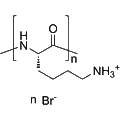
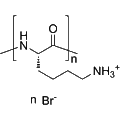
Poly-L-lysine (hydrobromide) (MW 70000-150000), a positively charged amino acid polymer, is a nonspecific attachment factor for cells. Poly-L-lysine (hydrobromide) (MW 70000-150000) has good biocompatibility. Poly-L-lysine (hydrobromide) (MW 70000-150000) is used to increase cell adhesion to solid substrates by enhancing electrostatic interaction between negatively charged ions of the cell membrane and the culture surface.
Poly-L-lysine hydrobromide (MW 150000-300000), a positively charged amino acid polymer, is a nonspecific attachment factor for cells. Poly-L-lysine hydrobromide (MW 150000-300000) has good biocompatibility. Poly-L-lysine hydrobromide (MW 150000-300000) is used to increase cell adhesion to solid substrates by enhancing electrostatic interaction between negatively charged ions of the cell membrane and the culture surface.
Synonyms: DNase
DNase I (EC 3.1.21.1) is an endonuclease enzyme that degrades DNA by cleaving phosphodiester bonds, playing a vital role in the clearance of extracellular DNA. This activity is essential for limiting inflammation and maintaining immune homeostasis. Exogenous DNase I has demonstrated therapeutic benefits in inflammatory diseases and cancer by reducing DNA-mediated immune activation and promoting resolution of inflammation.
Synonyms: Calcein acetoxymethyl ester
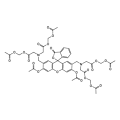
Calcein AM is a cell-permeable, non-fluorescent dye that readily enters live cells. Once inside, it is hydrolyzed by intracellular esterases to generate Calcein, a polar and highly negatively charged molecule that is retained within the cytoplasm. Calcein emits strong green fluorescence (Ex/Em: 494/515 nm) and is commonly used in combination with Propidium Iodide for assessing cell viability and cytotoxicity.