
- Cat. No.
- A11901
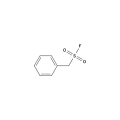
PMSF
Synonyms: Benzylsulfonyl fluoride
PMSF is an irreversible serine/cysteine protease inhibitor.
Search by product name, CAS, target or catalog number. Press Down Arrow to reach product suggestions, Tab to move between links, and Escape to close suggestions.
Buffers, detergents and protease inhibitors are basic reagents for preparing, lysing and stabilizing biological samples. Zwitterionic Good's buffers such as HEPES, MOPS, PIPES and MES hold pH steady in the physiological range, while Tris serves electrophoresis and general use. Detergents such as CHAPS, polysorbate 20 and sodium dodecyl sulfate (SDS) solubilize membranes and proteins. Dithiothreitol (DTT) keeps thiol groups reduced, and ethylenediaminetetraacetic acid (EDTA) chelates divalent metal ions. Protease inhibitors such as leupeptin, aprotinin, pepstatin A and E-64, with the phosphatase inhibitor sodium orthovanadate, protect proteins in cell lysates.
Synonyms: Benzylsulfonyl fluoride
PMSF is an irreversible serine/cysteine protease inhibitor.
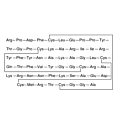
Synonyms: BPTI ,Bovine Pancreatic Trypsin Inhibitor
Aprotinin is a small protein serine protease inhibitor, used to reduce perioperative blood loss and transfusion.
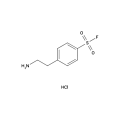
AEBSF HCl is a broad spectrum, irreversible serine protease inhibitor.
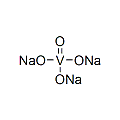
Sodium orthovanadate is the chemical compound Na3VO4. It is an inhibitor of protein tyrosine phosphatases, alkaline phosphatases and a number of ATPases, most likely acting as a phosphate analogue.
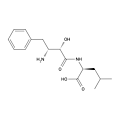
Synonyms: NK 421; Bestatin; NSC 265489
Ubenimex, also known as NK 421 and Bestatin, is a CD13 inhibitor. Ubenimex attenuates acquired sorafenib resistance in renal cell carcinoma by inhibiting Akt signaling in a lipophagy associated mechanism. Ubenimex synergistically enhances the effects of anticancer drugs in hepatocellular carcinoma. Ubenimex inhibits cell proliferation, migration and invasion by inhibiting the expression of APN and inducing autophagic cell death in prostate cancer cells.
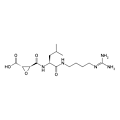
E-64 is an irreversible and selective cysteine protease inhibitor with IC50 of 9 nM for papain.
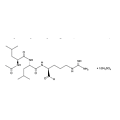
Leupeptin hemisulfate is a reversible inhibitor of trypsin-like and cysteine proteases such as calpain.
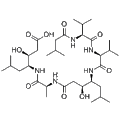
Synonyms: Pepstation-A
Pepstatin A is a potent aspartic protease inhibitor, and also inhibits HIV replication.
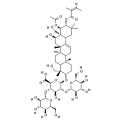
Synonyms: Saponin
Saponins are a class of chemical compounds of glycosides found in particular abundance in various plant species. In plants, saponins may serve as anti-feedants, and to protect the plant against microbes and fungi.
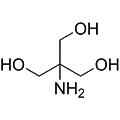
Synonyms: Tris; Tris(hydroxymethyl)aminomethane
THAM (Tris) is an amino alcohol that functions as a buffering agent, effectively stabilizing pH levels in both in vitro and in vivo environments. Its low toxicity and biologically inert nature make it suitable for various biological applications, particularly in maintaining physiological pH ranges. THAM is widely utilized in research settings for studying carbon dioxide dynamics and acid-base balance in biochemical assays.
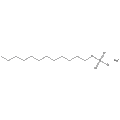
Synonyms: NSC 402488; Sodium dodecylsulfate; Anticerumen; Natrium laurylsulfuricum; EPA Pesticide Chemical Code 079011
Sodium lauryl sulfate is an anionic surfactant, usually a mixture of sodium alkyl sulfates, mainly the lauryl; lowers surface tension of aqueous solutions; used as fat emulsifier, wetting agent, detergent in cosmetics, pharmaceuticals and toothpastes; also as research tool in protein biochemistry.
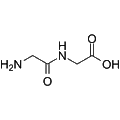
Synonyms: Gly-Gly; H-Gly-Gly-OH
Glycylglycine, an iNOS inhibitor, is a dipeptide that serves as a non-selective glycylglycine dipeptidase substrate. It effectively crosses cell membranes through passive diffusion and is subsequently hydrolyzed to glycine, which participates in energy metabolism and antioxidant defense. This compound promotes the proliferation of spermatogonial stem cells (SSCs), mitigates astrocyte overactivation, and reduces nitric oxide (NO) release while enhancing the expression of neurotrophic factors such as PDGFA, FGF2, and CNTF, thereby supporting nerve myelin repair. Glycylglycine is valuable in research on male reproductive biology and neurodegenerative diseases, including the investigation of neuroprotective mechanisms in conditions like multiple sclerosis.
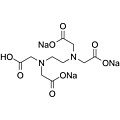
Synonyms: EDTA trisodium salt; Trisodium EDTA
Ethylenediaminetetraacetic acid trisodium salt (EDTA trisodium salt) is used to bind metal ions in the practice of chelation therapy, for treating mercury and lead poisoning, used in a similar manner to remove excess iron from the body, for treating the complication of repeated blood transfusions, as would be applied to treat thalassaemia.
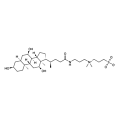
CHAPS is a zwitterionic nondenaturing detergent for solubilizing membrane proteins.
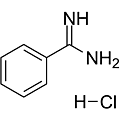
Benzamidine hydrochloride is an reversible competitive inhibitor of trypsin-like serine proteases, with Kis of 97 µM, 21 µM, 20 µM and 110 µM for uPA, trypsin, tryptase and factor Xa, respectively.
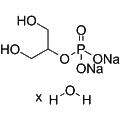
β-Glycerophosphate disodium salt pentahydrate is a bioactive endogenous metabolite and a widely used phosphatase inhibitor. It plays a critical role in promoting and sustaining osteoblast differentiation, supporting mineral metabolism, and modulating cellular signal transduction pathways. In tissue engineering and drug delivery, it is commonly utilized as a component in the formation of heat-sensitive hydrogels due to its thermoresponsive properties. Additionally, β-glycerophosphate disodium salt accelerates calcification in vascular smooth muscle cells, making it a valuable tool for studying vascular calcification and related pathologies.
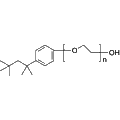
Polyethylene glycol mono(4-tert-octylphenyl) ether is a nonionic surfactant that effectively solubilizes lipid membranes, facilitating various laboratory applications. It serves as a crucial excipient in the formulation of vaccines, including split virus influenza vaccines, and is integral during different stages of vaccine manufacturing. In addition to its role in vaccine development, this compound has demonstrated the ability to induce apoptosis in prostate and colon cancer cell lines and to diminish the infectivity of enveloped viruses, such as West Nile Virus (WNV).
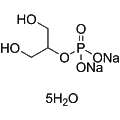
β-Glycerophosphate disodium salt pentahydrate is a potent phosphatase inhibitor that plays a crucial role in osteoblast differentiation, mineral metabolism, and signal transduction. This bioactive metabolite is instrumental in promoting the calcification of vascular smooth muscle cells and offers applications as a drug carrier for the development of heat-sensitive hydrogels. Its diverse biological activities make it valuable for research in bone biology and vascular health.
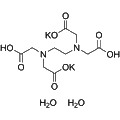
Synonyms: Ethylenediaminetetraacetic acid dipotassium dihydrate
EDTA dipotassium dihydrate is a versatile metal ion chelator that efficiently forms stable, water-soluble complexes with various metal ions. It is widely used as a blood anticoagulant to prevent coagulation, thereby preserving the morphology and functionality of cells in blood specimens. Additionally, in industrial applications, EDTA dipotassium dihydrate mitigates the detrimental effects of metal ions, helping to prevent oxidation and degradation processes.
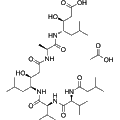
Synonyms: Pepstatin A acetate
Pepstatin acetate is a potent aspartic protease inhibitor derived from actinomycetes, exhibiting a range of IC50 values, including 4.5 nM for hemoglobin-pepsin and 6.2 nM for hemoglobin-proctase. It selectively inhibits various proteolytic activities, including those of casein-pepsin and HIV protease. This compound is valuable for studies investigating protease function and inhibition, with potential applications in enzyme regulation, cancer research, and HIV treatment.
Out of stock
All 3 sizes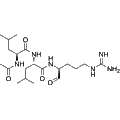
Leupeptin is a membrane-permeable broad-spectrum protease inhibitor that effectively targets serine, cysteine, and threonine proteases. This compound has been shown to inhibit the main protease of SARS-CoV-2 (Mpro) while also exhibiting anti-inflammatory properties. Leupeptin is valuable for research applications involving proteolytic processes and can aid in the study of viral infections and inflammatory responses.
Out of stock
All 3 sizes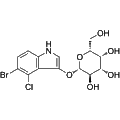
Synonyms: BCIG
X-GAL is a chromogenic substrate for β-galactosidase that serves as a vital tool in molecular biology. Upon enzymatic cleavage by β-galactosidase, X-GAL is converted from a colorless state to a blue, insoluble product, facilitating the identification of recombinant bacterial colonies in blue-white screening applications. Additionally, X-GAL is utilized for quantifying β-galactosidase activity, making it an essential reagent in various cloning and gene expression studies.
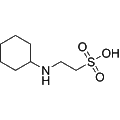
Synonyms: N-Cyclohexyltaurine
CHES (N-Cyclohexyltaurine) serves as a zwitterionic buffering agent with notable stability across a wide pH range. It exhibits the ability to bind to hemagglutinin (HA), mimicking sialic acid (SA) and facilitating interactions with receptor binding site (RBS)-targeting broadly neutralizing antibodies. CHES is widely utilized in biochemical assays and research applications requiring precise pH control and stability.
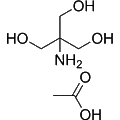
Synonyms: Tris acetate; Tris(hydroxymethyl)aminomethane acetate
THAM acetate is an amino alcohol that serves as an effective buffering agent for carbon dioxide and acids in both in vitro and in vivo settings. This low-toxicity compound is utilized for pH control in the physiological range, making it essential in various biological research applications. Its biologically inert nature facilitates a stable experimental environment, enhancing the accuracy of biochemical assays and physiological studies.
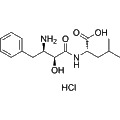
Synonyms: Ubenimex hydrochloride
Bestatin hydrochloride is an inhibitor of aminopeptidase N (CD13) and leukotriene A4 hydrolase. It plays a significant role in cancer research by modulating the enzymatic activities associated with tumor progression and inflammatory processes. This compound is valuable for studies investigating the implications of aminopeptidases in tumor microenvironments and immune responses.