- Cat. No.
- A15454
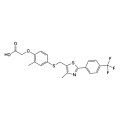
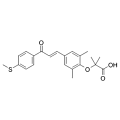
Elafibranor
Synonyms: GFT505
Elafibranor is an agonist of the peroxisome proliferator-activated Receptor-α and -δ, induces resolution of nonalcoholic steatohepatitis without fibrosis worsening.
Search by product name, CAS, target or catalog number. Press Down Arrow to reach product suggestions, Tab to move between links, and Escape to close suggestions.
PPAR agonists and antagonists target peroxisome proliferator-activated receptors (PPARs), a nuclear receptor family. The first PPAR was identified in 1990 as a member of the steroid hormone receptor superfamily activated by peroxisome proliferators. The three subtypes, PPARα, PPARδ and PPARγ, act as ligand-activated transcription factors in tissues such as liver, muscle and fat. PPARγ promotes adipocyte differentiation, and thiazolidinediones were shown in 1995 to bind it with high affinity. Examples include rosiglitazone and troglitazone for PPARγ, fenofibrate for PPARα and GW 501516 for PPARδ. Elafibranor acts on PPARα and PPARδ, while T0070907 is a PPARγ antagonist for blocking studies.
Synonyms: GFT505
Elafibranor is an agonist of the peroxisome proliferator-activated Receptor-α and -δ, induces resolution of nonalcoholic steatohepatitis without fibrosis worsening.
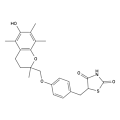
Synonyms: Rezulin
Troglitazone is a selective PPARγ receptor agonist (EC50 values are 780 and 555 nM at murine and human PPARγ receptors respectively).
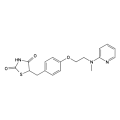
Synonyms: Avandia; BRL-49653
Rosiglitazone works as an insulin sensitizer, by binding to the PPAR receptors in fat cells and making the cells more responsive to insulin.
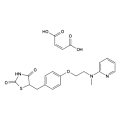
Synonyms: Avandia; Avandamet; Avandaryl
Rosiglitazone maleate, an antidiabetic drug, works as an insulin sensitizer, by binding to the PPAR receptors in fat cells and making the cells more responsive to insulin.
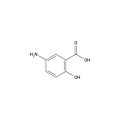
Synonyms: Mesalamine; 5-ASA; Mesalazine
5-Aminosalicylic acid (Mesalamine) acts as a specific PPARγ agonist and also inhibits p21-activated kinase 1 (PAK1) and NF-κB.
Synonyms: GW1516; GSK-516
GW501516 (GW1516 or GSK-516) is a drug that acts as a PPARδ modulator.
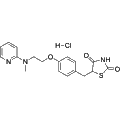
Synonyms: BRL 49653 hydrochloride
Rosiglitazone hydrochloride is a selective agonist of the peroxisome proliferator-activated receptor gamma (PPARγ), demonstrating an EC50 of 60 nM and a Kd of 40 nM. In addition to its primary action, it acts as a TRPC5 activator with an EC50 of 30 μM and a TRPM3 inhibitor. This compound is extensively utilized in research related to obesity, diabetes, cellular senescence, and ovarian cancer.
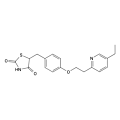
Synonyms: Actos
Pioglitazone selectively stimulates the nuclear receptor peroxisome proliferator-activated receptor gamma (PPAR-γ) and to a lesser extent PPAR-α.
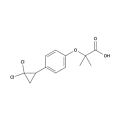
Ciprofibrate is a peroxisome proliferator-activated receptor agonist.
GW 7647 is a potent and highly selective PPARα agonist (EC50 values are 6, 1100 and 6200 nM for human PPARα, PPARγ and PPARδ receptors respectively).
Synonyms: L-165041
L-165,041 is a potent PPARδ agonist (Ki = 6 nM); displays > 100-fold selectivity for both mouse and human PPARδ receptors over other subtypes.
Synonyms: WY 14643
WY 14643 is a highly potent PPARα agonist.
Synonyms: R1439; RO0728804
Aleglitazar is a new dual PPAR-α/γ agonist with IC50 of 2.8 nM/4.6 nM.
Chiglitazar is a PPARα/γ dual agonist, with EC50s of 1.2, 0.08, 1.7 μM for PPARα, PPARγ and PPARδ, respectively.
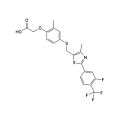
Pparδ agonist 2 is a PPARδ agonist extracted from patent WO 2016057656 A1.
GW0742 is a selective agonist of PPARδ with EC50 value of 1.1 nM.
GW1929 is a synthetic peroxisome proliferator-activated receptor-γ (PPARγ) agonist with IC50 of 6.2 nM and 13 nM for human and mouse, respectively.
Synonyms: Efatutazone; CS-7017; RS5444
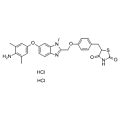
Inolitazone dihydrochloride is a novel high-affinity PPARγ agonist, which activates PPARγ with an EC50 about 1/50 that of rosiglitazone and has no effect on RIE cells.
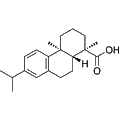
Dehydroabietic acid is a diterpene resin acid that serves as a dual agonist for PPAR-α and PPAR-γ, with partial agonist activity at PPAR-γ. This compound exhibits significant biological activities, including anti-bacterial, anti-fungal, anti-inflammatory, and anti-cancer effects. It has been shown to mitigate insulin resistance and hepatic steatosis induced by high-fat diet consumption in animal models, making it a valuable reagent for research in metabolic disorders and inflammatory diseases.
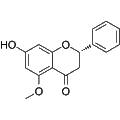
Alpinetin is a flavonoid that acts as a PPAR-γ activator, demonstrating significant anti-inflammatory and hepatoprotective properties. It effectively inhibits lipopolysaccharide (LPS)-induced inflammation and protects against LPS-induced renal injury by modulating TLR4 expression and activating the Nrf2 pathway. Its diverse biological activities make Alpinetin a valuable reagent for research into tumor biology, cardiovascular health, and neuroprotection.
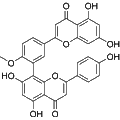
Bilobetin acts as a PPARα activator, enhancing lipid metabolism and insulin sensitivity. It effectively reduces blood lipid levels by promoting hepatic lipid uptake and oxidation, while decreasing triglyceride secretion and accumulation in tissues. Additionally, Bilobetin stimulates the phosphorylation and nuclear translocation of PPARα, resulting in increased cAMP levels and PKA activity. This compound is significant for research in metabolic disorders, particularly those related to insulin resistance and lipid regulation.
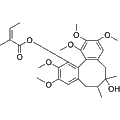
Angeloylgomisin H is a PPAR-γ activator derived from the lignin extract of Schisandra rubriflora. This compound has demonstrated the ability to enhance insulin-stimulated glucose uptake, making it a valuable candidate for research in metabolic disorders and diabetes. Its mechanism of action may provide insights into therapeutic strategies aimed at improving insulin sensitivity and glucose metabolism.
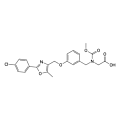
BMS-687453 is a potent and selective peroxisome proliferator activated receptor (PPAR) alpha agonist, with an EC(50) of 10 nM for human PPARalpha and approximately 410-fold selectivity vs human PPARgamma in PPAR-GAL4 transactivation assays.
Synonyms: BM15075
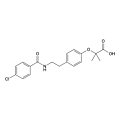
Bezafibrate is the first clinically tested dual and pan-PPAR co-agonist.
Synonyms: RTA-403; TP-235; CDDO-Imidazolide
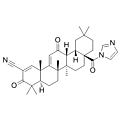
CDDO-Im is a novel synthetic triterpenoid more potent than its parent compound CDDO both in vitro and in vivo; PPARγ Agonist.