- Cat. No.
- A13691
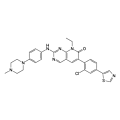
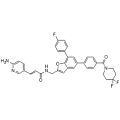
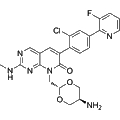
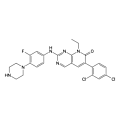
FRAX486
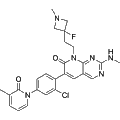
FRAX486 is a small-molecule PAK inhibitor.
Search by product name, CAS, target or catalog number. Press Down Arrow to reach product suggestions, Tab to move between links, and Escape to close suggestions.
PAK inhibitors act on p21-activated kinases (PAK), effector kinases of the small GTPases Rac and Cdc42. The first family member was described in 1994 as a brain serine/threonine kinase activated by Cdc42 and Rac1. Group I PAKs (PAK1 to PAK3) are held inactive by an autoinhibitory region, whereas group II PAKs (PAK4 to PAK6) are regulated differently. PAK signaling remodels the actin cytoskeleton and contributes to cell motility and neurite outgrowth. IPA-3, reported in 2008, blocks PAK1 activation by targeting this autoregulatory mechanism. NVS-PAK1-1 is a further allosteric PAK1 inhibitor, and FRAX486 and FRAX597 act mainly on group I PAKs. PF-3758309 was developed against PAK4, while KPT 9274 inhibits PAK4 and nicotinamide phosphoribosyltransferase (NAMPT).
FRAX486 is a small-molecule PAK inhibitor.
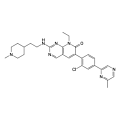
FRAX597, a small-molecule pyridopyrimidinone, is a potent and ATP competitive inhibitor of the group I PAKs (PAK1 IC50= 8 nM, PAK2 IC50= 13 nM, PAK3 IC50= 19 nM).
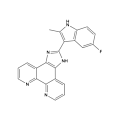
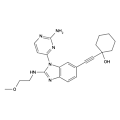
Synonyms: APTO-253
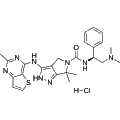
LOR-253 is a small molecule inhibitor of human metal-regulatory transcription factor 1 (MTF-1).
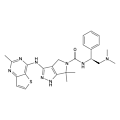
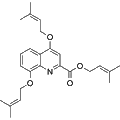
Synonyms: PF-03758309
PF-3758309 is a small-molecule p21-activated kinase inhibitor inhibiting oncogenic signaling and tumor growth.
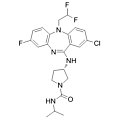
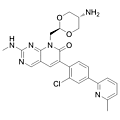
NVS-PAK1-1 is a potent and selective allosteric PAK1 inhibitor with an IC50 of 5 nM.
Synonyms: ATG-019
KPT 9274 ( ATG-019) is an orally bioavailable small molecule that is a non-competitive dual inhibitor of PAK4 and NAMPT. It shows an IC50 of ~120 nM for NAMPT in a cell-free enzymatic assay.
FRAX1036 is a PAK inhibitor with Kis of 23.3 nM, 72.4 nM, and 2.4 μM for PAK1, PAK2 and PAK4, respectively.
G-5555 is a potent p21-activated kinase 1 (PAK1) inhibitor with Kis of 3.7 nM and 11 nM for PAK1 and PAK2, respectively.
IPA-3 is a selective non-ATP competitive PAK1 inhibitor with IC50 of 2.5 μM, and shows no inhibition to group II PAKs (PAKs 4-6).
GNE 2861 is a PAK inhibitor that displays group II selectivity. GNE 2861 inhibits PAK4, PAK5 and PAK6 with IC50s of 7.5, 36, 126 nM, respectively.
PQA-18 is a selective inhibitor of PAK2, exhibiting an inhibitory concentration (IC50) of 10 nM. This compound demonstrates significant immunosuppressive effects by downregulating the production of pro-inflammatory cytokines including IL-2, IL-4, IL-6, and TNF-α. PQA-18 also affects regulatory T cell populations and reduces immunoglobulin production in response to T cell-dependent antigens, contributing to the alleviation of dermatitis in murine models. Its application may extend to research in autoimmune diseases and immunology.
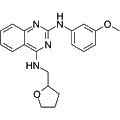
Synonyms: GNF-PF-2356
LCH-7749944 is a potent inhibitor of PAK4, demonstrating an IC50 of 14.93 μM. It effectively inhibits the proliferation of human gastric cancer cells by downregulating the PAK4/c-Src/EGFR/cyclin D1 signaling pathway and induces apoptosis in these cells. This reagent is valuable for research focused on cancer biology and therapeutic strategies targeting PAK4-related pathways.
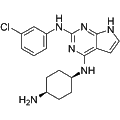
PAK4-IN-2 is a potent inhibitor of the p21-activated kinase 4 (PAK4), exhibiting an IC50 value of 2.7 nM. This compound effectively induces cell cycle arrest at the G0/G1 phase and promotes apoptosis in MV4-11 cancer cells. PAK4-IN-2 is suitable for investigations into cancer biology and therapeutic development targeting PAK4 signaling pathways.
MRIA9 is an ATP-competitive inhibitor targeting pan Salt-Inducible kinases (SIK) as well as PAK2 and PAK3. It exhibits potent biological activity with IC50 values of 516 nM for SIK1, 180 nM for SIK2, and 127 nM for SIK3. MRIA9 is suitable for applications in signaling pathway research and the study of various cellular processes influenced by SIK and PAK kinases.
Synonyms: PF-03758309 hydrochloride
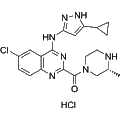
PF-3758309 hydrochloride is a potent and reversible ATP-competitive inhibitor targeting PAK4, with a Kd of 2.7 nM and a Ki of 18.7 nM. This compound is effective in inhibiting anchorage-independent growth and inducing apoptosis, while also promoting cytoskeletal remodeling and suppressing cellular proliferation. PF-3758309 hydrochloride is valuable in research applications aimed at understanding PAK4's role in cancer and other diseases associated with dysregulated cell growth.
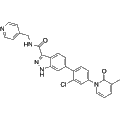
ZMF-10 is a potent PAK1 inhibitor, exhibiting an IC50 of 174 nM for PAK1 and varying potencies for related isoforms PAK2 and PAK3 at 1.038 µM and 1.372 µM, respectively. This compound effectively inhibits PAK1 activity, influencing PAK1-regulated processes such as apoptosis, ER stress response, and cellular migration in MDA-MB-231 breast cancer cells. ZMF-10 is suitable for investigations into mechanisms of anticancer therapy and related cellular pathways.
CZh226 is a selective inhibitor of PAK4 with an IC50 of 0.0111 μM and a Ki of 0.009 μM. This compound effectively inhibits PAK4 activity, leading to decreased phosphorylation of its downstream signaling molecules. CZh226 has demonstrated the ability to inhibit the migration and invasion of tumor cells, making it a valuable reagent for research related to lung cancer and other PAK4-mediated pathways.
Out of stock
All 3 sizes
GL-1196 is a potent inhibitor of PAK4, a serine/threonine kinase involved in cancer cell proliferation and invasion. This compound effectively inhibits PAK4-mediated signaling pathways leading to decreased proliferation and invasiveness in gastric cancer cells. GL-1196 disrupts the PAK4/c-Src/EGFR/Cyclin D1 and CDK4/6 axis, which results in the reduction of filamentous pseudopodia formation and promotes cell elongation in SGC7901 and BGC823 cell lines. Its applications in anti-cancer research make it a valuable tool for studies targeting gastric cancer progression.
Out of stock
All 3 sizes
AZ13705339 is a potent and selective PAK1 inhibitor that exerts its action with IC50 values of 0.33 nM for PAK1 and 59 nM for phosphorylated PAK1 (pPAK1). This compound displays strong binding affinities for PAK1 and PAK2, with dissociation constants (Kd) of 0.28 nM and 0.32 nM, respectively. AZ13705339 is primarily utilized in cancer research, providing insights into PAK1-mediated signaling pathways.
G-5555 hydrochloride is a selective inhibitor of p21-activated kinase 1 (PAK1), exhibiting a potency with a Ki value of 3.7 nM. This compound is useful in research focused on cell signaling pathways and oncogenesis, particularly in studies exploring the role of PAK1 in cancer progression and metastasis. G-5555 hydrochloride can be used to elucidate the biological functions of PAK1, aiding in the development of targeted therapeutic strategies.
NVS-PAK1-C is a specific allosteric inhibitor of the PAK1 protein, exhibiting ATP-competitive activity with IC50 values of 5 nM and 6 nM for dephosphorylated and phosphorylated PAK1, respectively. Additionally, NVS-PAK1-C demonstrates inhibitory effects on PAK2, with IC50 values of 270 nM for dephosphorylated PAK2 and 720 nM for phosphorylated PAK2. This compound serves as a valuable tool for research applications focused on elucidating the role of PAK1 and PAK2 in various cellular processes and signaling pathways.
PAK1-IN-1 is a selective inhibitor of PAK1, exhibiting an IC50 of 9.8 nM. This compound effectively inhibits the migration and invasion of tumor cells associated with PAK1 activity in a dose-dependent fashion. PAK1-IN-1 serves as a valuable tool for research related to cancer biology and the exploration of therapeutic strategies targeting PAK1 signaling pathways.
G-9791 is a potent inhibitor of p21-activated kinases (PAK) with high affinity characterized by Ki values of 0.95 nM for PAK1 and 2.0 nM for PAK2. This pyridone side chain analogue demonstrates significant biological activity, making it a valuable tool for studying the PAK signaling pathway. G-9791 is widely applicable in cancer research and investigations into cellular processes regulated by PAK kinases.
Out of stock
All 3 sizes
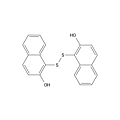
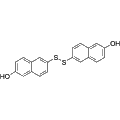
Synonyms: DDD; Bis(6-hydroxy-2-naphthyl)disulfide; PIR-3.5
2,2′-Dihydroxy-6,6′-dinaphthyl disulfide is a selective PAK1 inhibitor, targeting the p21-activated kinase 1 protein with notable specificity. This compound has demonstrated the ability to modulate cellular signaling pathways linked to cancer progression and migration. It is particularly valuable for researchers investigating the role of PAK1 in various biological processes and disease models.
CZh226 hydrochloride is a selective inhibitor of PAK4, demonstrating an IC50 of 18 nM with a remarkable selectivity ratio of 346-fold for PAK4 over PAK1. Despite its low oral bioavailability, it serves as a valuable tool for investigating tumorigenic pathways in colorectal cancer and melanoma when combined with prodrug PAK4-IN-1 to enhance absorption and metabolic stability. This compound provides significant insights into PAK4's role in cancer biology and therapeutic potential.
Out of stock
All 3 sizes