HDAC

Histone deacetylase (HDAC) inhibitors block enzymes that remove acetyl groups from histones and other proteins. Deacetylation compacts chromatin and generally represses transcription, so HDAC inhibitors are widely used to study gene regulation. Trichostatin A was characterized in 1990 as a specific inhibitor of mammalian histone deacetylase. The first mammalian HDAC was cloned in 1996 and found to be related to the yeast transcriptional regulator Rpd3p. Isoform-selective tools include entinostat for HDAC1 and HDAC3, and Tubastatin A HCl for HDAC6, a microtubule-associated deacetylase. Broad-spectrum hydroxamates such as vorinostat and panobinostat, together with the cyclic depsipeptide romidepsin, complete the range.

Items 376-400 of 495

  • HDAC1-IN-7
    Cat. No.
    A26533

    HDAC1-IN-7

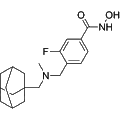
    HDAC1-IN-7 is a potent inhibitor of histone deacetylase 1 (HDAC1), exhibiting an IC50 of 0.957 mM. This compound serves as a valuable tool for investigating the role of HDAC1 in various biological processes, including gene expression regulation and cellular differentiation. Its application is relevant in studies of cancer biology and neurodegenerative disorders, where modulation of HDAC1 activity may provide insights into therapeutic strategies.

    5 mg
    $295.00
    10 mg
    $485.00
    All 5 sizes
  • HDAC11-IN-2
    Cat. No.
    A26534

    HDAC11-IN-2

    HDAC11-IN-2 is a selective inhibitor of Histone Deacetylase 11 (HDAC11), exhibiting an IC50 of 51.1 µM for HDAC11 and 5 µM for HDAC8. This compound effectively inhibits de novo lipogenesis and promotes fatty acid oxidation, addressing hepatic lipid accumulation and its associated pathological features in MASLD mouse models. Additionally, HDAC11-IN-2 enhances the phosphorylation of AMPKα1 at Thr172, further regulating metabolic pathways involved in lipid metabolism within the liver.

    5 mg
    $450.00
    10 mg
    $755.00
    All 5 sizes
  • Bavarostat
    Cat. No.
    A26535

    Bavarostat

    Synonyms: EKZ-001

    Bavarostat is a potent inhibitor of histone deacetylase 6 (HDAC6) with an IC50 of 17 nM, capable of crossing the blood-brain barrier. As a PET radiotracer, it can be labeled with 18F for in vivo mapping of HDAC6 distribution and assessing target occupancy in non-human primate models. Bavarostat selectively enhances tubulin acetylation without affecting histone acetylation, making it a valuable tool for research into neurodegenerative diseases, such as Alzheimer’s, as well as various cancers.

    5 mg
    $100.00
    10 mg
    $160.00
    All 5 sizes
  • HDAC6 degrader-3
    Cat. No.
    A26536

    HDAC6 degrader-3

    HDAC6 Degrader-3 is a selective inhibitor that promotes the degradation of histone deacetylase 6 (HDAC6) through ternary complex formation and the ubiquitin-proteasome pathway, exhibiting a DC50 value of 19.4 nM. With IC50 values of 4.54 nM for HDAC6 and 0.647 μM for HDAC1, it effectively induces significant hyperacetylation of α-tubulin. This compound is valuable for research applications focused on neurodegenerative diseases and cancer, where modulation of HDAC6 activity may play a critical role.

    5 mg
    $595.00
    10 mg
    $1,015.00
    All 4 sizes
  • HD-TAC7
    Cat. No.
    A26537

    HD-TAC7

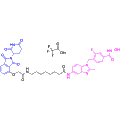
    HD-TAC7 is a highly effective PROTAC HDAC degrader, specifically targeting histone deacetylases HDAC1, HDAC2, and HDAC3 with IC50 values of 3.6 μM, 4.2 μM, and 1.1 μM, respectively. This compound has demonstrated the ability to reduce NF-κB p65 levels in RAW 264.7 macrophages. HD-TAC7 is suitable for research applications focused on inflammatory diseases, including asthma and chronic obstructive pulmonary disease (COPD).

    1 mg
    $160.00
    5 mg
    $375.00
    All 6 sizes
  • TD034
    Cat. No.
    A26540

    TD034

    TD034 is a selective, reversible, and noncovalent inhibitor of HDAC11, exhibiting an IC50 value of 5.1 nM and a Ki of 1.5 nM. This compound specifically targets HDAC11 without affecting other histone deacetylases or sirtuins, and it inhibits the defatty acylation of the substrate SHMT2. Additionally, TD034 reduces the levels of YAP1 through its action on HDAC11. This reagent is suitable for investigating the role of HDAC11 in lung cancer research.

    1 mg
    $690.00
    5 mg
    $1,765.00
    All 4 sizes
  • HDAC6-IN-3
    Cat. No.
    A26541

    HDAC6-IN-3

    HDAC6-IN-3 is a potent inhibitor of histone deacetylase 6 (HDAC6), with an IC50 ranging from 0.02 to 1.54 μM for various HDAC isoforms, including HDAC1, HDAC2, HDAC3, and HDAC8. Additionally, it exhibits significant inhibitory activity against monoamine oxidase A (MAO-A) with an IC50 of 0.79 μM and lysine-specific demethylase 1 (LSD1). This compound serves as a valuable tool for research applications in cancer biology and epigenetics and is equipped with an alkyne functionality, enabling it to participate in copper-catalyzed azide-alkyne cycloaddition (CuAAc).

    5 mg
    $420.00
    10 mg
    $695.00
    All 5 sizes
  • HDAC6-IN-23
    Cat. No.
    A26543

    HDAC6-IN-23

    HDAC6-IN-23 is a potent inhibitor of the histone deacetylase HDAC6, exhibiting oral bioavailability. This compound demonstrates significant biological activity by modulating histone acetylation, which plays a crucial role in gene regulation and cellular processes. It is primarily utilized in research focused on neurodegenerative disorders, cancer therapy, and the study of protein homeostasis.

    5 mg
    $395.00
    10 mg
    $645.00
    All 3 sizes
  • HDAC ligand-1
    Cat. No.
    A26544

    HDAC ligand-1

    HDAC Ligand-1 is a selective histone deacetylase (HDAC) ligand that serves as a valuable building block for the synthesis of PROTAC HDAC degraders. This compound can facilitate the development of innovative therapeutic agents targeting HDAC enzymes, enhancing the understanding of their role in various biological processes. Its applications extend to cancer research and epigenetic studies, providing insights into the modulation of gene expression and cellular behavior.

    25 mg
    $1,275.00
    50 mg
    $1,625.00
    All 3 sizes
  • HDAC-IN-4
    Cat. No.
    A26546

    HDAC-IN-4

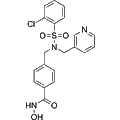
    HDAC-IN-4 is a selective inhibitor of HDAC6 and HDAC10, demonstrating pIC50 values of 7.2 and 6.8 in BRET assays, respectively. This compound exhibits antitumoral activity, making it a significant tool for the investigation of cancer biology and the modulation of gene expression. Its selective inhibition of these histone deacetylases positions HDAC-IN-4 as a valuable reagent for research focusing on epigenetic regulation and potential therapeutic applications in cancer treatment.

    2 mg
    $55.00
    5 mg
    $125.00
    All 6 sizes
  • BG48
    Cat. No.
    A26547

    BG48

    BG48 is a potent histone deacetylase (HDAC) inhibitor that selectively targets HDAC1 and HDAC2. By inhibiting the enzymatic activity of these enzymes, BG48 modulates gene expression and can influence cellular processes such as differentiation, proliferation, and apoptosis. This compound is valuable for research applications in cancer biology, neurodegenerative diseases, and epigenetic studies.

    5 mg
    $305.00
    10 mg
    $525.00
    All 5 sizes
  • Purinostat
    Cat. No.
    A26548

    Purinostat

    Purinostat is a selective inhibitor of histone deacetylases (HDAC) I and IIb, exhibiting potent anti-leukemic activity. It effectively reduces the survival of Philadelphia chromosome-positive leukemic cells and CD34+ leukemic progenitors from chronic myeloid leukemia patients. By targeting HDAC I/IIb, Purinostat disrupts critical pathways for leukemic stem cell survival, influencing factors such as c-Myc, β-Catenin, E2F, Ezh2, Alox5, and mTOR. Additionally, Purinostat enhances glutamate metabolism in leukemic stem cells by upregulating GLS1.

    5 mg
    $460.00
    10 mg
    $755.00
    All 5 sizes
  • HNHA
    Cat. No.
    A26549

    HNHA

    HNHA is a potent histone deacetylase (HDAC) inhibitor with an IC50 of 100 nM. The compound effectively induces cell cycle arrest at the G1/S phase through the upregulation of p21. HNHA has demonstrated the ability to inhibit tumor growth and neovascularization, suggesting potential applications in cancer research, particularly in the context of breast cancer therapeutics.

    1 mg
    $30.00
    5 mg
    $60.00
    All 6 sizes
  • JPS036
    Cat. No.
    A26550

    JPS036

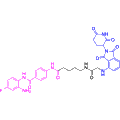
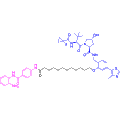
    JPS036 is a benzamide-based HDAC degrader that operates through the Von Hippel-Lindau (VHL) E3-ligase proteolysis targeting chimera (PROTAC) mechanism. This compound selectively degrades class I histone deacetylases (HDAC1 and HDAC2), demonstrating significant biological activity by promoting the expression of differentially expressed genes and enhancing apoptosis in HCT116 cells. JPS036 serves as a valuable research tool for studying the roles of HDACs in cellular processes and disease models.

    1 mg
    $280.00
    5 mg
    $710.00
    All 2 sizes
  • HDAC-IN-40
    Cat. No.
    A26551

    HDAC-IN-40

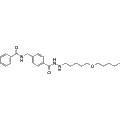
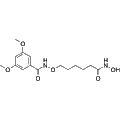
    HDAC-IN-40 is a potent alkoxyamide-based inhibitor of histone deacetylases (HDACs), specifically targeting HDAC2 and HDAC6 with Ki values of 60 nM and 30 nM, respectively. This compound exhibits significant antitumor activity, making it a valuable tool for cancer research. HDAC-IN-40 can be utilized to explore the role of histone deacetylation in tumor development and progression, as well as to investigate potential therapeutic interventions in various cancers.

    1 mg
    $25.00
    5 mg
    $60.00
    All 6 sizes
  • BG47
    Cat. No.
    A26563

    BG47

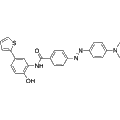
    BG47 is a selective inhibitor of histone deacetylases HDAC1 and HDAC2, functioning as an optoepigenetic probe. Upon light-induced trans-to-cis isomerization, BG47 competitively inhibits the deacetylase activity of its targets, resulting in increased acetylation of Histone H3K9. This compound is relevant for research applications in neurological diseases, providing insights into epigenetic regulation and its implications in various disorders.

    25 mg
    $1,275.00
    50 mg
    $1,625.00
    All 3 sizes
  • HDAC6-IN-65
    Cat. No.
    A26687

    HDAC6-IN-65

    HDAC6-IN-65 is a selective inhibitor of histone deacetylase 6 (HDAC6) with an IC50 of 0.9 nM, demonstrating additional inhibitory effects on HDAC3 with an IC50 of 39.4 nM. This compound induces the accumulation of acetylated α-tubulin and acetylated histone H3 in Neuro-2a cells, serving as a marker for class I HDAC inhibition. HDAC6-IN-65 provides valuable insights in the study of melanoma and related cancer research applications.

    1 mg
    $155.00
    5 mg
    $395.00
    All 6 sizes
  • HDAC-IN-48
    Cat. No.
    A26911

    HDAC-IN-48

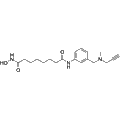
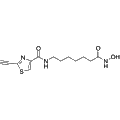
    HDAC-IN-48 is a potent inhibitor of histone deacetylases (HDACs) that exhibits significant cytotoxicity, with a GI50 of approximately 20 nM. This hybrid molecule incorporates pharmacophores from SAHA and CETZOLE, effectively inducing ferroptosis while inhibiting HDAC activity. Additionally, HDAC-IN-48 features an alkyne group, allowing it to participate in copper-catalyzed azide-alkyne cycloaddition (CuAAc) reactions, making it a valuable tool for click chemistry applications in chemical biology and therapeutic research.

    Out of stock

    All 3 sizes
  • HDAC11-IN-3
    Cat. No.
    A26963

    HDAC11-IN-3

    HDAC11-IN-3 is a selective inhibitor of HDAC11, exhibiting an IC50 of 4.1 nM. This compound demonstrates potent anti-acute myeloid leukemia (AML) activity against U937 and OCI-AML2 cell lines with an IC50 of 10 μM. It effectively induces apoptosis, cell cycle arrest, and differentiation while upregulating iron transporters transferrin (TF) and transferrin receptor (TFRC). Additionally, HDAC11-IN-3 activates the p62-Keap1-Nrf2-HMOX1 pathway, resulting in elevated intracellular iron levels and subsequent ferroptosis in AML cells. This reagent is suited for studies investigating the molecular mechanisms of AML and can be utilized alone or in combination with other therapeutic agents like Cytarabine.

    5 mg
    $475.00
    10 mg
    $680.00
    All 5 sizes
  • MHY219
    Cat. No.
    A29074

    MHY219

    MHY219 is a potent histone deacetylase (HDAC) inhibitor with an IC50 of 0.276 μM, effectively inhibiting total HDAC enzyme activity. This compound promotes histone H3 and H4 hyperacetylation, leading to cell cycle arrest, apoptosis, and reduced proliferation in cancer cells. Additionally, MHY219 enhances cleavage of PARP, Bax, and cytochrome c levels, while upregulating androgen receptor expression and downregulating Bcl-2 expression. It serves as a valuable research tool for studying prostate cancer mechanisms and potential therapeutic strategies.

    25 mg
    $1,275.00
    50 mg
    $1,625.00
    All 3 sizes
  • HDAC-IN-39
    Cat. No.
    A30063

    HDAC-IN-39

    HDAC-IN-39 is a potent inhibitor of histone deacetylases (HDACs), exhibiting IC50 values of 1.07 μM for HDAC1, 1.47 μM for HDAC2, and 2.27 μM for HDAC3. This compound also significantly disrupts microtubule polymerization and induces cell cycle arrest at the G2/M phase, highlighting its potential for modulating cell cycle dynamics. Furthermore, HDAC-IN-39 demonstrates promising anticancer activity, particularly against resistant cancer cell lines, making it a valuable tool for cancer research and therapeutic exploration.

    25 mg
    $1,275.00
    50 mg
    $1,625.00
    All 3 sizes
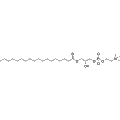
  • 1-Stearoyl-sn-glycero-3-phosphocholine
    Cat. No.
    A30084

    1-Stearoyl-sn-glycero-3-phosphocholine

    Synonyms: 18:0 Lyso-PC; LPC(18:0)

    1-Stearoyl-sn-glycero-3-phosphocholine is an inhibitor of histone deacetylase 3 (HDAC3) and the phosphorylation of signal transducer and activator of transcription 3 (p-STAT3). This compound has demonstrated the ability to induce apoptosis and exhibits significant anticancer activity in chronic myelogenous leukemia (CML) K562 cells. It serves as a valuable tool for researchers investigating the therapeutic potential of HDAC inhibitors in cancer treatment.

    25 mg
    $25.00
    50 mg
    $35.00
    All 6 sizes
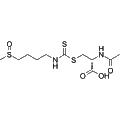
  • DL-Sulforaphane N-acetyl-L-cysteine
    Cat. No.
    A30566

    DL-Sulforaphane N-acetyl-L-cysteine

    Synonyms: SFN-NAC

    DL-Sulforaphane N-acetyl-L-cysteine is an orally active inhibitor of histone deacetylases (HDACs) and a stable metabolite of sulforaphane. This compound enhances autophagy-mediated reduction of α-tubulin expression via the ERK signaling pathway, making it a valuable tool in cancer research. Its improved blood-brain barrier permeability and extended half-life support its potential in neurobiological studies and therapeutic applications.

    1 mg
    $100.00
    5 mg
    $410.00
    All 2 sizes
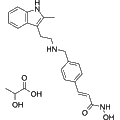
  • Panobinostat lactate
    Cat. No.
    A30663

    Panobinostat lactate

    Synonyms: LBH589 lactate; NVP-LBH589 lactate

    Panobinostat lactate is a potent, orally active non-selective histone deacetylase (HDAC) inhibitor. It exhibits significant antineoplastic activity and has been shown to disrupt HIV latency effectively. Additionally, Panobinostat lactate induces apoptosis and autophagy in various cell types. This reagent is valuable for studying refractory or relapsed multiple myeloma and exploring HDAC inhibition in cancer research.

    5 mg
    $40.00
    10 mg
    $65.00
    All 5 sizes
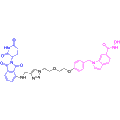
  • SZUH280
    Cat. No.
    A30796

    SZUH280

    SZUH280 is a selective PROTAC degrader targeting HDAC8, demonstrating a DC50 of 0.58 μM in A549 cells. It effectively induces apoptosis in cancer cells and disrupts DNA repair mechanisms, thereby enhancing cellular radiosensitivity. This compound is particularly useful for research related to cancer therapeutics and the study of epigenetic regulation.

    5 mg
    $280.00
    10 mg
    $460.00
    All 5 sizes

Items 376-400 of 495

Added to your cart

View Cart Checkout

    Loading...