- Cat. No.
- A16926
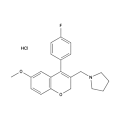
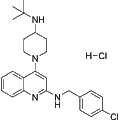
AX-024
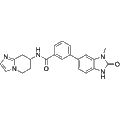
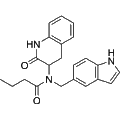
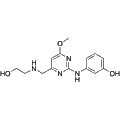
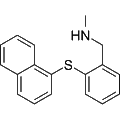
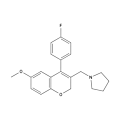
AX-024 is an cytokine release inhibitor which can strongly inhibit the production of interleukin-6 (IL-6), tumor necrosis factor-α (TNFα), interferon-γ (IFN-γ), IL-10 and IL-17A.
Search by product name, CAS, target or catalog number. Press Down Arrow to reach product suggestions, Tab to move between links, and Escape to close suggestions.
IFNAR modulators act on the type I interferon receptor (IFNAR), which binds interferon alpha and beta. The receptor has two chains: IFNAR1 was cloned as a functional human interferon alpha receptor, and IFNAR2 was later characterized as the ligand-binding chain. Mice lacking type I interferon signaling are highly susceptible to viral infection. Products here include RO8191, a small-molecule IFNAR agonist, and IFN alpha-IFNAR-IN-1 hydrochloride, which blocks the ligand-receptor interaction. The section also lists 2',3'-cGAMP, an upstream inducer of type I interferon, and IRF5-IN-1, which targets the interferon regulatory factor 5 (IRF5) transcription factor.
AX-024 is an cytokine release inhibitor which can strongly inhibit the production of interleukin-6 (IL-6), tumor necrosis factor-α (TNFα), interferon-γ (IFN-γ), IL-10 and IL-17A.
Synonyms: AX-024; AX024 HCl
AX-024 is an orally available inhibitor of the TCR-Nck interaction that selectively inhibits TCR-triggered T cell activation (IC50 value 1 nM). Inhibiting an immediate TCR signal has promise for treating a broad spectrum of human T cell-mediated autoimmune and inflammatory diseases.
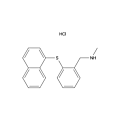
IFN alpha-IFNAR-IN-1 hydrochloride is a nonpeptidic, low-molecular-weight inhibitor of the interaction between IFN-α and IFNAR; inhibit MVA-induced IFN-α responses by BM-pDCs (IC50=2-8 uM).
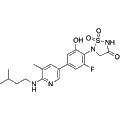
PTPN2/1-IN-4 is a potent dual inhibitor of PTPN1 and PTPN2, exhibiting IC50 values of 12.8 nM and 5.8 nM, respectively. This compound effectively modulates the IFNγ-JAK-STAT signaling pathway, resulting in enhanced CD8+ T-cell infiltration into tumors. PTPN2/1-IN-4 demonstrates significant anticancer activity, inhibiting tumor growth both as a standalone treatment and in combination with anti-PD-1 antibodies in B16-OVA syngeneic mouse models, making it a valuable tool for cancer research.
Out of stock
All 3 sizes
IRF5-IN-1 is a potent inhibitor of the interferon regulatory factor 5 (IRF5), a key player in inflammatory signaling pathways. This compound effectively suppresses the activation of IRF5, thereby inhibiting the TLR7/8 signaling cascade. The anti-inflammatory properties of IRF5-IN-1 make it valuable for research applications aimed at understanding and modulating immune responses and inflammatory diseases.
IRF5-CPP5 is a selective inhibitor targeting the interferon regulatory factor 5 (IRF5), which plays a crucial role in the immune response. It demonstrates potent inhibition of IRF5 dimerization, with IC50 values of 15.4 μM for the recombinant S430D variant and 15.3 μM for wild-type IRF5. This peptide is valuable for investigating IRF5-related signaling pathways and their implications in various inflammatory diseases.
QL-1200186 is a selective, orally active allosteric inhibitor specifically targeting the pseudokinase domain JH2 of tyrosine kinase TYK2, exhibiting an IC50 of 0.06 nM with 164-fold selectivity over TYK1 JH2 (IC50 = 9.85 nM). By stabilizing the TYK2 JH2 conformation, QL-1200186 inhibits the activity of the JH1 catalytic domain and disrupts the IFNα, IL-12/IL-23-mediated JAK-STAT signaling pathway. This compound effectively reduces the production of Th1/Th17-related cytokines and has shown promise in alleviating skin inflammation in Imiquimod-induced psoriasis models, making it relevant for the study of autoimmune diseases such as psoriasis and systemic lupus erythematosus (SLE).
RIG012 is a potent inhibitor of RIG-I with an IC50 of 0.71 μM, as determined by the NADH-coupled ATPase assay. It effectively suppresses the expression of interferon beta (IFN-β) and the interferon-stimulated gene hRsad2. RIG012 is valuable for research applications focusing on the modulation of innate immune responses and the study of viral infections.
YE6144 is a selective interferon regulatory factor 5 (IRF5) inhibitor. It exhibits significant biological activity by suppressing disease progression and is particularly effective for maintaining remission in murine models of systemic lupus erythematosus (SLE). This compound serves as a valuable tool for researchers investigating the mechanisms of SLE and the role of IRF5 in autoimmune diseases.
Z36-MP5 is a targeted inhibitor of Mi-2β, exhibiting an IC50 value of 0.082 μM. This compound effectively reduces Mi-2β ATPase activity, leading to the reactivation of interferon-stimulated gene (ISG) transcription. Additionally, Z36-MP5 is known to enhance T-cell-mediated cytotoxicity, making it a valuable tool for research in immunology and potential therapeutic applications in cancer and viral infections.
IFNα-IN-1 is an SLC5A4 inhibitor that specifically targets and inhibits the production of interferon-alpha (IFN-α). Its primary biological activity is to modulate the inflammatory response by reducing IFN-α levels. This reagent is suitable for research applications focused on studying inflammation and related disease mechanisms.
VISTA-IN-3 is a potent small molecule inhibitor of the VISTA pathway, exhibiting a KD value of 0.49 μM. It effectively induces the release of IFN-γ cytokines, thereby enhancing immune responses. Additionally, VISTA-IN-3 demonstrates synergistic effects when combined with PD-L1 antibodies, making it a valuable tool for cancer immunotherapy research.
IFN alpha-IFNAR-IN-1 is a small-molecule inhibitor that specifically targets the interaction between interferon-alpha (IFN-α) and its receptor, IFNAR. This compound effectively inhibits IFN-α responses induced by modified Vaccinia virus Ankara (MVA) in murine bone marrow-derived plasmacytoid dendritic cell (pDC) cultures, exhibiting an IC50 of 2-8 μM. It serves as a valuable tool for studying the immune response modulation in various infectious and inflammatory conditions.
StA-IFN-1 is a selective inhibitor of type I interferon (IFN), specifically targeting the activation of IFNβ with an IC50 of 4.1 μM. This compound is utilized in research exploring the roles of IFNβ in immune responses and associated pathologies. Its inhibitory properties make it a valuable reagent for studying the modulation of inflammatory processes and therapeutic strategies in various disease models.
YE6144 free base is a selective inhibitor of interferon regulatory factor 5 (IRF5). It effectively suppresses disease progression and is particularly beneficial for maintaining remission in preclinical models of systemic lupus erythematosus (SLE). This compound serves as a valuable tool for researchers investigating the role of IRF5 in autoimmune disorders and potential therapeutic strategies for SLE.
Out of stock
All 3 sizes
Sim-9 is a covalent allosteric inhibitor targeting interferon regulatory factor 3 (IRF3). By binding covalently to the Cys222 residue, Sim-9 induces a conformational change that inhibits interactions between IRF3 and key signaling partners such as TRIF, MAVS, and STING, ultimately blocking homodimerization and the type I interferon response. This compound demonstrates significant anti-inflammatory and organ-protective effects in mouse models of sepsis and acute pancreatitis, making it a valuable tool for research focused on inflammatory diseases.
Out of stock
All 3 sizes
Synonyms: GNS561 (hydrochloride)
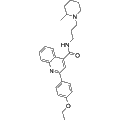
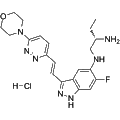
Ezurpimtrostat (hydrochloride) is a potent and selective PPT1 inhibitor with multiple biological activities. It disrupts lysosomal function, modulates autophagy, and induces apoptosis, making it a valuable tool in cancer research and immunology. This compound has demonstrated efficacy in reducing inflammatory markers such as IFN-α and CRP, as well as in lowering viral loads of SARS-CoV-2. Ezurpimtrostat is suitable for investigating conditions such as systemic lupus erythematosus, hepatocellular carcinoma, fibrosis, and other related disorders.