
- Cat. No.
- A13471
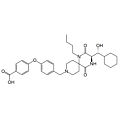
Aplaviroc
Synonyms: AK 602; GW 873140; ONO 4128
Aplaviroc is a CCR5 entry inhibitor developed for the treatment of HIV infection.
In stock
View Details
Search by product name, CAS, target or catalog number. Press Down Arrow to reach product suggestions, Tab to move between links, and Escape to close suggestions.
CC chemokine receptor (CCR) antagonists block G protein-coupled receptors that guide leukocyte migration. CCR2, a receptor for monocyte chemoattractant protein 1 (MCP-1), was cloned in 1994 as two splice variants. CCR5 was identified in 1996 as a fusion cofactor for macrophage-tropic human immunodeficiency virus type 1 (HIV-1). Maraviroc, described in 2005 as a selective small-molecule CCR5 inhibitor, blocks this route of viral entry. Other CCR5 antagonists include vicriviroc malate and aplaviroc, while INCB3344 and MK-0812 target CCR2. Cenicriviroc blocks both CCR2 and CCR5, and GSK2239633A is a CCR4 antagonist for studies of T cell trafficking.
Synonyms: AK 602; GW 873140; ONO 4128
Aplaviroc is a CCR5 entry inhibitor developed for the treatment of HIV infection.
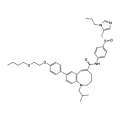
Synonyms: TAK-652; TBR-652
Cenicriviroc is an experimental drug candidate for the treatment of HIV infection.Cenicriviroc is an inhibitor of CCR2 and CCR5 receptors, allowing it to function as an entry inhibitor which prevents the virus from entering into a human cell.
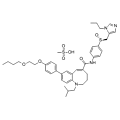
Synonyms: TAK-652 Mesylate; TBR-652 Mesylate
Cenicriviroc, also known as TAK-652 and TBR-652, is an inhibitor of CCR2 and CCR5 receptors, allowing it to function as an entry inhibitor which prevents the virus from entering into a human cell. CAS: 199673-74-0(LY 334370 hydrochloride); 182563-08-2 (LY 334370 Free Base)
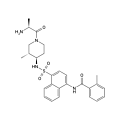
ML604086 is a selective CCR8 inhibitor, inhibiting CCL1 binding to CCR8 on circulating T-cells. ML604086 inhibits CCL1 mediated chemotaxis and increases in intracellular Ca2+ concentrations.

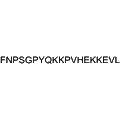
CKLF1-C19 is the C-terminal peptide of human chemokine-like factor 1 (CKLF1). CKLF1-C19 interacts with CCR4, and inhibits chemotaxis induced by both CKLF1 and CCL17. CKLF1-C19 can suppress allergic lung inflammation via inhibiting chemotaxis mediated by CCR3 and CCR4.
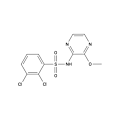
AZD2098 is a potent and selective CCR4 inhibitor with pIC₅₀ values of 7.8–8.0 across human, rat, mouse, and dog. It is commonly used in asthma research to study CCR4-mediated inflammatory pathways.
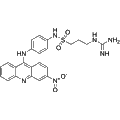
Synonyms: NSC 1
NSC177365 is a potent CcrM inhibitor that acts by competitively disrupting DNA binding. It demonstrates significant antibacterial activity, displaying IC50 values of 2.3 μM and 14.6 μM against C. crescentus and M. lincolnii, respectively. Furthermore, NSC177365 has potential applications in reversing neurodegenerative disorders and shows promise as an anticancer agent, making it a valuable tool for chemical research.
Out of stock
All 3 sizes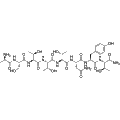
Synonyms: D-Ala-peptide T-amide; Adaptavir
DAPTA is a synthetic peptide that acts as a selective inhibitor of the CCR5 receptor. By blocking CCR5, DAPTA interferes with viral entry into host cells, exhibiting significant anti-HIV activity. This compound is valuable for research in virology and the development of therapeutic strategies against HIV.
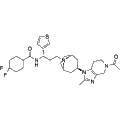
CCR5 antagonist 3 is a potent inhibitor of the CCR5 receptor, exhibiting an IC50 of 15.90 nM. This compound demonstrates broad-spectrum anti-HIV-1 activity, making it a valuable tool for research focused on HIV-1 infection mechanisms and therapeutic development. Its specificity for CCR5 enhances its potential utility in studying chemokine receptor modulation and viral entry inhibition in various biological contexts.
Out of stock
All 3 sizes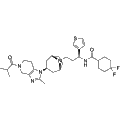
CCR5 antagonist 2 is a potent inhibitor of the CCR5 receptor, exhibiting an IC50 of 8.34 nM. This compound demonstrates broad-spectrum anti-HIV-1 activity and can be utilized in research focused on HIV pathogenesis and therapy development. Its mechanism of action makes it a valuable tool for studies aimed at blocking viral entry and understanding the role of CCR5 in immune response.
Out of stock
All 3 sizes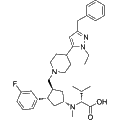
Synonyms: MRK-1
CMPD167 is a selective CCR5 inhibitor that exerts its antiviral effects by blocking the CCR5 receptor, which is critical for the entry of certain viruses into host cells. This compound demonstrates potent antiviral activity in vitro, making it a valuable tool for research on viral infections, particularly in studies related to HIV. CMPD167 can facilitate investigations into CCR5-related pathways and the development of therapeutic strategies targeting viral entry mechanisms.
Out of stock
All 3 sizes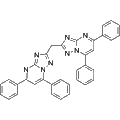
CB-0821 is a high-affinity CCR5 inhibitor with a Ki value of 0.04 nM. It effectively binds to the hydrophobic pocket of the CCR5 protein, disrupting the interactions between viral proteins and CCR5, which inhibits viral entry into cells. This compound is poised for use in anti-HIV research applications, facilitating studies on viral tropism and potential therapeutic strategies.
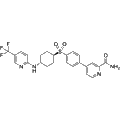
CCR6 Inhibitor 1 is a highly selective inhibitor of the CCR6 receptor, demonstrating IC50 values of 0.45 nM for monkey CCR6 and 6 nM for human CCR6, while exhibiting minimal activity against human CCR1 and CCR7. This inhibitor effectively prevents ERK phosphorylation, making it a valuable tool in the study of signaling pathways. CCR6 Inhibitor 1 is employed in research focused on autoimmune diseases and cancer, facilitating insights into therapeutic strategies targeting CCR6-related pathways.
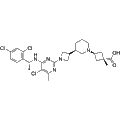
Synonyms: RPT193
Zelnecirnon is an orally active CCR4 inhibitor that effectively blocks the recruitment of Th2 inflammatory immune cells to inflamed tissues. This compound exhibits potent anti-inflammatory activity, making it valuable in researching allergic inflammation associated with conditions such as atopic dermatitis and asthma. Zelnecirnon serves as a critical tool for understanding and developing therapeutic strategies in inflammatory diseases.
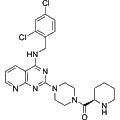
CCR4 Antagonist 4 is a selective and potent inhibitor of the CC chemokine receptor-4 (CCR4), exhibiting an IC50 of 0.02 μM. This compound effectively blocks MDC-mediated chemotaxis and Ca2+ mobilization, with IC50 values of 0.007 μM and 0.003 μM, respectively. CCR4 Antagonist 4 is valuable for investigations into allergic inflammation mechanisms and related therapeutic applications.
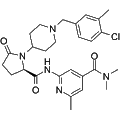
Synonyms: AKST4290
ALK4290 is a potent, orally active inhibitor of CCR3, exhibiting a Ki of 3.2 nM for human CCR3. Its biological activity positions ALK4290 as a valuable tool for research into neovascular age-related macular degeneration and Parkinsonism. This compound may help elucidate the role of CCR3 in these diseases, facilitating the development of targeted therapeutic strategies.
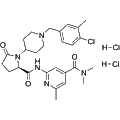
Synonyms: AKST4290 dihydrochloride
ALK4290 dihydrochloride is a potent inhibitor of the CCR3 receptor, exhibiting a Ki value of 3.2 nM for human CCR3. This compound demonstrates significant potential for modulating immune responses, making it a valuable tool in the study of neovascular age-related macular degeneration and Parkinson's disease. Researchers can utilize ALK4290 to investigate its effects on CCR3-related signaling pathways and its implications in various pathological conditions.
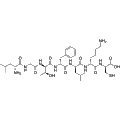
ECL1i is an allosteric inhibitor targeting the CCR2 receptor. It selectively disrupts CCL2/CCR2-mediated chemotaxis, thereby impeding the recruitment of CCR2-positive cells. ECL1i has demonstrated efficacy in attenuating disease progression in models of experimental autoimmune encephalomyelitis, making it a valuable tool for studying autoimmune disease mechanisms and potential therapeutic interventions.
Out of stock
All 3 sizes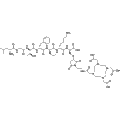
DOTA-ECL1i is a CCR2 inhibitor conjugated with DOTA, designed for use in positron emission tomography (PET) imaging. When radiolabeled with 68Ga, DOTA-ECL1i provides a specific PET tracer that targets CCR2 expression in various pathological conditions. This compound is applicable in research focused on pulmonary fibrosis, cardiac injury, abdominal aortic aneurysm inflammation, atherosclerosis, and cancers of the head, neck, and pancreas.
Out of stock
All 3 sizes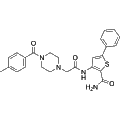
CCR5/CXCR3-IN-1 is a potent inhibitor of the chemokine receptors CXCR3 and CCR5. This compound effectively suppresses the chemotaxis of transformed cells expressing CCR5 and CXCR3, while exhibiting no inhibitory effect on CXCR4-expressing transfected cells. CCR5/CXCR3-IN-1 is valuable for research into chronic arthritic rheumatism and other conditions where modulation of these receptors is crucial.
Out of stock
All 3 sizes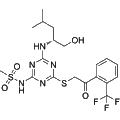
CX3CR1-IN-2 is a selective inhibitor of CX3CR1, demonstrating an IC50 of 0.04 μM. This compound effectively disrupts the binding of CX3CR1 to its ligand, fractalkine (CX3CL1). CX3CR1-IN-2 is valuable for studying cardiovascular diseases, including heart failure and cardiomyopathy, providing insights into the underlying mechanisms and potential therapeutic targets in these conditions.
Out of stock
All 3 sizes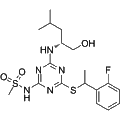
CX3CR1-IN-1 is a potent CX3CR1 inhibitor, exhibiting an IC50 of 9 nM. This compound is instrumental in investigating the role of CX3CR1 in various cardiovascular diseases. Its selective inhibition of CX3CR1 allows for elucidation of underlying mechanisms and potential therapeutic strategies in related pathological conditions.
Out of stock
All 3 sizes