
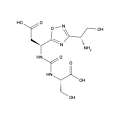
- Cat. No.
- A12148
PD-1-IN-18
PD-1-IN-18 is a PD1 signaling pathway inhibitor, which acts as an immunomodulator.
In stock
View Details
Search by product name, CAS, target or catalog number. Press Down Arrow to reach product suggestions, Tab to move between links, and Escape to close suggestions.
PD-1/PD-L1 inhibitors are research compounds that block binding between an inhibitory T cell receptor and its ligand. Programmed cell death protein 1 (PD-1) was first identified in 1992 as a gene induced in cell lines undergoing programmed cell death. Its ligand, programmed death-ligand 1 (PD-L1), is a B7 family protein whose binding to PD-1 inhibits T cell proliferation and cytokine secretion. This checkpoint limits T cell activation and is studied in immune tolerance, tumor immunology and chronic infection. Small molecules such as BMS-202 bind PD-L1 and induce its dimerization, which hides the surface that engages PD-1. The category lists BMS-1166, BMS-202 and PD-1-IN-1 as small-molecule tools, alongside the anti-PD-L1 antibody avelumab as a reference reagent.
PD-1-IN-18 is a PD1 signaling pathway inhibitor, which acts as an immunomodulator.
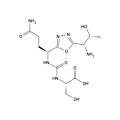
PD-1-IN-17 is a programmed cell death-1 (PD-1) inhibitor extracted from patent WO2015033301A1, Compound 12, inhibits 92% splenocyte proliferation at 100 nM.
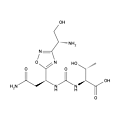
PD-1-IN-1 is an inhibitor of programmed cell dealth-1 (PD-1) extracted from patent WO2015033299A1, compound example 4. PD-1-IN-1 can be used as immune modulator.
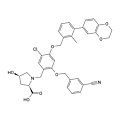
BMS-1166 is a potent PD-1/PD-L1 interaction inhibitor with an IC50 of 1.4 nM. BMS-1166 antagonizes the inhibitory effect of PD-1/PD-L1 immune checkpoint on T cell activation.
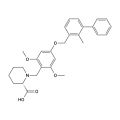
Synonyms: PD-1 /PD-Ll inhibitor; PD1-PDL1 inhibitor 1
PD1-PDL1 inhibitor 1 is a PD-1/PD-L1 interaction inhibitor.
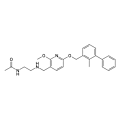
Synonyms: PD1-PDL1 inhibitor 2
PD-1/PD-L1 inhibitor 2 is a PD-1/PD-L1 interaction inhibitor.
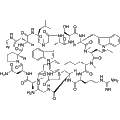
PD-1/PD-L1-IN 3 is a macrocyclic peptide that acts as a selective inhibitor of the PD-1/PD-L1 and CD80/PD-L1 interactions. By binding to PD-L1, it effectively disrupts the binding of PD-L1 to PD-1 and CD80, exhibiting IC50 values of 5.60 nM and 7.04 nM, respectively. This compound is valuable for research in various fields, particularly in cancer immunotherapy and the study of infectious diseases.
Out of stock
All 3 sizes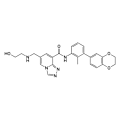
PD-1-IN-22 is a potent programmed cell death-1 (PD-1)/programmed cell death-ligand 1 (PD-L1) interaction inhibitor with an IC50 of 92.3 nM.
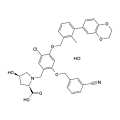
Synonyms: BMS-1166 HCl
BMS-1166 hydrochloride is a potent PD-1/PD-L1 interaction inhibitor with an IC50 of 1.4 nM. BMS-1166 antagonizes the inhibitory effect of PD-1/PD-L1 immune checkpoint on T cell activation.
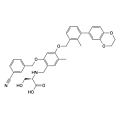
BMS-1001 is a potent inhibitor of PD-1/PD-L1 interaction with EC50 of 253 nM.
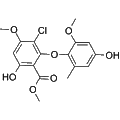
PD-1/PD-L1-IN-54 is an inhibitor of the PD-1/PD-L1 interaction, targeting immune checkpoints critical for tumor immune evasion. With a KD of 55.8 μM for PD-1 and 46.4 μM for PD-L1, and an IC50 of 88.6 μM, this compound enhances CD8+ T cell activation and promotes the secretion of key cytokines such as IFN-γ and IL-2. Furthermore, PD-1/PD-L1-IN-54 exhibits anticancer properties by inhibiting tumor cell proliferation and inducing apoptosis, while also modulating T cell immunity via the PI3K/Akt signaling pathway.
Out of stock
All 3 sizes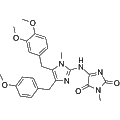
Naamidine J is an imidazole-type alkaloid that functions as a CSE1L/PD-L1 inhibitor. It demonstrates significant anti-inflammatory activity by reducing pro-inflammatory cytokines such as TNF-α, IL-1β, and IL-6, while enhancing the expression of anti-inflammatory markers like CD206 and Arg-1. Additionally, Naamidine J exhibits antitumor properties and alleviates pulmonary tissue edema and inflammatory infiltrates in murine models. This compound is valuable for research focused on the immune microenvironment in the contexts of acute lung injury and cancer.
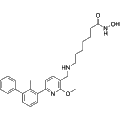
PD-L1/HDAC6-IN-1 is a dual inhibitor targeting PD-L1 and HDAC6, effectively disrupting the PD-L1/PD-1 interaction with IC50 values of 26.8 nM and 69 nM, respectively. This compound significantly enhances the cytotoxicity of Jurkat T cells against HepG2 cells with an IC50 of 3.4 μM. Additionally, PD-L1/HDAC6-IN-1 demonstrates favorable pharmacokinetics in rat models, achieving a drug exposure level of 871.62 ng·h/mL, and shows promising antitumor efficacy in B16-F10 xenograft models in mice.
Out of stock
All 3 sizes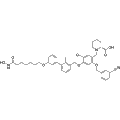
PD-L1/HDAC-IN-1 is a dual inhibitor targeting PD-L1, HDAC2, and HDAC3, with IC50 values of 88.10 nM, 27.98 nM, and 14.47 nM, respectively. This compound effectively disrupts the PD-1/PD-L1 interaction and demonstrates minimal cytotoxicity in MCF-7 cells (IC50=19.34 μM). PD-L1/HDAC-IN-1 enhances the expression of PD-L1 and CXCL10, thereby facilitating an anti-tumor immune response through increased T-cell recruitment into the tumor microenvironment (TME). Its unique mechanism positions it as a valuable tool for research in cancer immunotherapy.
Out of stock
All 3 sizes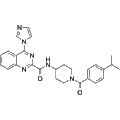
CYP51/PD-L1-IN-3 is a dual inhibitor targeting CYP51 and PD-L1, exhibiting potent antifungal activity with IC50 values of 0.205 μM and 0.039 μM, respectively. This compound induces early apoptosis in fungal cells by reducing levels of intracellular IL-2, NLRP3, and NF-κBp65 proteins. Additionally, CYP51/PD-L1-IN-3 causes mitochondrial damage and reactive oxygen species (ROS) accumulation, ultimately resulting in fungal lysis and cell death. This compound serves as a valuable tool for research in fungal infections and immune modulation.
Out of stock
All 3 sizes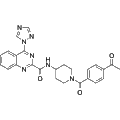
CYP51/PD-L1-IN-2 is a quinazoline compound that functions as a dual inhibitor of CYP51 and PD-L1, exhibiting IC50 values of 0.263 μM and 0.017 μM, respectively. It displays notable antifungal activity by triggering early apoptosis in fungal cells, leading to significant reductions in intracellular IL-2, NLRP3, and NF-κBp65 protein levels. Additionally, CYP51/PD-L1-IN-2 induces mitochondrial damage and reactive oxygen species (ROS) accumulation, culminating in fungal lysis and subsequent cell death. This compound is valuable for research exploring antifungal mechanisms and cancer immunotherapy.
Out of stock
All 3 sizes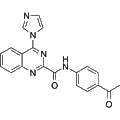
CYP51/PD-L1-IN-1 is a dual inhibitor targeting both CYP51 and PD-L1, exhibiting an IC50 of 0.884 μM for CYP51 and 0.083 μM for PD-L1. This quinazoline compound demonstrates notable antifungal activity by inducing early apoptosis in fungal cells while significantly reducing intracellular levels of IL-2, NLRP3, and NF-κBp65. Additionally, CYP51/PD-L1-IN-1 contributes to mitochondrial damage and reactive oxygen species (ROS) accumulation, ultimately leading to fungal lysis and cell death. This compound is valuable for research focused on antifungal therapies and immune modulation.
Out of stock
All 3 sizes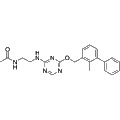
PD-L1-IN-1 is a potent inhibitor targeting programmed cell death ligand 1 (PD-L1) with an IC50 of 115 nM. It effectively disrupts the PD-L1 and PD-1 interaction, enhancing antitumor immune responses in co-cultures of PD-L1 expressing cancer cells and peripheral blood mononuclear cells. Additionally, PD-L1-IN-1 demonstrates low cytotoxicity towards healthy cells, making it a valuable tool for immunological research and therapeutic applications in cancer treatment.
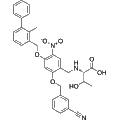
PD-1/PD-L1-IN-10 is a potent orally active inhibitor of the PD-1/PD-L1 interaction, with an IC50 value of 2.7 nM. This compound exhibits significant anticancer efficacy by blocking the immune checkpoint pathway, thereby enhancing T-cell activation and promoting anti-tumor responses. PD-1/PD-L1-IN-10 is valuable for research in immunotherapy and cancer treatment studies.
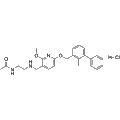
BMS-202 hydrochloride is a potent inhibitor of the PD-1/PD-L1 complex, exhibiting an IC50 of 18 nM and a KD of 8 μM. This nonpeptidic molecule selectively binds to PD-L1, effectively blocking the interaction between human PD-1 and PD-L1. BMS-202 hydrochloride demonstrates significant antitumor activity, making it a valuable tool for research in immunotherapy and cancer biology.
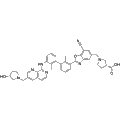
Synonyms: PD-1/PD-L1-IN-8
INCB086550 is a potent oral small-molecule inhibitor of PD-L1, exhibiting IC50 values of 3.1, 4.9, and 1.9 nM for human, cynomolgus, and rat PD-L1, respectively. This compound promotes the dimerization of cell-surface PD-L1 and facilitates its entry into Golgi vesicles, leading to nuclear trafficking. INCB086550 is primarily used in cancer research, particularly in studies focusing on immune checkpoint regulation and tumor microenvironment modulation.
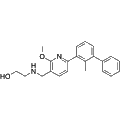
PD-1/PD-L1-IN-9 is a potent inhibitor of the PD-1/PD-L1 interaction, exhibiting an IC50 value of 3.8 nM. This compound enhances the antitumor activity of immune cells against tumor cells. Additionally, PD-1/PD-L1-IN-9 demonstrates significant in vivo antitumor efficacy in the CT26 mouse model, making it a valuable tool for cancer immunotherapy research.
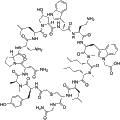
BMS-986189 is a macrocyclic peptide that functions as a highly potent PD-L1 inhibitor, demonstrating an IC50 of 1.03 nM in disrupting the PD-1/PD-L1 interaction. This compound is suitable for cancer research applications, particularly in studies involving human lung carcinoma cells such as L2987, making it valuable for exploring immune checkpoint mechanisms and developing novel therapeutic strategies.
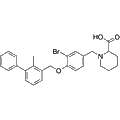
BMS-8 is a selective inhibitor of the PD-1/PD-L1 interaction, exhibiting an IC50 of 7.2 μM. It directly binds to PD-L1, promoting the formation of PD-L1 homodimers, thereby obstructing the engagement with PD-1. This compound is primarily utilized in cancer immunotherapy research, particularly in studies focused on the modulation of immune checkpoint pathways.
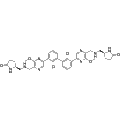
Synonyms: GS-4224; PD-1/PD-L1-IN 7
Evixapodlin is a potent inhibitor of the PD-1/PD-L1 protein-protein interaction, exhibiting an IC50 of 0.213 nM. This compound demonstrates significant anticancer and antiviral activities, making it a valuable tool for research in immunotherapy and viral pathogenesis. Evixapodlin is particularly useful for studying the modulation of immune responses in tumor environments and understanding the interplay between immune checkpoints and viral infections.