Phospholipids

Phospholipids, mainly glycerophospholipids, form cell membrane bilayers and give rise to lipid signaling mediators. Each glycerophospholipid carries fatty acyl or ether-linked chains on a glycerol backbone and a phosphate-containing head group. Egg phosphatidylcholines, a natural mixture of phosphatidylcholine species, are commonly used to prepare model membranes and vesicles. sn-Glycero-3-phosphocholine is the deacylated backbone of phosphatidylcholine and a water-soluble metabolite of choline metabolism. Oxidized phospholipids such as POVPC arise when polyunsaturated acyl chains in membranes and lipoproteins are oxidized. 2-O-Methyl PAF C-16 is an ether lipid analog of platelet-activating factor (PAF). A few compounds, such as the nucleotide 5-PA-dUTP, are phosphate-containing reagents rather than phospholipids.

Items 126-150 of 279

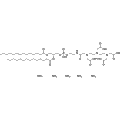
  • 14:0 PE-DTPA pentaammonium
    Cat. No.
    A90444

    14:0 PE-DTPA pentaammonium

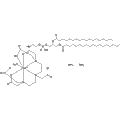
    14:0 PE-DTPA pentaammonium is a phospholipid-based chelator that effectively binds metal ions through its DTPA (diethylenetriaminepentaacetic acid) moiety. This compound facilitates the study of metal ion interactions in biological systems and can be utilized in a variety of applications including targeted drug delivery and imaging studies. Its unique structure allows for enhanced metal ion coordination, making it a valuable tool in biochemical research.

    Out of stock

    All 3 sizes
  • 16:0 Azidocaproyl PE ammonium
    Cat. No.
    A90456

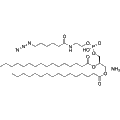
    16:0 Azidocaproyl PE ammonium

    16:0 Azidocaproyl PE ammonium is a clickable phospholipid that facilitates bioorthogonal reactions in lipid-based systems. This reagent is essential for labelling and studying membrane dynamics, liposome formation, and lipid interactions in various biological contexts. Its unique azide functional group enables efficient conjugation with alkyne-containing probes, making it valuable in imaging and drug delivery research applications.

    Out of stock

    All 3 sizes
  • C16 Ceramide-suc-PEG2K-maleimide
    Cat. No.
    A90588

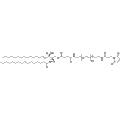
    C16 Ceramide-suc-PEG2K-maleimide

    C16 Ceramide-suc-PEG2K-maleimide is a functionalized polyethylene glycol (PEG) lipid designed for the synthesis of lipid nanoparticles. This compound facilitates drug delivery applications, leveraging its lipid-based properties to enhance cellular uptake and bioavailability of therapeutic agents. Its unique structure allows for versatile functionalization, making it suitable for various formulations in drug delivery research.

    Out of stock

    All 3 sizes
  • 18:1-6:0 Biotin PI(3,5)P2 ammonium)
    Cat. No.
    A90656

    18:1-6:0 Biotin PI(3,5)P2 ammonium)

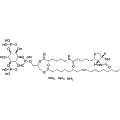
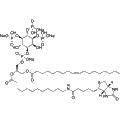
    18:1-6:0 Biotin PI(3,5)P2 ammonium is a biotinylated phosphoinositide, specifically targeting lipid signaling pathways. It plays a crucial role in cell signaling processes, particularly in the regulation of membrane trafficking and cytoskeletal dynamics. This reagent is suitable for applications such as studying lipid interactions, protein localization, and signal transduction in various biological systems.

    Out of stock

    All 3 sizes
  • 16:0 Phosphatidylpropanol
    Cat. No.
    A90665

    16:0 Phosphatidylpropanol

    Synonyms: 1,2-Dipalmitoyl-sn-glycero-3-phosphopropanol sodium

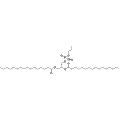
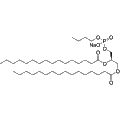
    16:0 Phosphatidylpropanol is a phosphatidyl alcohol featuring propanol head groups. This compound is utilized in research to study membrane biology, lipid metabolism, and the interaction of bioactive lipids with proteins. Its unique structure allows for investigations into cellular signaling pathways and the role of phospholipids in various biological processes.

    Out of stock

    All 3 sizes
  • 18:0-Azo PC
    Cat. No.
    A90728

    18:0-Azo PC

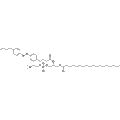
    18:0-Azo PC is a phosphatidylcholine analog that functions as a photoswitchable compound. Upon exposure to light, it undergoes cis/trans isomerization due to the azobenzene moiety, which can regulate cell signaling pathways in a controlled manner. This compound is valuable for research applications involving photoregulation of cellular processes and studying lipid bilayer dynamics.

    Out of stock

    All 3 sizes
  • 16:0-23:2 Diyne PE
    Cat. No.
    A90743

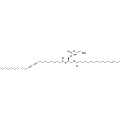
    16:0-23:2 Diyne PE

    Synonyms: PTPE

    16:0-23:2 Diyne PE is a diacetylene lipid that serves as a valuable chemical probe in lipid research. This compound can facilitate studies in membrane biophysics and lipid membrane assembly due to its unique structural properties. Its ability to undergo photopolymerization allows for applications in imaging and characterizing lipid interactions in cellular environments.

    Out of stock

    All 3 sizes
  • 18:1 (Δ9-Trans) PG
    Cat. No.
    A90780

    18:1 (Δ9-Trans) PG

    18:1 (Δ9-Trans) PG is a phosphatidylglycerol characterized by a trans configuration at the 9th carbon of its fatty acid chain. This compound plays a critical role in cell membrane formation and stability, influencing lipid metabolism and signaling pathways. It is commonly utilized in research applications related to membrane biology, cellular signaling, and the study of lipid-protein interactions.

    Out of stock

    All 3 sizes
  • 18:0-18:2 PG sodium
    Cat. No.
    A90796

    18:0-18:2 PG sodium

    Synonyms: 1-Stearoyl-2-linoleoyl-sn-glycero-3-phospho-(1'-rac-glycerol) sodium

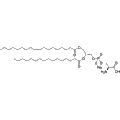
    18:0-18:2 PG sodium is a glycerophospholipid that consists of Stearic acid and Linoleic acid, linked to phospho-rac-(1-glycerol). This compound plays a vital role in membrane fluidity and cellular signaling processes. It is commonly utilized in research applications focused on lipid metabolism, cell membrane studies, and the investigation of signaling pathways associated with phospholipids.

    1 mg
    $340.00
    5 mg
    $865.00
    All 3 sizes
  • 16:0-i15:0 PC
    Cat. No.
    A90883

    16:0-i15:0 PC

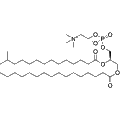
    16:0-i15:0 PC, a branched phosphatidylcholine, serves as a key component in lipid research and membrane biology. This lipid plays a significant role in studying membrane dynamics and biophysical properties of cellular structures. It is commonly utilized in investigations of lipid metabolism, membrane organization, and drug delivery systems.

    Out of stock

    All 3 sizes
  • 18:1-12:0 Biotin PIP3 tetrasodium
    Cat. No.
    A90958

    18:1-12:0 Biotin PIP3 tetrasodium

    18:1-12:0 Biotin PIP3 tetrasodium is a biotinylated phosphatidylinositol 3,4,5-trisphosphate (PIP3) derivative. This compound serves as a vital tool for studying lipid signaling pathways and interactions with lipid-binding proteins. Its biotinylation facilitates the capture and detection of PIP3 in cellular assays, making it ideal for research applications in membrane biology and signaling mechanisms in various cellular contexts.

    Out of stock

    All 3 sizes
  • 18:0 PE-DTPA (Gd) diammonium
    Cat. No.
    A90986

    18:0 PE-DTPA (Gd) diammonium

    Synonyms: DSPE-DTPA (Gd) diammonium

    18:0 PE-DTPA (Gd) diammonium is a gadolinium-based MRI imaging reagent designed for targeted lipid analysis in biological systems. This compound enhances contrast in magnetic resonance imaging, enabling the visualization of lipid structures and distributions. It is particularly useful in research applications involving lipid metabolism, membrane dynamics, and in-vivo imaging studies.

    1 mg
    $165.00
    5 mg
    $420.00
    All 2 sizes
  • 1-(1(Z)-Hexadecenyl)-2-linoleoyl-sn-glycero-3-phosphocholine
    Cat. No.
    A91126

    1-(1(Z)-Hexadecenyl)-2-linoleoyl-sn-glycero-3-phosphocholine

    Synonyms: C16(plasm)-18:2-PC; ​1-1(Z)-Hexadecenyl-2-Linoleoyl-sn-glycero-3-PC; PC(P-16:0/18:2)

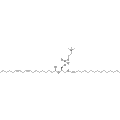
    1-(1(Z)-Hexadecenyl)-2-linoleoyl-sn-glycero-3-phosphocholine is a phosphatidylcholine that serves as a significant component in lipid preparations. This compound is utilized as a biomarker in metabolomic studies, contributing to the understanding of lipid metabolism and cellular signaling pathways. Its distinct fatty acid composition allows for its application in research focused on membrane dynamics and lipid interactions in biological systems.

    Out of stock

    All 3 sizes
  • 18:1 PE-N-20:4 ammonium
    Cat. No.
    A91167

    18:1 PE-N-20:4 ammonium

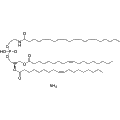
    18:1 PE-N-20:4 ammonium is a phosphatidylethanolamine derivative that acts as a precursor to bioactive lipids. This compound is involved in cellular signaling processes and has been studied for its role in modulating various physiological responses. It is applicable in lipid research, particularly in investigations concerning endocannabinoid-mediated pathways and membrane dynamics.

    Out of stock

    All 3 sizes
  • 16:0 Phosphatidylbutanol sodium
    Cat. No.
    A91289

    16:0 Phosphatidylbutanol sodium

    16:0 Phosphatidylbutanol sodium is a lipid primarily acting as an alkyl phosphate. This compound serves as a key component in studies exploring lipid metabolism and cell membrane dynamics. It is utilized in research related to signal transduction pathways and cellular processes influenced by phospholipid interactions.

    Out of stock

    All 3 sizes
  • 18:1(n9)-16:0 PS - IsoPure sodium
    Cat. No.
    A91316

    18:1(n9)-16:0 PS - IsoPure sodium

    18:1(n9)-16:0 PS - IsoPure sodium is an isomerically pure mixed-acyl glycerophospholipid that serves as a key component in lipid research. This reagent is essential for studying membrane dynamics, cell signaling pathways, and the role of phospholipids in cellular processes. It is particularly useful in the formulation of liposomes and model membranes for various biophysical analyses.

    Out of stock

    All 3 sizes
  • 18:1 Monomethyl PE
    Cat. No.
    A91375

    18:1 Monomethyl PE

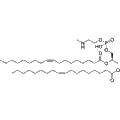
    18:1 Monomethyl PE is an alkyl phosphate that serves as a phospholipid analogue. It is commonly used in lipid research, particularly for examining membrane dynamics and properties. This reagent can facilitate the study of lipid metabolism and cell signaling pathways, making it a valuable tool for investigating cellular functions and interactions.

    Out of stock

    All 3 sizes
  • 18:1 DGS-NTA triammonium
    Cat. No.
    A91380

    18:1 DGS-NTA triammonium

    Synonyms: DOGS NTA triammonium

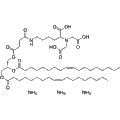
    18:1 DGS-NTA triammonium is a lipid-based chelator designed for the efficient capture of metal ions. It exhibits key biological activity by facilitating the study of metal-dependent proteins and enzymes. Its applications include biochemical assays, metal ion transport investigations, and functional studies of metalloproteins in various cellular contexts.

    Out of stock

    All 3 sizes
  • 18:0-20:4 PI(4)P ammonium
    Cat. No.
    A91396

    18:0-20:4 PI(4)P ammonium

    18:0-20:4 PI(4)P ammonium is a fatty acid characterized by its role in cell membrane structure and signaling. It acts as a precursor for phosphoinositides, playing a crucial role in various cellular processes, including signal transduction and cellular trafficking. This reagent is primarily utilized in research applications focused on lipid metabolism, membrane dynamics, and the study of phosphoinositide-mediated signaling pathways.

    Out of stock

    All 3 sizes
  • 18:1 Glutaryl PE-alendronate trisodium
    Cat. No.
    A91411

    18:1 Glutaryl PE-alendronate trisodium

    18:1 Glutaryl PE-alendronate trisodium is a lipid compound that effectively reacts with SNAP-tags, providing a unique tool for biochemical labeling applications. This reagent facilitates the study of protein interactions, subcellular localization, and membrane dynamics in various biological contexts. Researchers can utilize this compound to probe cellular processes and enhance the understanding of lipid-related functions in different cellular environments.

    Out of stock

    All 3 sizes
  • DChemsPC
    Cat. No.
    A91466

    DChemsPC

    DChemsPC is a sterol-modified phospholipid that serves as a key component in lipid research. It plays an integral role in cell membrane biophysics, impacting membrane fluidity and protein function. This reagent is valuable for studying lipid interactions, membrane dynamics, and the development of lipid-based drug delivery systems.

    Out of stock

    All 3 sizes
  • 18:1 Phosphatidylmethanol sodium
    Cat. No.
    A91476

    18:1 Phosphatidylmethanol sodium

    18:1 Phosphatidylmethanol sodium is an alkyl phosphate that acts as a structural component in cellular membranes. This compound is utilized in studies examining lipid bilayer dynamics and membrane protein interactions. Its unique lipid profile makes it suitable for various applications in membrane biology and lipidomics research.

    Out of stock

    All 3 sizes
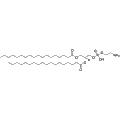
  • Ent-DSPE
    Cat. No.
    A91512

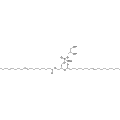
    Ent-DSPE

    Synonyms: 2,3-Distearoyl-sn-glycero-1-phosphoethanolamine

    Ent-DSPE is an enantiomer of 1,2-Distearoyl-sn-glycero-3-phosphorylethanolamine (DSPE), designed to enhance lipid-based formulations. This compound serves as a critical building block for the preparation of lipid nanoparticles, facilitating effective drug delivery systems. Its application extends to research in nanomedicine and targeted therapeutics, allowing for improved bioavailability and therapeutic efficacy of encapsulated agents.

    Out of stock

    All 3 sizes
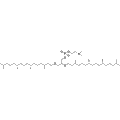
  • 4ME 16:0 Diether PC
    Cat. No.
    A91547

    4ME 16:0 Diether PC

    4ME 16:0 Diether PC is a diphytanoyl phosphatidylcholine that plays a crucial role as a membrane lipid. This compound exhibits key biological activities related to lipid bilayer stability and membrane fluidity. It is commonly utilized in research focusing on lipid metabolism, membrane structure studies, and the development of lipid-based drug delivery systems.

    Out of stock

    All 3 sizes
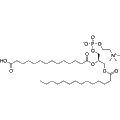
  • 14:0-14:0(COOH) PC
    Cat. No.
    A91593

    14:0-14:0(COOH) PC

    Synonyms: DMPC-COOH

    14:0-14:0(COOH) PC is a phosphatidylcholine lipid characterized by its unique composition of 14-carbon fatty acid chains. This lipid is primarily utilized in the formation of supported monolayers, making it valuable for studies involving membrane dynamics and biophysical properties. Its applications extend to investigating lipid interactions and model membrane systems in cellular biology and biochemistry research.

    Out of stock

    All 3 sizes

Items 126-150 of 279

Added to your cart

View Cart Checkout

    Loading...