Phospholipids

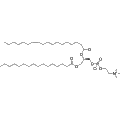
Phospholipids, mainly glycerophospholipids, form cell membrane bilayers and give rise to lipid signaling mediators. Each glycerophospholipid carries fatty acyl or ether-linked chains on a glycerol backbone and a phosphate-containing head group. Egg phosphatidylcholines, a natural mixture of phosphatidylcholine species, are commonly used to prepare model membranes and vesicles. sn-Glycero-3-phosphocholine is the deacylated backbone of phosphatidylcholine and a water-soluble metabolite of choline metabolism. Oxidized phospholipids such as POVPC arise when polyunsaturated acyl chains in membranes and lipoproteins are oxidized. 2-O-Methyl PAF C-16 is an ether lipid analog of platelet-activating factor (PAF). A few compounds, such as the nucleotide 5-PA-dUTP, are phosphate-containing reagents rather than phospholipids.

Items 176-200 of 279

  • 18:1 DGS-NTA(Co)
    Cat. No.
    A92546

    18:1 DGS-NTA(Co)

    18:1 DGS-NTA(Co) is a glycosphingolipid-based chelator that selectively binds to metal ions. It serves as a crucial tool in various biochemical assays and research applications involving metal ion chelation and membrane interactions. Its unique properties make it valuable for studying lipid biology and metal transport mechanisms in cellular systems.

    Out of stock

    All 3 sizes
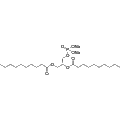
  • 18:1(n9)-16:0 PG-IsoPure sodium
    Cat. No.
    A92555

    18:1(n9)-16:0 PG-IsoPure sodium

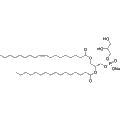
    18:1(n9)-16:0 PG-IsoPure sodium is an isomerically pure mixed-acyl glycerophospholipid that targets lipid membranes. It demonstrates key biological activities such as membrane stabilization and modulation of lipid bilayer properties. This reagent is primarily utilized in research applications involving lipid metabolism, cellular signaling, and the study of membrane-associated processes.

    Out of stock

    All 3 sizes
  • 10:0 PA sodium
    Cat. No.
    A92579

    10:0 PA sodium

    Synonyms: 1,2-Didecanoyl-sn-glycero-3-phosphate sodium

    10:0 PA sodium (1,2-Didecanoyl-sn-glycero-3-phosphate sodium) is an anionic lipid that serves as a critical component in the formulation of nanoemulsions. It enhances the oral bioavailability of hydrophobic drugs, such as Etoposide, making it a valuable reagent in pharmaceutical research. This compound is essential for studies focusing on drug delivery systems and lipid formulation development.

    Out of stock

    All 3 sizes
  • 18:1-6:0 Biotin PI(4,5)P2 triammonium
    Cat. No.
    A92656

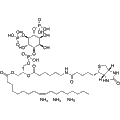
    18:1-6:0 Biotin PI(4,5)P2 triammonium

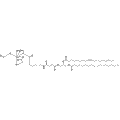
    18:1-6:0 Biotin PI(4,5)P2 triammonium is a biotinylated phosphoinositide targeting lipid signaling pathways. It plays a critical role in cell membrane dynamics and protein binding interactions within the cellular context. This reagent is suitable for applications in studying lipid-protein interactions, membrane trafficking, and signal transduction processes in various cellular systems.

    Out of stock

    All 3 sizes
  • 16:0-18:0 (9-10BR) PC
    Cat. No.
    A92659

    16:0-18:0 (9-10BR) PC

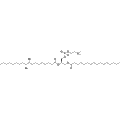
    16:0-18:0 (9-10BR) PC is a brominated phosphatidylcholine derivative that targets lipid membranes. This compound exhibits significant biological activity by influencing membrane fluidity and lipid bilayer properties. It is utilized in research applications investigating membrane dynamics, lipid signaling processes, and the interactions of lipids with proteins in various cellular contexts.

    Out of stock

    All 3 sizes
  • 12:0 Biotinyl LPA ammonium
    Cat. No.
    A92806

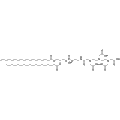
    12:0 Biotinyl LPA ammonium

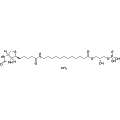
    12:0 Biotinyl LPA ammonium is a biotinylated lipid that serves as a valuable tool for biochemical research. It targets lipid signaling pathways and can be utilized in cell-based assays to study lipid-protein interactions. This compound is particularly useful for applications involving biotin affinity purification and labeling of lipid-related biological molecules in various experimental contexts.

    Out of stock

    All 3 sizes
  • 16:0-a15:0 PC
    Cat. No.
    A92815

    16:0-a15:0 PC

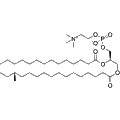
    16:0-a15:0 PC is a branched phosphatidylcholine lipid that plays a critical role in cellular membrane structure and function. This compound can be utilized in research focusing on lipid bilayer dynamics, membrane fluidity, and the biophysical properties of membranes. Its unique branching structure enhances the understanding of lipid interactions and their effects on cellular signaling and membrane-related processes.

    Out of stock

    All 3 sizes
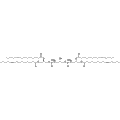
  • 13:0 Lyso PI
    Cat. No.
    A92835

    13:0 Lyso PI

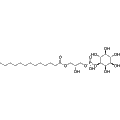
    13:0 Lyso PI is a phospholipid that serves as a key component in the formulation of lipid nanoparticles (LNPs) for drug delivery applications. Its unique structure facilitates the stabilization and encapsulation of therapeutic agents, improving their bioavailability and distribution in biological systems. This reagent is instrumental in research focused on developing efficient delivery systems for nucleic acids, small molecules, and other biopharmaceuticals.

    Out of stock

    All 3 sizes
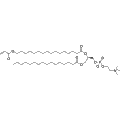
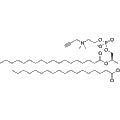
  • 18:0 Propargyl PC
    Cat. No.
    A92836

    18:0 Propargyl PC

    18:0 Propargyl PC is a clickable phospholipid designed for applications in click chemistry. Its unique propargyl group enables efficient conjugation to biological molecules, facilitating the study of membrane dynamics and lipid interactions. This reagent is ideal for researchers exploring lipid-based drug delivery systems, bioorthogonal labeling, and cellular imaging techniques.

    Out of stock

    All 3 sizes
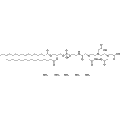
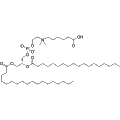
  • 18:0 Carboxypentyl PC
    Cat. No.
    A92848

    18:0 Carboxypentyl PC

    18:0 Carboxypentyl PC is a functionalized lipid that serves as a phospholipid derivative. This compound facilitates the study of lipid bilayer dynamics and membrane protein interactions, making it valuable in research related to cell membrane biology. Its unique structure supports the design of lipid-based drug delivery systems and aids in the investigation of lipid metabolism pathways.

    Out of stock

    All 3 sizes
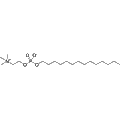
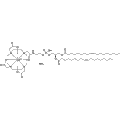
  • DOPE-DOTA (Gd) ammonium
    Cat. No.
    A92928

    DOPE-DOTA (Gd) ammonium

    DOPE-DOTA (Gd) ammonium is a lipid compound that utilizes a DOTA chelating agent to link DOPE with a gadolinium complex. This reagent serves as a critical contrast agent in magnetic resonance imaging (MRI), enhancing the visibility of tissues and structures in imaging studies. Its unique properties enable researchers to investigate various biological processes and improve diagnostic accuracy in preclinical and clinical research applications.

    Out of stock

    All 3 sizes
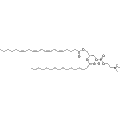
  • 20:4-16:0 PC - IsoPure
    Cat. No.
    A92968

    20:4-16:0 PC - IsoPure

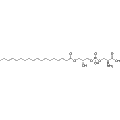
    20:4-16:0 PC - IsoPure is an isomerically pure mixed-acyl glycerophospholipid, targeting lipid bilayer composition and fluidity. This compound plays a crucial role in cellular membrane formation and function, making it valuable for research in membrane biology and lipid metabolism. Its high purity ensures reliable performance in experimental applications, supporting studies in cell signaling and membrane dynamics.

    Out of stock

    All 3 sizes
  • 16:0-18:1(n7) PC - IsoPure
    Cat. No.
    A93063

    16:0-18:1(n7) PC - IsoPure

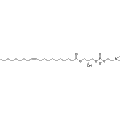
    16:0-18:1(n7) PC - IsoPure is an isomerically pure mixed-acyl glycerophospholipid targeted for lipid research. It serves as a valuable standard in the study of membrane biophysics and lipid metabolism. This compound aids in investigating lipid-related cellular processes and facilitates the exploration of lipid-mediated signaling pathways. Its purity ensures reliable results in various biochemical assays and experimental applications.

    Out of stock

    All 3 sizes
  • 16:0 CDP DG ammonium
    Cat. No.
    A93224

    16:0 CDP DG ammonium

    Synonyms: CDP-DAG ammonium; Dihexadecanoyl ammonium; Cytidine Diacylglycerol ammonium

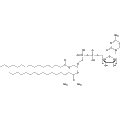
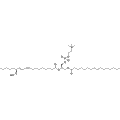
    16:0 CDP DG ammonium is a liponucleotide that serves as a key intermediate in the biosynthesis of glycerophospholipids. This compound is essential for the construction of cell membranes and plays a critical role in lipid metabolism. Its applications extend to studies focused on membrane dynamics, cellular signaling, and lipid signaling pathways.

    1 mg
    $320.00
    5 mg
    $820.00
    All 2 sizes
  • 1,2-Dihexanoyl-sn-glycero-3-PS sodium
    Cat. No.
    A93412

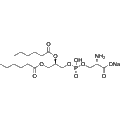
    1,2-Dihexanoyl-sn-glycero-3-PS sodium

    1,2-Dihexanoyl-sn-glycero-3-PS sodium is a phospholipid that features Hexanoic acid moieties at the sn-1 and sn-2 positions, serving as a model compound in membrane biochemistry. This reagent is utilized in studies of membrane dynamics, cell signaling processes, and the investigation of lipid-based therapeutics. Its structural properties make it valuable for research in lipidomics and membrane-related cellular functions.

    Out of stock

    All 3 sizes
  • 18:0 PE-DTPA
    Cat. No.
    A93443

    18:0 PE-DTPA

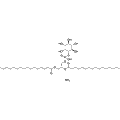
    18:0 PE-DTPA is a spin-labeled phospholipid that serves as a versatile tool for studying lipid interactions within cellular membranes. This compound effectively incorporates into lipid bilayers, allowing for the examination of membrane dynamics and the behavior of lipid assemblies. Its unique properties make it suitable for various applications in lipid biophysics and membrane biology research.

    Out of stock

    All 3 sizes
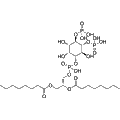
  • Cardiolipin sodium
    Cat. No.
    A93553

    Cardiolipin sodium

    Cardiolipin sodium is an anionic phospholipid known for its role in maintaining mitochondrial membrane integrity and function. It is composed of the monounsaturated fatty acid myristoleic acid, making it crucial for energy metabolism and apoptosis regulation. This reagent is primarily used in research applications focused on mitochondrial dynamics, bioenergetics, and cellular signaling pathways.

    Out of stock

    All 3 sizes
  • 16:0-16:0(Acrylate) PC
    Cat. No.
    A93768

    16:0-16:0(Acrylate) PC

    16:0-16:0(Acrylate) PC is a phospholipid primarily used in the formation of supported lipid monolayers. This compound serves as a valuable tool in membrane biology, facilitating studies on membrane dynamics, protein-lipid interactions, and lipid organization. Its unique structure allows for the creation of stable lipid films, making it essential for various applications in biophysical and biochemical research.

    Out of stock

    All 3 sizes
  • 16:0 PE-DTPA pentaammonium
    Cat. No.
    A93777

    16:0 PE-DTPA pentaammonium

    16:0 PE-DTPA pentaammonium is a lipid that interacts with membrane lipids, serving as a crucial component in membrane biophysics studies. Its unique structure enhances solubility and facilitates the investigation of lipid bilayer properties. This compound is applicable in research areas including lipid membrane dynamics, drug delivery systems, and the study of membrane protein interactions.

    Out of stock

    All 3 sizes
  • Tetradecylphosphocholine
    Cat. No.
    A94011

    Tetradecylphosphocholine

    Tetradecylphosphocholine is a zwitterionic surfactant primarily utilized as a detergent for the solubilization of membrane proteins. It effectively disrupts lipid bilayers, facilitating the extraction and purification of membrane-associated proteins essential for functional studies and biophysical assays. This reagent is instrumental in research areas such as structural biology and drug discovery, where membrane protein analysis is critical.

    100 mg
    $70.00
    250 mg
    $125.00
    All 4 sizes
  • 18:0-LPS
    Cat. No.
    A94075

    18:0-LPS

    Synonyms: Lysophosphatidylserine C18:0

    18:0-LPS (Lysophosphatidylserine C18:0) is a lysophosphatidylserine derivative that primarily targets lipid metabolism pathways. It functions as a lipid standard utilized in atherosclerosis research, facilitating the study of lipid-related diseases and cardiovascular health. Its applications include the assessment of lipid profiles and the investigation of lysophospholipid signaling in cellular processes.

    Out of stock

    All 3 sizes
  • LysoPC(20:1(11Z))
    Cat. No.
    A94379

    LysoPC(20:1(11Z))

    Lysophosphatidylcholine (LysoPC(20:1(11Z))) serves as a bioactive lipid that plays a significant role in lysophospholipid metabolism. This compound is known to modulate various biological processes, including cell signaling, inflammation, and membrane dynamics. LysoPC(20:1(11Z)) is frequently utilized in research applications focusing on cardiovascular diseases, neurobiology, and cell biology. Its ability to influence cellular responses makes it a valuable tool for investigating the roles of lysophospholipids in health and disease.

    Out of stock

    All 3 sizes
  • 1-Palmitoyl-2-13(S)-HpODE-sn-glycero-3-PC
    Cat. No.
    A94387

    1-Palmitoyl-2-13(S)-HpODE-sn-glycero-3-PC

    1-Palmitoyl-2-13(S)-HpODE-sn-glycero-3-PC is a phospholipid comprised of palmitic acid at the sn-1 position and 13(S)-hydroxy-octadecadienoic acid (HpODE) at the sn-2 position. This compound is critical for studies exploring membrane dynamics and lipid signaling pathways. Its unique structure facilitates research into the biological roles of oxidized lipids and their involvement in inflammatory processes.

    0.05 mg
    $215.00
    0.1 mg
    $390.00
    All 3 sizes
  • PtdIns-(1,2-dipalmitoyl) ammonium
    Cat. No.
    A95245

    PtdIns-(1,2-dipalmitoyl) ammonium

    PtdIns-(1,2-dipalmitoyl) ammonium (DPPI) is a phosphatidylinositol derivative featuring C16:0 fatty acyl chains. This compound is crucial for studies involving membrane dynamics, cell signaling, and lipid metabolism. DPPI is commonly used in research applications related to cell membrane formation, lipid bilayer studies, and the exploration of lipid-mediated cellular processes.

    0.1 mg
    $120.00
    0.5 mg
    $510.00
    All 3 sizes
  • PtdIns-(4,5)-P2 (1,2-dioctanoyl)
    Cat. No.
    A95771

    PtdIns-(4,5)-P2 (1,2-dioctanoyl)

    PtdIns-(4,5)-P2 (1,2-dioctanoyl) is a synthetic derivative of phosphatidylinositol that primarily targets cellular membranes. This compound plays a crucial role in cell signaling pathways, particularly in the regulation of cytoskeletal dynamics and membrane trafficking. It is commonly used in research focusing on phosphoinositide-mediated signaling and the investigation of cellular processes influenced by lipid-mediated interactions.

    0.5 mg
    $895.00
    1 mg
    $1,435.00
    All 2 sizes

Items 176-200 of 279

Added to your cart

View Cart Checkout

    Loading...