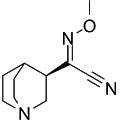
mAChR

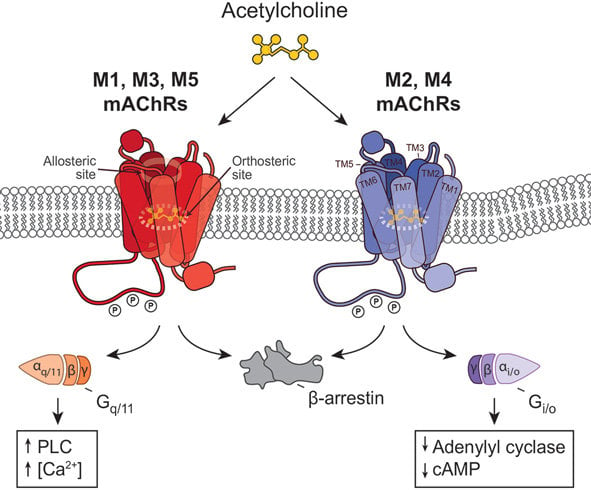
Muscarinic acetylcholine receptors (mAChRs) are a class of G protein-coupled receptors (GPCRs) found in the central and peripheral nervous systems, as well as in various other tissues and organs throughout the body. These receptors are named after muscarine, a natural alkaloid compound found in certain mushrooms, which was one of the first substances discovered to activate them.

There are five subtypes of muscarinic receptors, designated as M1 through M5, each with distinct tissue distribution and functions. Here's an overview of their roles:

  • M1 Receptors: Predominantly found in the central nervous system, particularly in regions associated with cognitive functions. Activation of M1 receptors is linked to memory and learning.
  • M2 Receptors: Found in the heart, where they play a crucial role in regulating heart rate and cardiac contractility. Activation of M2 receptors slows heart rate and reduces the force of cardiac contractions.
  • M3 Receptors: Present in smooth muscle tissues, such as those in the gastrointestinal tract, urinary bladder, and bronchial airways. Activation of M3 receptors leads to smooth muscle contraction.
  • M4 Receptors: Distributed mainly in the central nervous system and involved in modulating neurotransmitter release. Their role in cognition and neuropsychiatric disorders is of interest.
  • M5 Receptors: Located in certain areas of the brain and implicated in the modulation of dopamine release. Research suggests they may be relevant to Parkinson's disease and addiction.

Muscarinic receptors are activated by the neurotransmitter acetylcholine and play a vital role in regulating a wide range of physiological processes, including heart rate, smooth muscle contraction, glandular secretion, and neurotransmitter release. They are targets for various drugs, including anticholinergic agents, which block their activity, and drugs used to treat conditions like bradycardia and neurodegenerative disorders.

Understanding the functions and regulation of muscarinic acetylcholine receptors is essential for developing therapies that modulate their activity and for advancing our knowledge of how they contribute to various physiological and pathological processes in the body.

9 Items

  • Arecoline hydrobromide
    Cat. No.
    A11815

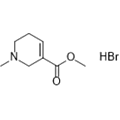
    Arecoline hydrobromide

    Synonyms: methyl 1,2,5,6-tetrahydro-1-methyl-3-pyridinecarboxylate hydrobromide

    Arecoline hydrobromide is a partial agonist of nicotinic (nAChR) and muscarinic acetylcholine receptors (mAChR). This naturally occurring psychoactive alkaloid possesses brain-penetrant properties and is known for its stimulation, alertness enhancement, anxiolytic effects, and anti-parasitic activity. Additionally, Arecoline hydrobromide can induce oxidative stress, making it valuable for research in neuropharmacology and related fields.

    100 mg
    $25.00
    200 mg
    $30.00
    All 5 sizes
  • Arecoline hydrochloride
    Cat. No.
    A61365

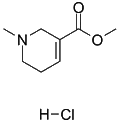
    Arecoline hydrochloride

    Arecoline hydrochloride is a partial agonist of nicotinic and muscarinic acetylcholine receptors (nAChR/mAChR). This psychoactive alkaloid demonstrates stimulation, increased alertness, anxiolytic effects, and possesses anti-parasitic properties. Additionally, Arecoline hydrochloride can induce oxidative stress, making it a valuable compound for research in neuropharmacology and parasitology.

    Out of stock

    All 3 sizes
  • Milameline hydrochloride
    Cat. No.
    A61379

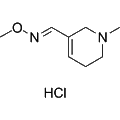
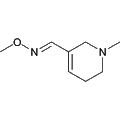
    Milameline hydrochloride

    Synonyms: CI 979 hydrochloride; RU 35926 hydrochloride

    Milameline hydrochloride is a nonselective, partial agonist of muscarinic receptors, demonstrated to enhance cognitive function. It exhibits comparable affinity across various human muscarinic receptor subtypes, with IC50 values of 1.3 µM for M1, 1.1 µM for M2, 1.5 µM for M3, and 1.9 µM for M4 receptors. Milameline hydrochloride produces both central and peripheral cholinergic effects and effectively reverses cognitive deficits induced by scopolamine. This compound serves as a valuable tool for research related to Alzheimer's disease and cognitive impairment.

    25 mg
    $1,275.00
    50 mg
    $1,625.00
    All 3 sizes
  • PTAC oxalate
    Cat. No.
    A61418

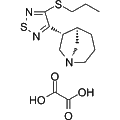
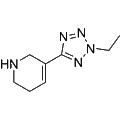
    PTAC oxalate

    PTAC oxalate is a selective ligand for muscarinic receptors, functioning as a partial agonist at M2 and M4 receptors while acting as an antagonist at M1, M3, and M5 receptors, with Ki values ranging from 0.2 to 2.8 nM in CHO cells. This compound demonstrates significant biological activity by alleviating mechanical allodynia associated with neuropathic pain and exhibiting potential antidepressant effects. PTAC oxalate serves as a valuable tool for research into muscarinic receptor function and the development of therapeutics for pain and mood disorders.

    25 mg
    $1,530.00
    50 mg
    $1,950.00
    All 3 sizes
  • Milameline
    Cat. No.
    A61432

    Milameline

    Synonyms: CI-979; RU35926

    Milameline is a nonselective, partial agonist of muscarinic receptors, demonstrating significant potential in cognitive enhancement. It exhibits balanced affinity across various human muscarinic receptor subtypes, with IC50 values of approximately 1.3 µM for M1, 1.1 µM for M2, 1.5 µM for M3, and 1.9 µM for M4 receptors. In addition to its central and peripheral cholinergic effects, Milameline counteracts cognitive deficits induced by Scopolamine. This compound is valuable for researching Alzheimer's Disease and other cognitive disorders.

    25 mg
    $1,275.00
    50 mg
    $1,625.00
    All 3 sizes
  • LU-25-077
    Cat. No.
    A61443

    LU-25-077

    LU-25-077 is a brain-penetrant N-demethyl metabolite of Lu 25-109, functioning primarily as a partial agonist of the M1 muscarinic acetylcholine receptor while exhibiting antagonistic properties toward M2 and M3 receptors. This compound is valuable for neurological research, enabling the exploration of cholinergic modulation in various pathophysiological conditions. It provides an important tool for studying cognitive processes and potential therapeutic strategies for neurodegenerative disorders.

    Out of stock

    All 3 sizes
  • L-687306
    Cat. No.
    A61453

    L-687306

    L-687306 is a high-affinity partial agonist of the muscarinic M1 receptor, demonstrating significant activity in rat ganglia. Additionally, it acts as a competitive antagonist at M2 and M3 muscarinic receptors in guinea pig cardiac and ileal tissues, respectively. This compound is valuable for investigating muscarinic receptor reserve and exploring muscarinic signaling pathways in various physiological contexts.

    Out of stock

    All 3 sizes
  • A-72055
    Cat. No.
    A61477

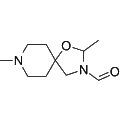
    A-72055

    A-72055 is a partial agonist of muscarinic receptors, specifically targeting M1 and M2 subtypes with Ki values of 32 nM and 30 nM, respectively. This compound enhances cognitive function and has potential applications in addressing learning and memory deficits. A-72055 is valuable for research focused on neurological disorders, particularly those associated with cognitive impairment.

    Out of stock

    All 3 sizes
  • Sabcomeline
    Cat. No.
    A61515

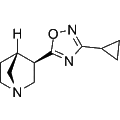
    Sabcomeline

    Synonyms: SB-202026; Memric

    Sabcomeline is a selective partial agonist of the muscarinic M1 receptor, known for its ability to enhance cognitive function. This compound holds promise for research applications related to Alzheimer's disease, where modulation of the M1 receptor may assist in ameliorating cognitive deficits. Its functional selectivity makes Sabcomeline a valuable tool for investigating the role of muscarinic receptors in neurodegenerative disorders.

    25 mg
    $3,085.00
    50 mg
    $4,805.00
    All 3 sizes

9 Items

Added to your cart

View Cart Checkout

    Loading...