Carbohydrates & Glycobiology

Carbohydrates for glycobiology research range from sugars and sugar alcohols to amino sugars and polysaccharides. Sugar alcohols such as D-Sorbitol and maltitol are used as osmotic agents, stabilizers and enzyme substrates. Among the sugars, lactulose is a synthetic disaccharide built from galactose and fructose. Glucosamine and its salts represent the amino sugars, which are building blocks of glycosaminoglycans and chitin. Polysaccharides include hyaluronic acid, a glycosaminoglycan of the extracellular matrix, and chitosan, the deacetylated form of chitin. Protected sugars such as D-Xylofuranose, 1,2,3,5-tetraacetate serve as starting materials for nucleoside synthesis. The category belongs to Biochemical Assay Reagents, next to Acyl-CoA & Cofactors and Chelators & Bifunctional Chelators.

Items 726-750 of 1090

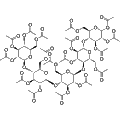
  • D-Cellopentose heptadecaacetate
    Cat. No.
    A91716

    D-Cellopentose heptadecaacetate

    D-Cellopentose heptadecaacetate is a biochemical reagent utilized in glycobiology research, primarily targeting the structure and synthesis of carbohydrates. This compound facilitates studies on glycan formation, enzymatic processes, and protein-glycan interactions, playing a critical role in understanding the biological significance of glycans. Its applications extend to basic research, biomedicine, and biotechnology, making it essential for advancing knowledge in carbohydrate chemistry and related fields.

    5 mg
    $190.00
    10 mg
    $290.00
    All 5 sizes
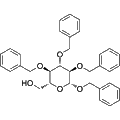
  • 1,2,3,4-Tetra-O-benzyl-β-D-glucopyranoside, 98%
    Cat. No.
    A91729

    1,2,3,4-Tetra-O-benzyl-β-D-glucopyranoside, 98%

    1,2,3,4-Tetra-O-benzyl-β-D-glucopyranoside serves as a substrate for enzymatic glycosylation reactions and is utilized in glycosyltransferase assays. This compound is crucial for studying glycosylation processes, providing insights into carbohydrate metabolism and enzyme specificity. Its high purity level (98%) ensures reliable performance in research applications involving carbohydrate chemistry and enzymology.

    10 mg
    $185.00
    25 mg
    $335.00
    All 3 sizes
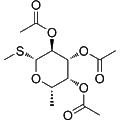
  • Methyl 2,3,4-Tri-O-acetyl-1-thio-β-L-fucopyranoside
    Cat. No.
    A91733

    Methyl 2,3,4-Tri-O-acetyl-1-thio-β-L-fucopyranoside

    Methyl 2,3,4-Tri-O-acetyl-1-thio-β-L-fucopyranoside is a biochemical assay reagent that serves as a glycosyl donor in synthetic chemistry. This compound is valuable for studying glycosylation processes and carbohydrate interactions in various biological systems. Its applications extend to research involving glycobiology, glycoprotein synthesis, and the development of carbohydrate-based therapeutics.

    Out of stock

    All 3 sizes
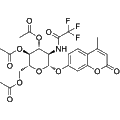
  • 4-Methylumbelliferyl 2-trifluoroacetyl-3,4,6-O-triacetyl-2-deoxy-β-D-glucopyranoside
    Cat. No.
    A91735

    4-Methylumbelliferyl 2-trifluoroacetyl-3,4,6-O-triacetyl-2-deoxy-β-D-glucopyranoside

    4-Methylumbelliferyl 2-trifluoroacetyl-3,4,6-O-triacetyl-2-deoxy-β-D-glucopyranoside is a biochemical reagent primarily used as a fluorescent substrate for the detection and quantification of glycosidases. Upon enzymatic hydrolysis, it releases a fluorescent compound, enabling sensitive assays in glycoprotein research and carbohydrate metabolism studies. This compound is suitable for applications in enzymology, cell biology, and various biochemical assays focusing on carbohydrate-active enzymes.

    5 mg
    $50.00
    10 mg
    $65.00
    All 3 sizes
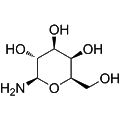
  • β-D-Galactopyranosylamine
    Cat. No.
    A91747

    β-D-Galactopyranosylamine

    β-D-Galactopyranosylamine is a key biochemical reagent that targets the study of glycobiology. This compound plays a significant role in researching carbohydrate structures, synthesis, and their biological functions, facilitating investigations into protein-glycan interactions and glycan metabolism. Its applications extend to various fields including basic research, biomedicine, and biotechnology, making it essential for advancing understanding of glycan-related processes in biological systems.

    100 mg
    $160.00
    1 g
    $1,200.00
    All 2 sizes
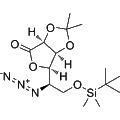
  • 5-Azido-6-(tert-butyldimethylsilyl)-2,3-O-isopropylidene L-gulono-1,4-lactone
    Cat. No.
    A91748

    5-Azido-6-(tert-butyldimethylsilyl)-2,3-O-isopropylidene L-gulono-1,4-lactone

    5-Azido-6-(tert-butyldimethylsilyl)-2,3-O-isopropylidene L-gulono-1,4-lactone is an azido sugar derivative that serves as a valuable probe in glycobiology research. Its primary mechanism involves the incorporation of azide functionality for bioorthogonal reactions, facilitating the study of carbohydrate interactions and dynamics. This reagent is instrumental in exploring glycan structures, synthesis pathways, and their roles in cellular signaling and recognition processes, thereby advancing applications in basic research, biomedicine, and biotechnology.

    5 mg
    $255.00
    10 mg
    $325.00
    All 3 sizes
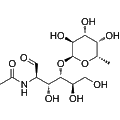
  • 2-(Acetylamino)-2-deoxy-4-O-(6-deoxy-α-L-galactopyranosyl)-D-glucose
    Cat. No.
    A91753

    2-(Acetylamino)-2-deoxy-4-O-(6-deoxy-α-L-galactopyranosyl)-D-glucose

    Synonyms: Fuc-α-2-4-GlcNAc

    2-(Acetylamino)-2-deoxy-4-O-(6-deoxy-α-L-galactopyranosyl)-D-glucose (Fuc-α-2-4-GlcNAc) is a biochemical reagent that primarily targets glycan structures in glycobiology. This compound plays a significant role in elucidating the synthesis, recognition, and biological functions of carbohydrates, contributing to advances in carbohydrate chemistry and enzymology. It is valuable for research applications that explore the roles of glycans in various biological processes, providing insights into their implications in biomedicine and biotechnology.

    1 mg
    $175.00
    5 mg
    $350.00
    All 3 sizes
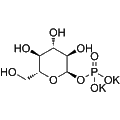
  • α-D-Glucopyranose,1-dihydrogen phosphate (potassium)
    Cat. No.
    A91754

    α-D-Glucopyranose,1-dihydrogen phosphate (potassium)

    α-D-Glucopyranose, 1-dihydrogen phosphate (potassium) serves as an important biochemical reagent in glycobiology, targeting various biological processes involving sugars. This compound facilitates studies on carbohydrate chemistry, the enzymatic synthesis and degradation of glycans, and protein-glycan interactions. Its applications are vital for advancing research in basic science, biomedicine, and biotechnology, shedding light on the evolution and function of glycan structures in biological systems.

    Out of stock

    All 3 sizes
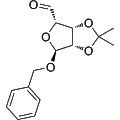
  • Benzyl 2,3-O-isopropylidene-α-D-mannopentenofuranoside-6-aldehyde
    Cat. No.
    A91755

    Benzyl 2,3-O-isopropylidene-α-D-mannopentenofuranoside-6-aldehyde

    Benzyl 2,3-O-isopropylidene-α-D-mannopentenofuranoside-6-aldehyde is a biochemical reagent targeting glycobiology. It is utilized in the study of sugar structures, the synthesis and evolution of carbohydrates, and protein-glycan interactions. This compound plays a significant role in enzymology related to glycan formation and degradation, making it a valuable tool for basic research and applications in biomedicine and biotechnology.

    100 mg
    $250.00
    250 mg
    $480.00
    All 3 sizes
  • D-Ribopyranosylamine
    Cat. No.
    A91758

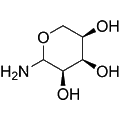
    D-Ribopyranosylamine

    D-Ribopyranosylamine is a biochemical reagent targeting glycobiology, which focuses on the structure, synthesis, and function of carbohydrates in biological systems. This compound plays a crucial role in studies involving glycan chemistry, enzymatic processes of glycan formation and degradation, and protein-glycan interactions. D-Ribopyranosylamine is essential for advancing research in fundamental biology, biomedicine, and biotechnology applications related to glycosylation and glycan-mediated processes.

    50 mg
    $75.00
    100 mg
    $115.00
    All 4 sizes
  • D-Glucuronic acid,2-propen-1-yl ester
    Cat. No.
    A91760

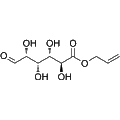
    D-Glucuronic acid,2-propen-1-yl ester

    D-Glucuronic acid, 2-propen-1-yl ester functions as a biochemical assay reagent. This compound is utilized in a variety of biochemical research applications, particularly those involving glycosylation processes and conjugation reactions. Its role in assays enables the investigation of enzymatic activities and interactions related to glucuronidation pathways, providing valuable insights into metabolic processes and drug metabolism.

    25 mg
    $55.00
    50 mg
    $80.00
    All 5 sizes
  • 2-Acetamido-2-deoxy-6-O-(α-L-fucopyranosyl)-D-glucopyranose
    Cat. No.
    A91761

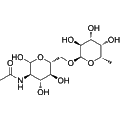
    2-Acetamido-2-deoxy-6-O-(α-L-fucopyranosyl)-D-glucopyranose

    2-Acetamido-2-deoxy-6-O-(α-L-fucopyranosyl)-D-glucopyranose is a biochemical reagent that targets glycobiology, focusing on the structure and function of carbohydrates. Its unique sugar structure is instrumental in studies of carbohydrate chemistry, glycan synthesis and degradation, and the interaction between proteins and glycans. This compound is essential for advancing research in basic science, biomedicine, and biotechnology, particularly in understanding the biological roles of glycan structures.

    Out of stock

    All 3 sizes
  • Sucrose 6′-monophosphate (dipotassium)
    Cat. No.
    A91763

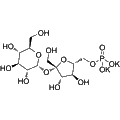
    Sucrose 6′-monophosphate (dipotassium)

    Sucrose 6′-monophosphate dipotassium is a dipotassium salt of a phosphorylated derivative of sucrose, serving as a key substrate in carbohydrate metabolism studies. This reagent plays a vital role in the investigation of sugar phosphate pathways and their implications in cellular signaling and energy transfer. It is useful in a variety of biochemical applications, particularly in enzyme activity assays and metabolic research.

    1 mg
    $230.00
    5 mg
    $590.00
    All 3 sizes
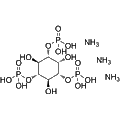
  • D-myo-Inositol-1,3,5-triphosphate ammonium
    Cat. No.
    A91772

    D-myo-Inositol-1,3,5-triphosphate ammonium

    Synonyms: Ins(1,3,5)P3 ammonium; 1,3,5-IP3 ammonium

    D-myo-Inositol-1,3,5-triphosphate ammonium is a pivotal reagent in glycobiology, facilitating investigations into the structure, synthesis, and biological functions of carbohydrates. This compound plays a crucial role in studies surrounding glycan formation and degradation, as well as protein-glycan interactions. Its application extends to various areas of basic research, biomedicine, and biotechnology, making it essential for advancing the understanding of glycan biology.

    Out of stock

    All 3 sizes
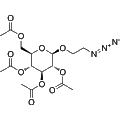
  • 2-Azidoethyl 2,3,4,6-Tetra-O-acetyl-β-D-glucopyranoside
    Cat. No.
    A91774

    2-Azidoethyl 2,3,4,6-Tetra-O-acetyl-β-D-glucopyranoside

    2-Azidoethyl 2,3,4,6-Tetra-O-acetyl-β-D-glucopyranoside is a biochemical assay reagent featuring an azide group, facilitating click chemistry applications. It can effectively participate in copper-catalyzed azide-alkyne cycloaddition (CuAAc) reactions with alkyne-containing compounds, as well as strain-promoted alkyne-azide cycloaddition (SPAAC) reactions when interacting with DBCO or BCN groups. This reagent is widely utilized in chemical biology and bioconjugation studies, making it a valuable tool for researchers engaged in the development of innovative molecular probes and therapeutic agents.

    Out of stock

    All 3 sizes
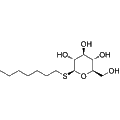
  • n-Heptyl β-D-thioglucoside
    Cat. No.
    A91779

    n-Heptyl β-D-thioglucoside

    Synonyms: Heptyl 1-thiohexopyranoside

    n-Heptyl β-D-thioglucoside serves as a biochemical assay reagent that functions as a substrate for various glycosidases. This compound is utilized in research applications focused on enzymatic activity and the study of carbohydrate metabolism. Its unique structure and properties make it suitable for analyses in glycosylation processes and carbohydrate-related studies.

    100 mg
    $40.00
    500 mg
    $125.00
    All 2 sizes
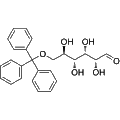
  • 6-O-(Triphenylmethyl)-D-glucose
    Cat. No.
    A91781

    6-O-(Triphenylmethyl)-D-glucose

    6-O-(Triphenylmethyl)-D-glucose is a biochemical reagent that serves as an important tool in glycobiology research. It acts as a glycosyl donor, facilitating the study of glycan synthesis and interactions. This compound assists in elucidating the structure and functions of carbohydrates, enabling insights into protein-glycan recognition and the roles of glycans in biological processes. Its applications span basic research, biomedicine, and biotechnology, making it a valuable asset for researchers investigating the complexities of carbohydrate chemistry.

    100 mg
    $250.00
    500 mg
    $975.00
    All 3 sizes
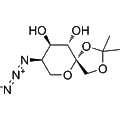
  • 5-Azido-5-deoxy-1,2-O-(1-methylethylidene)-β-D-fructopyranose
    Cat. No.
    A91785

    5-Azido-5-deoxy-1,2-O-(1-methylethylidene)-β-D-fructopyranose

    5-Azido-5-deoxy-1,2-O-(1-methylethylidene)-β-D-fructopyranose is a biochemical reagent used in glycobiology research, targeting the structural and functional aspects of carbohydrates. It facilitates the study of glycan synthesis, degradation, and protein-glycan interactions. This compound is essential for exploring the roles of glycans in biological systems, with applications spanning basic research, biomedicine, and biotechnology.

    5 mg
    $180.00
    All 1 sizes
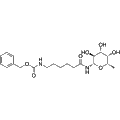
  • N-[(ε-Benzyloxycarbonylamino)caproyl]-β-L-fucopyranosylamine
    Cat. No.
    A91790

    N-[(ε-Benzyloxycarbonylamino)caproyl]-β-L-fucopyranosylamine

    N-[(ε-Benzyloxycarbonylamino)caproyl]-β-L-fucopyranosylamine serves as a biochemical reagent targeting aspects of glycobiology. This compound is instrumental in exploring the structure and synthesis of carbohydrates, as well as the enzymatic processes involved in glycan formation and degradation. It supports research into protein-glycan interactions and the biological significance of glycans, contributing to advancements in basic research, biomedicine, and biotechnology.

    Out of stock

    All 3 sizes
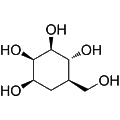
  • Pseudo-β-D-mannopyranose
    Cat. No.
    A91793

    Pseudo-β-D-mannopyranose

    Pseudo-β-D-mannopyranose is a hapten that can be utilized in the development of glycan-based bioconjugates and vaccines. By coupling with mannose, it facilitates the study of carbohydrate-protein interactions, aiding in research related to immunology and cell signaling. This compound serves as a valuable tool for exploring the role of mannose in biological processes and for generating targeted immune responses.

    Out of stock

    All 3 sizes
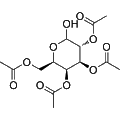
  • 2,3,4,6-Tetra-O-acetyl-D-galactopyranose
    Cat. No.
    A91794

    2,3,4,6-Tetra-O-acetyl-D-galactopyranose

    2,3,4,6-Tetra-O-acetyl-D-galactopyranose is an important reagent in glycobiology research, targeting the study of carbohydrate structures and their biological functions. This compound serves as an acetylated form of D-galactopyranose, facilitating investigations into glycan synthesis and degradation mechanisms, as well as protein-glycan interactions. Its applications extend to basic research, biomedicine, and biotechnology, aiding in the understanding of glycan roles in various biological processes.

    5 mg
    $35.00
    10 mg
    $55.00
    All 7 sizes
  • Sucrose hexasulfate potassium
    Cat. No.
    A91801

    Sucrose hexasulfate potassium

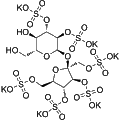
    Sucrose hexasulfate potassium is a biochemical reagent primarily utilized in glycobiology research. It plays a significant role in the study of carbohydrate chemistry, glycan synthesis and degradation, as well as protein-glycan interactions. This compound aids in understanding the biological functions and evolutionary aspects of glycans, facilitating advancements in basic research, biomedicine, and biotechnology applications.

    5 mg
    $115.00
    10 mg
    $230.00
    All 3 sizes
  • 2,3:4,6-Di-O-cyclohexylidene-α-D-mannopyranose
    Cat. No.
    A91802

    2,3:4,6-Di-O-cyclohexylidene-α-D-mannopyranose

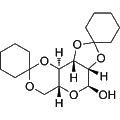
    2,3:4,6-Di-O-cyclohexylidene-α-D-mannopyranose is a chemical reagent used in glycobiology, targeting the study of carbohydrate structures and their biological roles. Its primary applications include investigating glycan synthesis, enzymatic interactions, and protein-glycan recognition processes, thereby enhancing understanding of glycoconjugates in cellular functions. This compound is fundamental for research in carbohydrate chemistry and has significant implications in basic science, biomedicine, and biotechnology.

    100 mg
    $55.00
    250 mg
    $100.00
    All 3 sizes
  • 2,5-Anhydro-D-glucitol
    Cat. No.
    A91807

    2,5-Anhydro-D-glucitol

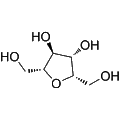
    2,5-Anhydro-D-glucitol is a biochemical reagent utilized in glycobiology research, focusing on the study of sugar structures, synthesis, and functionality. This compound is integral in exploring carbohydrate chemistry, the enzymatic processes of glycan formation and degradation, and the interactions between proteins and glycans. Its applications extend to basic research, biomedicine, and biotechnology, contributing to a deeper understanding of glycans' roles in biological systems.

    5 mg
    $215.00
    10 mg
    $350.00
    All 4 sizes
  • Methyl 2,3-O-diallyl-4,6-O-benzylidene-α-D-mannopyranoside
    Cat. No.
    A91810

    Methyl 2,3-O-diallyl-4,6-O-benzylidene-α-D-mannopyranoside

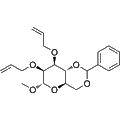
    Methyl 2,3-O-diallyl-4,6-O-benzylidene-α-D-mannopyranoside is a biochemical assay reagent that serves as a substrate for glycosyltransferase enzymes. This compound exhibits significant biological activity through its ability to participate in glycosylation reactions, making it relevant for studying carbohydrate metabolism and enzyme kinetics. It is suitable for various research applications, including investigating enzyme specificity and the role of glycosylation in cell signaling pathways.

    Out of stock

    All 3 sizes

Items 726-750 of 1090

Added to your cart

View Cart Checkout

    Loading...