
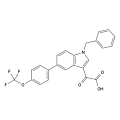
- Cat. No.
- A14190
Tiplaxtinin (PAI-039)
Synonyms: PAI-039
Tiplaxtinin is a selective and orally efficacious inhibitor of plasminogen activator inhibitor-1 (PAI-1) with IC50 of 2.7 μM.
Search by product name, CAS, target or catalog number. Press Down Arrow to reach product suggestions, Tab to move between links, and Escape to close suggestions.
PAI-1 inhibitors act on plasminogen activator inhibitor 1, the main brake on fibrinolysis. PAI-1, encoded by serpin family E member 1 (SERPINE1), is a serine protease inhibitor (serpin). It inactivates tissue-type and urokinase-type plasminogen activators (tPA, uPA), which convert plasminogen into the fibrin-degrading protease plasmin. Active PAI-1 converts spontaneously into an inactive latent form, so its activity in samples changes over time. Raised PAI-1 has been linked to thrombosis, obesity and tissue fibrosis, which are studied in animal models. Tiplaxtinin (PAI-039), TM5275 sodium and TM5441 are small-molecule PAI-1 inhibitors that restore plasminogen activator activity. UK-371804 and ZK824859 instead inhibit uPA, acting on the protease rather than its inhibitor.
Synonyms: PAI-039
Tiplaxtinin is a selective and orally efficacious inhibitor of plasminogen activator inhibitor-1 (PAI-1) with IC50 of 2.7 μM.
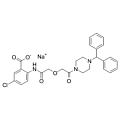
Synonyms: TM 5275
TM5275 sodium is a plasminogen activator inhibitor (PAI-1) with an IC50 of 6.95 μM.
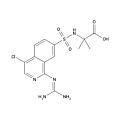
UK-371804 is a potent urokinase-type plasminogen activator (uPA) inhibitor.
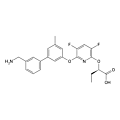
ZK824859 is an oral available and selective urokinase plasminogen activator (uPA) inhibitor with IC50s of 79 nM, 1580 nM and 1330 nM for human uPA, tPA, and plasmin, respectively.
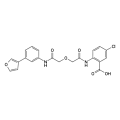
Synonyms: M-5441; BMS-790052; EBP 883
TM5441 is an orally bioavailable inhibitor of plasminogen activator inhibitor-1 (PAI-1), has IC50 values between 13.9 and 51.1 μM and induces intrinsic apoptosis in several human cancer cell lines.
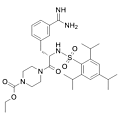
Synonyms: UKI-1C
UKI-1 is a novel synthetic inhibitor of the urokinase-type plasminogen activator system.
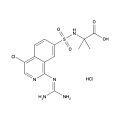
Synonyms: UK371804
UK-371804 is a potent and selective urokinase-type plasmogen activator (uPA) inhibitor with excellent enzyme potency (Ki=10 nM) and selectivity profile (4000-fold versus tPA and 2700-fold versus plasmin).
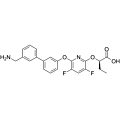
ZK824190 is an orally available and selective urokinase plasminogen activator (uPA) inhibitor as a potential treatment for multiple sclerosis. IC50s of 237, 1600 and 1850 nM for uPA, tPA, and Plasmin, respectively.
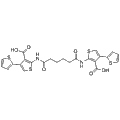
TM5007 is a poent inhibitor of plasminogen activator inhibitor-1 (PAI-1) with IC50 of 29 uM.
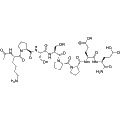
Synonyms: A6 Peptide
Angstrom6 (A6 Peptide) is an 8 amino-acid peptide derived from single-chain urokinase plasminogen activator (scuPA) and interferes with the uPA/uPAR cascade and abrogates downstream effects. Angstrom6 binds to CD44 resulting in the inhibition of migration, invasion, and metastasis of tumor cells, and the modulation of CD44-mediated cell signaling.
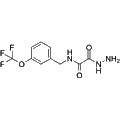
MDI-2268 is a potent inhibitor of plasminogen activator inhibitor-1 (PAI-1), a crucial regulator of coagulation and fibrinolysis. By enhancing fibrinolytic activity, MDI-2268 exhibits significant antithrombotic properties, making it a valuable tool for studying blood coagulation dynamics. This compound is particularly relevant in research related to conditions such as deep vein thrombosis and other thromboembolic disorders.
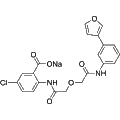
TM5441 sodium is a potent inhibitor of plasminogen activator inhibitor-1 (PAI-1), demonstrating IC50 values ranging from 13.9 to 51.1 μM. It has been shown to induce intrinsic apoptosis in various human cancer cell lines, making it a valuable tool in cancer research. Additionally, TM5441 sodium mitigates cardiac hypertension and vascular senescence induced by Nω-nitro-l-arginine methyl ester, suggesting potential therapeutic applications in cardiovascular studies.
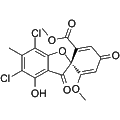
Geodin is a fungal metabolite that acts as an antibacterial agent. It also functions as a potent inhibitor of plasminogen activator inhibitor-1 (PAI-1), making it a valuable tool for studying the regulation of fibrinolysis and related pathways. This compound is used in various research applications to explore its effects on bacterial growth and PAI-1 mediated processes.
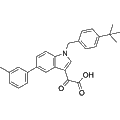
Synonyms: PAZ-417
Aleplasinin is a selective inhibitor of SERPINE1 (PAI-1) with an IC50 of 655 nM. By inhibiting PAI-1, Aleplasinin activates the tissue-type plasminogen activator (tPA)/fibrinolysis cascade, facilitating the degradation of amyloid-β (Aβ) oligomers and monomers. This compound has demonstrated significant efficacy in reducing plasma and brain Aβ levels, improving memory function, and reversing cognitive impairment. Aleplasinin is a valuable tool for research focused on Alzheimer’s disease and related neurodegenerative disorders.
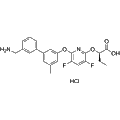
ZK824859 hydrochloride is a selective inhibitor of urokinase plasminogen activator (uPA) with a potent IC50 of 79 nM. It also demonstrates varied inhibitory effects on tissue plasminogen activator (tPA) and plasmin, with respective IC50s of 1580 nM and 1330 nM. This compound is particularly relevant for research applications focusing on serine/threonine proteases and their roles in pathological processes, including fibrinolysis and tumor progression. Its oral bioavailability makes it a valuable tool for in vivo studies targeting uPA-mediated pathways.
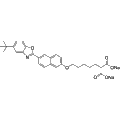
SK-216 is a potent inhibitor of plasminogen activator inhibitor-1 (PAI-1), playing a crucial role in reducing metastasis in human osteosarcoma. It has demonstrated efficacy in inhibiting lung metastasis associated with this malignancy, making it a valuable compound for research focused on cancer metastasis and therapeutic interventions in osteosarcoma. This compound is suitable for studies exploring the mechanisms of tumor invasion and potential anti-metastatic strategies.
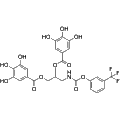
CDE-096 is a potent inhibitor of Plasminogen Activator Inhibitor-1 (PAI-1), effectively preventing PAI-1 from inactivating tissue plasminogen activator (tPA) and urokinase plasminogen activator (uPA) with comparable potency (IC50 values of 30 nM and 25 nM, respectively). It demonstrates efficacy against glycosylated forms of PAI-1 and possesses inhibitory activity against PAI-1 derived from various species, including murine, rat, and porcine models, with IC50 values of 19 nM, 22 nM, and 18 nM, respectively. CDE-096 is valuable for research focused on fibrinolysis, thrombolysis, and related cardiovascular studies.
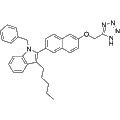
Synonyms: PAI-749
Diaplasinin is a potent inhibitor of plasminogen activator inhibitor-1 (PAI-1), exhibiting an IC50 of 295 nM. This compound demonstrates significant antithrombotic activity, making it valuable for research into coagulation disorders. Its ability to modulate PAI-1 levels may provide insights into therapeutic strategies for conditions associated with thrombosis and fibrinolysis.
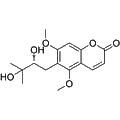
Toddalolactone is a potent inhibitor of plasminogen activator inhibitor-1 (PAI-1), demonstrating an IC50 value of 37.31 μM. This compound, derived from Toddalia asiatica, plays a critical role in modulating fibrinolysis and is of significant interest in research related to thrombosis and cardiovascular diseases. Its ability to inhibit PAI-1 activity makes it a valuable tool for investigating pathways involved in clot formation and resolution.
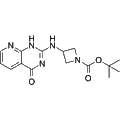
AZ3976 is a selective inhibitor of plasminogen activator inhibitor type 1 (PAI-1) that demonstrates an IC50 value of 26 μM in enzymatic chromogenic assays and 16 μM in plasma clot lysis assays. This compound enhances the latency transition of active PAI-1 by reversibly binding to latent PAI-1, thereby facilitating fibrinolysis. AZ3976 is ideal for research applications focused on thrombosis and fibrinolytic processes.
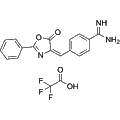
(E)-UK122 TFA is an isomer of UK122 TFA, functioning as a selective inhibitor of urokinase-type plasminogen activator (uPA) with an IC50 of 0.2 μM. This compound exhibits significant potential in studies related to fibrinolysis and tissue remodeling. Its inhibitory properties make it a valuable tool for research in cancer metastasis and other conditions associated with aberrant plasminogen activation.
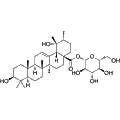
28-O-β-D-Glucopyranosyl pomolic acid is an inhibitor of urokinase plasminogen activator, with an IC50 value of 37.82 μM. This compound can effectively modulate the fibrinolytic pathway by hindering the activation of plasminogen, thereby impacting processes related to fibrin degradation and tissue remodeling. It is suitable for research in fields such as cancer biology, fibrosis, and vascular disorders, where regulation of the uPA system is of significant interest.
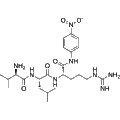
D-Val-Leu-Arg-pNA is a substrate for glandular kininoreleasing enzymes and tissue-type plasminogen activator (t-PA), exhibiting no significant affinity for fibrin. This compound is utilized to study enzyme kinetics and the activation mechanisms of proteolytic enzymes involved in various physiological processes. Its specificity for t-PA makes it a valuable tool in research focusing on thrombolytic therapy and related areas.
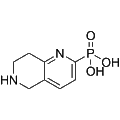
BT-114143 is a plasminogen activation inhibitor, exhibiting an IC50 of 8.42 μM. This compound is valuable in research focused on hemorrhagic diseases stemming from hyperfibrinolysis, including traumatic bleeding, severe menstrual bleeding, postpartum hemorrhage, and complications associated with hemophilia. Its targeted inhibition of plasminogen activation positions it as a potential therapeutic agent in the management of these conditions.
Out of stock
All 3 sizes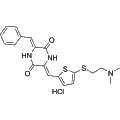
XR 5118 hydrochloride is a selective inhibitor of plasminogen activator inhibitor 1 (PAI-1), with an IC50 value of 12 µM. By binding to PAI-1, XR 5118 hydrochloride effectively reduces plasma PAI-1 activity, promoting endogenous thrombolysis and inhibiting thrombus formation. This compound is valuable for research applications related to cancer and thrombotic disorders, providing insights into mechanisms of fibrinolysis and clot regulation.
Out of stock
All 3 sizes