
- Cat. No.
- A19547
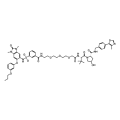
dTRIM24
dTRIM24 is a selective bifunctional degrader of TRIM24 based on PROTAC.
In stock
View Details
Search by product name, CAS, target or catalog number. Press Down Arrow to reach product suggestions, Tab to move between links, and Escape to close suggestions.
PROTAC degraders recruit an E3 ubiquitin ligase to a target protein so that the proteasome degrades it. Each proteolysis-targeting chimera (PROTAC) links a target-binding ligand to an E3 ligase ligand through a chemical linker. The approach was first described in 2001, and later work showed that small-molecule PROTACs can act catalytically, removing several target copies per molecule. Examples include the bromodomain and extra-terminal (BET) degraders dBET1, MZ1 and ARV-771, and the estrogen receptor degrader ERD-308. Degraders of anti-apoptotic proteins, such as PROTAC Mcl1 degrader-1, are also listed.
dTRIM24 is a selective bifunctional degrader of TRIM24 based on PROTAC.
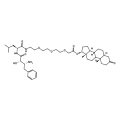
PROTAC AR Degrader-4 comprises a cIAP1 ligand binding group, a linker and an androgen receptor (AR) binding group. PROTAC AR Degrader-4 is an AR degrader.

PROTAC ERα Degrader-2 comprises a cIAP1 ligand binding group, a linker and an estrogen receptor α (ERα) binding group. PROTAC ERα Degrader-2 is an ERα degrader.
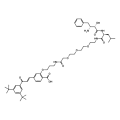
PROTAC RAR Degrader-1 comprises a cIAP1 ligand binding group, a linker and a RAR ligand binding group. PROTAC RAR Degrader-1 is an RAR degrader.
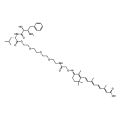
PROTAC CRABP-II Degrader-3 is a potent cellular retinoic acid binding protein (CRABP-II) degrader based on cIAp1.
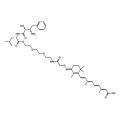
PROTAC CRABP-II Degrader-2 is a potent cellular retinoic acid binding protein (CRABP-II) degrader based on cIAp1.
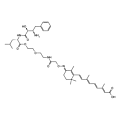
PROTAC CRABP-II Degrader-1 is a potent cellular retinoic acid binding protein (CRABP-II) degrader based on cIAp1.
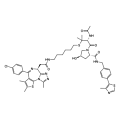
BRD4 degrader AT1 is a highly selective Brd4 degrader based on PROTAC technology, with a Kd of 44 nM for Brd4BD2 in cells.
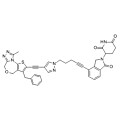
QCA570 is a potent BET degrader based on PROTAC, with an IC50 of 10 nM for BRD4 BD1 Protein.
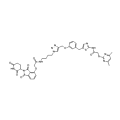
PROTAC Sirt2 Degrader-1 is a SirReal-based PROTAC, acts as a Sirt2 degrader, composed of a highly potent and isotype-selective Sirt2 inhibitor, a linker, and a bona fide cereblon ligand for E3 ubiquitin ligase.
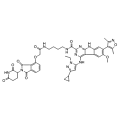
PROTAC BET Degrader-1 is a potent BET degrader based on PROTAC, decreasing BRD2, BRD3, and BRD4 protein levels at low concentration.
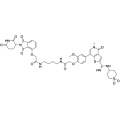
PROTAC BRD9 Degrader-1 is a lead PROTAC BRD9 chemical degrader (IC50=13.5 nM), which can be used as a selective probe useful for the study of BAF complex biology.
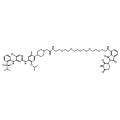
MS4077 is an anaplastic lymphoma kinase (ALK) PROTAC (degrader) with a Kd of 37 nM for binding affinity to ALK.
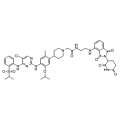
MS4078 is an anaplastic lymphoma kinase (ALK) PROTAC (degrader) with a Kd of 19 nM for binding affinity to ALK.
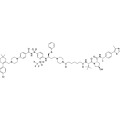
DT2216 is a potent and selective BCL-XL degrader based on PROTAC technology.
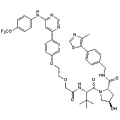
GMB-475 is a degrader of BCR-ABL1 tyrosine kinase based on PROTAC, overcoming BCR-ABL1-dependent drug resistance.
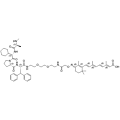
Synonyms: SN-11; PROTAC cIAP1 degrader-4
SNIPER(CRABP)-11, also known as PROTAC cIAP1 degrader-4, is a potent protein degrader.
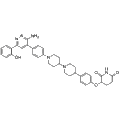
AU-24118 is an orally bioavailable PROTAC degrader targeting the mSWI/SNF chromatin remodeling complex ATPases SMARCA2 and SMARCA4, as well as PBRM1. It offers a powerful approach for modulating epigenetic regulation and holds promise for the treatment of cancers driven by alterations in SWI/SNF complex components.
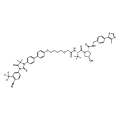
ARCC-4 is a low-nanomolar PROTAC degrader targeting the androgen receptor (AR), with a DC₅₀ of 5 nM. Based on enzalutamide and incorporating a von Hippel-Lindau (VHL) E3 ligase ligand, ARCC-4 efficiently degrades both wild-type and clinically relevant AR mutants linked to resistance to antiandrogen therapy. It outperforms enzalutamide in potency and degradation efficacy, making it a promising candidate for advanced prostate cancer research.
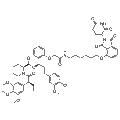
dTAG-13 is a PROTAC-based heterobifunctional degrader that selectively targets FKBP12^F36V fused in-frame to a protein of interest. By engaging both FKBP12^F36V and the cereblon (CRBN) E3 ligase, dTAG-13 induces efficient and selective degradation of FKBP12^F36V-tagged proteins, making it a valuable tool for conditional protein knockdown studies.
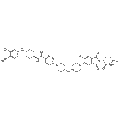
Synonyms: ARV-110
Bavdegalutamide (ARV-110) is an orally active and highly specific PROTAC degrader targeting the androgen receptor (AR). It induces ubiquitination and proteasomal degradation of AR, offering a novel therapeutic approach for AR-driven diseases such as prostate cancer.
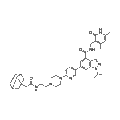
MS1943 is an orally active, PROTAC-based selective degrader of EZH2 that effectively reduces cellular EZH2 levels. It exhibits strong anticancer activity, showing cytotoxic effects in various triple-negative breast cancer (TNBC) cell lines while sparing normal cells. MS1943 maintains high potency in inhibiting EZH2 methyltransferase activity (IC₅₀ = 120 nM) and demonstrates high selectivity for EZH2, making it a promising candidate for epigenetic and cancer research.
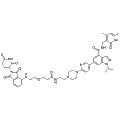
MS177 is a fast-acting and effective PROTAC degrader targeting EZH2. It comprises a cereblon (CRBN) ligand, a linker, and the potent EZH2 enzymatic inhibitor C24 (IC₅₀: 12 nM). MS177 efficiently depletes both canonical EZH2–PRC2 and noncanonical EZH2–cMyc complexes, leading to inhibition of leukemia cell proliferation, induction of apoptosis, and cell cycle arrest. It is a valuable tool for epigenetic and cancer research.
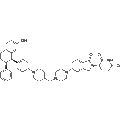
Synonyms: ARV471
Vepdegestrant (ARV-471) is an orally bioavailable PROTAC designed to target and degrade the estrogen receptor (ER). It is being developed for the treatment of patients with locally advanced or metastatic ER+/HER2− breast cancer, offering a novel approach to overcome endocrine resistance through targeted ER degradation.
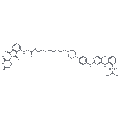
TL12-186 is a cereblon-dependent PROTAC degrader with broad-spectrum activity against multiple kinases, including CDKs, BTK, FLT3, Aurora kinases, TEC, ULK, and ITK. It inhibits CDK2/cyclin A and CDK9/cyclin T1 with IC₅₀ values of 73 nM and 55 nM, respectively, making it a valuable tool for studying kinase-driven signaling pathways and cancer biology.