- Cat. No.
- A13099
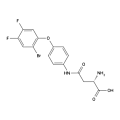
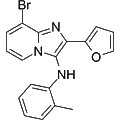
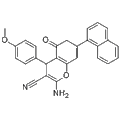
UCPH 101
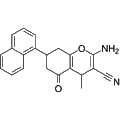
UCPH 101 is a selective non-substrate inhibitor of EAAT1 (IC50 values are 660, >300000 and >300000 nM for EAAT1, EAAT2 and EAAT3 respectively).
Search by product name, CAS, target or catalog number. Press Down Arrow to reach product suggestions, Tab to move between links, and Escape to close suggestions.
Glutamate transporter inhibitors and modulators act on the excitatory amino acid transporters (EAATs). Five subtypes, EAAT1 to EAAT5, use ion gradients to move glutamate from the synaptic cleft into astrocytes and neurons. Glutamate transporter 1 (GLT-1), the rodent form of EAAT2, accounts for most glutamate uptake in the forebrain. Mice lacking GLT-1 developed lethal spontaneous seizures and greater brain injury, which links this transporter to protection from excitotoxicity. DL-TBOA, described in 1998, blocks several EAAT subtypes without being transported. UCPH 101 selectively inhibits EAAT1, and WAY-213613 inhibits uptake through GLT-1/EAAT2. LDN-212320 raises GLT-1 expression, while GPNA hydrochloride inhibits the related alanine-serine-cysteine transporter 2 (ASCT2).
UCPH 101 is a selective non-substrate inhibitor of EAAT1 (IC50 values are 660, >300000 and >300000 nM for EAAT1, EAAT2 and EAAT3 respectively).
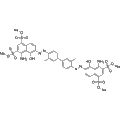
Synonyms: Direct Blue 53; T-1824; C.I. 23860
Evans Blue is a potent inhibitor of L-glutamate uptake through the membrane-bound excitatory amino acid transporter (EAAT). This compound effectively inhibits L-glutamate and kainate receptor-mediated currents, making it valuable for research into neurophysiological processes. Additionally, due to its strong affinity for serum albumin, Evans Blue serves as a high molecular weight protein tracer and is widely used to investigate blood-brain barrier (BBB) permeability.
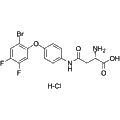
WAY-213613 is a potent, selective nonsubstrate reuptake inhibitor of GLT-1/EAAT2 with IC50 of 85 nM EAAT2.
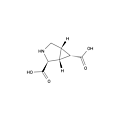
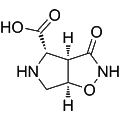
MPDC is a potent and competitive inhibitor of the Na+-dependent high-affinity glutamate transporter in forebrain synaptosomes.
DL-TBOA is a potent non-transportable inhibitor of excitatory amino acid transporters (EAATs), specifically targeting EAAT1, EAAT2, and EAAT3 with IC50 values of 70 μM, 6 μM, and 6 μM, respectively. This compound effectively inhibits the uptake of [14C]glutamate in COS-1 cells expressing human EAAT1 and EAAT2, demonstrating Ki values of 42 μM and 5.7 μM, respectively. Additionally, DL-TBOA competitively blocks EAAT4 and EAAT5 with Ki values of 4.4 μM and 3.2 μM, respectively. This reagent is valuable for studying excitatory neurotransmission and related pathologies in research applications.
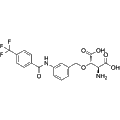
Synonyms: CF3-Bza-TBOA
TFB-TBOA is a potent blocker of glutamate transporters, specifically targeting EAAT1, EAAT2, and EAAT3. It demonstrates competitive inhibition with IC50 values of 22 nM for EAAT1, 17 nM for EAAT2, and 300 nM for EAAT3, effectively suppressing their transport activity. This compound is valuable for research applications investigating glutamate signaling and transporter function in neurobiology and related fields.
WAY-213613 hydrochloride is a potent and selective inhibitor of the human excitatory amino acid transporter 2 (EAAT2). With an IC50 value of 85 nM, it effectively modulates glutamate transport, making it a valuable tool for investigating glutamatergic signaling in the central nervous system. This compound is suitable for research applications exploring neurobiology and potential therapeutic interventions related to neurodegenerative diseases.
UCPH-102 is a highly selective inhibitor of the excitatory amino acid transporter 1 (EAAT1), exhibiting an IC50 value of 0.43 µM. This compound demonstrates significant anti-proliferative effects on T-cell acute lymphoblastic leukemia (T-ALL) cells. Furthermore, UCPH-102's favorable blood-brain barrier permeability makes it a valuable tool for research in neurodegenerative diseases such as amyotrophic lateral sclerosis and Alzheimer’s disease, as well as conditions related to chronic pain and obsessive-compulsive disorder.
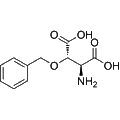
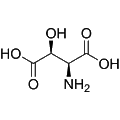
L-threo-3-Hydroxyaspartic acid functions as a selective inhibitor of excitatory amino acid transporters (EAATs), exhibiting inhibitory constants (Kis) of 11, 19, and 14 μM for EAAT1, EAAT2, and EAAT3, respectively, in HEK293 cell lines. This compound plays a crucial role in the study of neurotransmitter regulation and excitotoxicity, making it valuable for research related to neurological disorders and synaptic transmission. Its ability to modulate glutamate signaling contributes to understanding potential therapeutic pathways for conditions such as epilepsy and neurodegenerative diseases.
SLC1A1/EAAT3-IN-1 is a selective inhibitor of the excitatory amino acid transporter 3 (EAAT3), exhibiting an IC50 of 7.2 μM for human EAAT3 while showing significantly reduced inhibition of EAAT1, 2, and 4 (IC50: ~250 μM). This compound is primarily utilized in research related to psychiatric disorders, including obsessive-compulsive disorder and schizophrenia, and can aid in the investigation of neurotransmitter dynamics and therapeutic strategies targeting EAAT3.
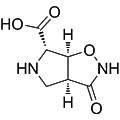
(±)-HIP-B is a non-competitive blocker of excitatory amino acid transporters (EAATs), demonstrating effective inhibition of glutamate uptake with an IC50 of 17-18 μM. This compound serves as a valuable lead in research focused on ischemia-induced neuronal degeneration. Its application extends to the investigation of various neurological disorders, contributing to a deeper understanding of excitotoxicity and neuronal survival mechanisms.
Out of stock
All 3 sizes
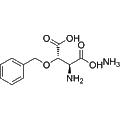
DL-TBOA ammonium is a selective inhibitor of excitatory amino acid transporters (EAATs), demonstrating IC50 values of 70 μM, 6 μM, and 6 μM for EAAT1, EAAT2, and EAAT3, respectively. This compound effectively inhibits the uptake of [14C]glutamate in COS-1 cells expressing human EAAT1 and EAAT2, with Ki values of 42 μM and 5.7 μM. Additionally, DL-TBOA ammonium competitively inhibits EAAT4 and EAAT5, featuring Ki values of 4.4 μM and 3.2 μM, respectively. Its distinct mechanism renders it a valuable tool for studies on excitatory neurotransmission and the role of glutamate transporters in neurological research.
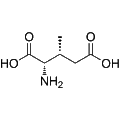
(±)-threo-3-Methylglutamic acid is a potent inhibitor of excitatory amino acid transporters EAAT2 and EAAT4. It functions as an ionotropic glutamate receptor agonist and is effective in inhibiting glutamate uptake in rod outer segments. This compound is valuable for research applications focusing on glutamatergic signaling and transport mechanisms in the nervous system.
(±)-HIP-A is a non-competitive blocker of excitatory amino acid transporters (EAATs) that inhibits glutamate uptake with an IC50 value of 17-18 μM. This compound serves as a lead candidate for research into ischemia-induced neuronal degeneration. (±)-HIP-A is particularly valuable for studying the pathophysiology of neurological diseases and the mechanisms underlying excitotoxicity.
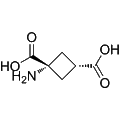
Synonyms: cis-1-Aminocyclobutane-1,3-dicarboxylic acid
Cis-ACBD is a potent and selective inhibitor of the high-affinity, Na+-dependent plasma membrane glutamate transporter. As a glutamate reuptake inhibitor, it effectively hinders the uptake of D-[3H]aspartate in a linear competitive manner. This compound is valuable for research applications focusing on neurotransmitter dynamics and associated neurological disorders.