- Cat. No.
- A16103
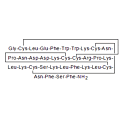
GsMTx4
GsMTX4 is a 34 amino acid peptidyl toxin isolated from the Grammostola rosea (Chilean rose) tarantula venom and belongs to the huwentoxin-1 family.
Search by product name, CAS, target or catalog number. Press Down Arrow to reach product suggestions, Tab to move between links, and Escape to close suggestions.
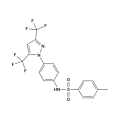
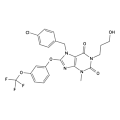
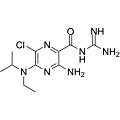
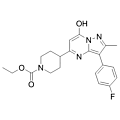
Transient receptor potential (TRP) channel modulators act on cation channels that sense heat, cold and irritants. The mammalian family has six subfamilies, including vanilloid (TRPV), ankyrin (TRPA), canonical (TRPC) and melastatin (TRPM) channels. TRP channels respond to temperature, touch, osmotic changes and plant-derived compounds, so they are often described as cellular sensors. Cloning of the capsaicin receptor TRPV1 in 1997 identified it as a heat-activated ion channel in pain-sensing neurons. AMG517 and SB-705498 are TRPV1 antagonists, while A 967079 blocks TRPA1 and optovin activates TRPA1 when exposed to light. Pyr10 inhibits TRPC3, and Pico145 inhibits channels formed by TRPC1, TRPC4 and TRPC5. The spider toxin peptide GsMTx4, an inhibitor of mechanosensitive channels, is also listed under Piezo Channel.
GsMTX4 is a 34 amino acid peptidyl toxin isolated from the Grammostola rosea (Chilean rose) tarantula venom and belongs to the huwentoxin-1 family.
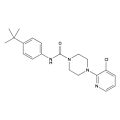
Pyr10is a novel TRPC3-selective inhibitor, IC50 of Ca2+ influx inhibition by Pyr10 in carbachol-stimulated YFP-TRPC3-transfected HEK293 cells for ROCE and thapsigargin-depleted native RBL-2H3 cells for SOCE is 0.72 uM and 13.08 uM.
Synonyms: HC-608
Pico145 is a remarkable inhibitor of TRPC1/4/5 channels, inhibits (?)-englerin A-activated TRPC4/TRPC5 channels, with IC50s of 0.349 and 1.3 nM in cells, and shows no effect on TRPC3, TRPC6, TRPV1, TRPV4, TRPA1, TRPM2, TRPM8.
Synonyms: L593754; MH 12-43
EIPA (L593754; MH 12-43) is a TRPP3 channel inhibitor with an IC50 of 10.5 μM. EIPA (L593754; MH 12-43) also inhibits Na+/H+-exchanger (NHE) and macropinocytosis.
TRPC6-IN-1 is a Transient Receptor Potential Canonical 6 Channel (TRPC6) inhibitor, with an EC50 of 4.66 μM.
Synonyms: Benemid
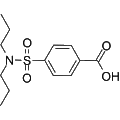
Probenecid is a selective inhibitor of bacterial growth, primarily targeting pannexin 1 channels, while also exhibiting activity as a TRPV2 channel agonist. Its ability to modulate ion channel activity makes it valuable for research into pain pathways and inflammatory responses. Probenecid is commonly used in studies investigating the role of TRPV2 in nociception and as a tool in exploring bacterial resistance mechanisms.
Synonyms: SAR-7334
SAR7334 is a novel, highly potent and bioavailable inhibitor of TRPC6 channels that opens new opportunities for the investigation of TRPC channel function in vivo. SAR7334 inhibited TRPC6, TRPC3 and TRPC7-mediated Ca(2+) influx into cells with IC50 s of 9.5, 282 and 226 nM, whereas TRPC4 and TRPC5-mediated Ca(2+) entry was not affected.
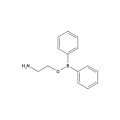
Synonyms: 2-Aminoethyl Diphenylborinate
2-Aminoethyl diphenylborinate (2-APB) is a cell-permeable inhibitor of IP3R. 2-Aminoethyl diphenylborinate also inhibits the store-operated Ca2+ (SOC) channel and activates some TRP channels (V1, V2 and V3).
DS88790512 is a potent, selective, and orally bioavailable TRPC6 inhibitor with an IC50 of 11 nM.
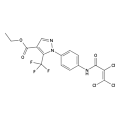
Pyr3 is a selective inhibitor of transient receptor potential canonical channel 3 (TRPC3), with an IC50 of 700 nM for TRPC3-mediated Ca2+ influx.
BCTC is a potent and specific inhibitor of transient receptor potential cation channel subfamily M member 8 (TRPM8) in prostate cancer (PCa) DU145 cells.
SAR7334 is a potent and specific TRPC6 inhibitor, inhibiting TRPC6 currents with IC50 of 7.9 nM.
Synonyms: L593754 hydrochloride; L 593754; MH 12-43 hydrochloride; MH-12-43
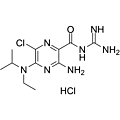
EIPA hydrochloride (L593754 hydrochloride) is a TRPP3 channel inhibitor with an IC50 of 10.5 μM. EIPA also inhibits Na+/H+-exchanger (NHE) and macropinocytosis.
Pyr6 is a selective inhibitor of TRPC3 with IC50 of 0.49 uM(Ca2+ influx inhibition in thapsigargin depleted native RBL-2H3 cells).
AC1903 is a specific and selective inhibitor of TRPC5 and has podocyte-protective properties.
LASSBio-1135 is a dual TRPV1 antagonist and TNF-alpha production inhibitor.
Synonyms: NMDAR/TRPM4-IN-2
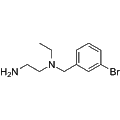
Brophenexin (compound 8) is a potent inhibitor of the interaction interface between NMDA receptors (NMDAR) and TRPM4 channels, exhibiting significant neuroprotective activity. It prevents NMDA-induced excitotoxicity, including cell death and mitochondrial dysfunction in hippocampal neurons, with an IC₅₀ of 2.1 μM. In vivo, Brophenexin protects against brain damage in mice subjected to middle cerebral artery occlusion (MCAO) and preserves retinal ganglion cells from NMDA-induced degeneration. These findings support its potential as a therapeutic agent for neurodegenerative diseases and ischemic brain injury.
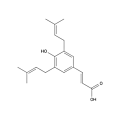
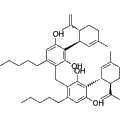
Artepillin C is an orally active compound that functions as a CREB/CRTC2 inhibitor and a covalent TRPA1 agonist (EC50 = 1.8 μM). It suppresses CREB/CRTC2-mediated gene transcription and downregulates BMAL1 expression, thereby modulating glucose and lipid metabolism. Additionally, Artepillin C activates TRPA1 channels, eliciting spicy taste signals. It exhibits antitumor activity by inhibiting cell proliferation and inducing necroptosis, improves insulin resistance, and reduces hepatic lipid synthesis. Artepillin C is applicable for research into metabolic syndrome, tumor prevention and treatment, and inflammation.
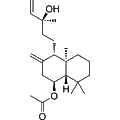
Larixyl acetate is a potent and selective inhibitor of the TRPC6 channel, exhibiting IC50 values of 0.58 μM and 6.83 μM against hTRPC6-YFP and hTRPC3-YFP, respectively. This compound demonstrates significant biological activity by preventing human papillomavirus (HPV) infections and offers protective effects against systemic endothelial dysfunction induced by traumatic brain injury. Larixyl acetate is a valuable tool for research in cellular signaling and the therapeutic exploration of TRPC6-related pathologies.
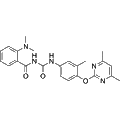
TRPM7-IN-1 is a selective inhibitor of the TRPM7 ion channel, a critical regulator of cellular functions. This compound induces cell cycle arrest and apoptosis in cancer cell lines, such as MCF-7 and BGC-823, while also reducing cell migration. TRPM7-IN-1 modulates expression levels of key proteins, decreasing vimentin and increasing E-cadherin, and acts through the PI3K/Akt signaling pathway. Its ability to diminish TRPM7 expression and function positions TRPM7-IN-1 as a promising candidate for investigation in the context of breast and gastric cancer metastasis.
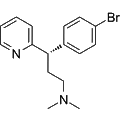
Synonyms: (+)-Brompheniramine; (S)-Brompheniramine
Dexbrompheniramine is a dual inhibitor of the histamine H1 receptor and the TRPV1 receptor, enabling it to effectively cross the blood-brain barrier. It functions by blocking H1 receptor activity and inhibiting TRPV1-mediated calcium responses in a dose-dependent manner, including responses triggered by Capsaicin. Research indicates that Dexbrompheniramine, when combined with Cimetidine, can mitigate drinking behavior induced by histamine and sham feeding, while it alone does not induce thirst. This compound is valuable for investigating the pathophysiology of chronic cough and related disorders.
AM9053 is a selective and slowly reversible inhibitor of N-acyl ethanolamine acid amidease (NAAA) with an IC50 of 30 nM. It shows limited impact on FAAH activity (IC50 > 100 nM). AM9053 demonstrates significant anti-proliferative effects on colorectal cancer cells through the activation of PPAR-α and TRPV1-dependent pathways, leading to S-phase cell cycle arrest. Additionally, it alleviates intestinal fibrosis by modulating macrophage activity and inhibiting the IL-23 signaling pathway, resulting in increased levels of N-acylethanolamines, particularly palmitoylethanolamide (PEA) and oleoylethanolamide (OEA). AM9053 is valuable for research into colorectal cancer and intestinal fibrosis.
Synonyms: CBDD
Cannabitwinol is a selective NF-κB inhibitor and thermosensitive TRP modulator. It effectively inhibits TNFα-induced NF-κB-driven transcription and IL-8 release, exhibiting notable anti-inflammatory and antioxidant properties. Cannabitwinol selectively activates cold-activated TRP channels, such as TRPA1 (EC50 = 3.0 μM), while antagonizing TRPM8 (IC50 = 3.9 μM), with minimal interaction with heat-activated TRP channels like TRPV1 and TRPV2. This compound is applicable in research focused on inflammatory skin diseases, cold allodynia, and hyperalgesia.
Out of stock
All 3 sizes
Synonyms: NMDAR/TRPM4-IN-2 free base
Brophenexin free base is a potent inhibitor targeting the N-methyl-D-aspartate receptor (NMDAR) and the transient receptor potential melastatin 4 (TRPM4). This compound exhibits significant neuroprotective activity, preventing NMDA-induced cell death and mitochondrial dysfunction in hippocampal neurons, with an IC50 of 2.1 μM. Furthermore, Brophenexin free base has demonstrated protective effects in vivo, safeguarding against brain damage induced by middle cerebral artery occlusion (MCAO) and preserving retinal ganglion cells from NMDA-induced loss.
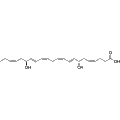
Resolvin D5 is an anti-inflammatory agent primarily targeting the GPR32 receptor, effectively modulating inflammation responses. It alleviates Paclitaxel-induced mechanical allodynia and inflammatory pain in male mice through mechanisms that do not involve TRPV1 or TRPA1 channels. Resolvin D5 reduces LPS-induced ERK phosphorylation and NF-κB nuclear translocation while downregulating pro-inflammatory mediators, inhibiting Th17 differentiation, and promoting regulatory T cell differentiation. This compound is particularly relevant for research on chemotherapy-induced peripheral neuropathy, inflammatory pain, and rheumatoid arthritis.