
- Cat. No.
- A12324
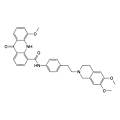
Elacridar (GF120918)
Synonyms: GF120918
Elacridaris a prototypical BCRP inhibitor which inhibits the Bcrp1-mediated transport.
Search by product name, CAS, target or catalog number. Press Down Arrow to reach product suggestions, Tab to move between links, and Escape to close suggestions.
BCRP inhibitors block breast cancer resistance protein (BCRP), a drug efflux pump in cell membranes. BCRP is ATP-binding cassette (ABC) subfamily G member 2 (ABCG2), a half transporter that works as a homodimer. It was first cloned from drug-selected breast cancer cells, where it conferred resistance to mitoxantrone and anthracyclines. In normal tissues it lines the intestine, bile canaliculi, placenta and blood-brain barrier and limits the entry of many xenobiotics. Inhibitors are used to study drug transport, oral absorption and multidrug resistance in cell and animal models. Ko-143, an analog of the fungal toxin fumitremorgin C, inhibits BCRP selectively. Elacridar blocks both BCRP and P-glycoprotein, listed under P-gp, while YHO-13177 and ML230 are further BCRP inhibitors.
Synonyms: GF120918
Elacridaris a prototypical BCRP inhibitor which inhibits the Bcrp1-mediated transport.
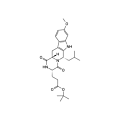
Synonyms: Ko 143,Ko143
Ko 143 is potent and selective inhibitor of breast cancer resistance protein multidrug transporter (BCRP) with an EC90 value of 26 nM.
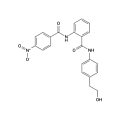
KS-176 is a potent and selective inhibitor of the breast cancer resistance protein (BCRP) multidrug transporter (IC50 values are 0.59 and 1.39 uM in Pheo A and Hoechst 33342 assays respectively).
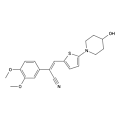
YHO-13177 is a potent and specific inhibitor of breast cancer resistance protein (BCRP/ABCG2).
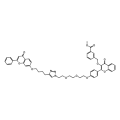
FD 12-9 is a flavonoid dimer, acts as a dual inhibitor of P-gp and BCRP, with EC50s of 285 nM and 0.9 nM, respectively. Anti-glioblastoma activity.
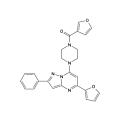
ML230 (CID44640177; SID 88095709) is a selective inhibitor of ATP-binding cassette (ABC) transporter ABCG2, and 36-fold selective for ABCG2 over ABCB1 with EC50s values of 0.13 μM and 4.65 μM, respectively.
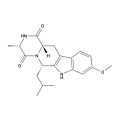
Synonyms: ML 753286
(S)-ML753286 is a breast cancer resistance protein (BCRP) inhibitor with an IC50 of 0.6 μM on BCRP efflux transporter.
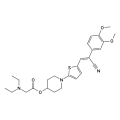
Synonyms: YHO13351
YHO-13351 (free base) is the water-soluble prodrug of YHO-13177, which is a potent and specific inhibitor of BCRP.
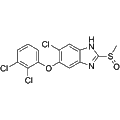
Synonyms: TCBZ-SO
Triclabendazole sulfoxide is an ABCG2/BCRP inhibitor that serves as the primary plasma metabolite of Triclabendazole. This compound demonstrates significant anti-parasitic activity and is useful in research applications focusing on the modulation of drug transport mechanisms in cellular assays. It contributes to studies investigating the role of ABCG2/BCRP in drug resistance and pharmacokinetics.
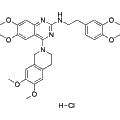
CP-100356 hydrochloride is a potent dual inhibitor of MDR1 (P-glycoprotein) and BCRP, featuring IC50 values of 0.5 µM and 1.5 µM for the inhibition of MDR1-mediated transport of Calcein-AM and BCRP-mediated transport of Prazosin, respectively. It also exhibits off-target activity as a weak inhibitor of OATP1B1 with an IC50 of approximately 66 µM, while showing no significant inhibition against MRP2 or major human P450 enzymes (IC50 > 15 µM). This compound is useful in studying drug transport dynamics and enhancing the bioavailability of therapeutic agents in pharmacological research.
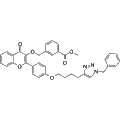
Ac32Az19 is a selective inhibitor of Breast Cancer Resistance Protein (BCRP), demonstrating a potent inhibitory effect with an EC50 value of 13 nM in BCRP-overexpressing HEK293/R2 cells. This high affinity and nontoxic profile make Ac32Az19 a valuable tool for research applications focused on drug transport mechanisms and multidrug resistance in cancer studies. Its specificity for BCRP allows for detailed investigations into therapeutic strategies and the modulation of drug pharmacokinetics.
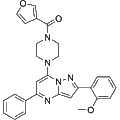
Efflux inhibitor-1 is a pyrazolo[1,5-a]pyrimidine compound that selectively inhibits the ABCG2/BCRP transporter. With IC50 values of 0.45 μM for ABCG2/BCRP and 2.17 μM for ABCB1, this inhibitor is a valuable tool for studying drug efflux mechanisms and multidrug resistance. It is useful in research applications focused on cancer pharmacology and the modulation of drug absorption and resistance pathways.
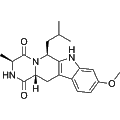
ML753286 is a selective inhibitor of the Breast Cancer Resistance Protein (BCRP), exhibiting an IC50 of 0.6 μM. This compound demonstrates high permeability and moderate clearance in liver S9 fractions from both rodent and human sources. Additionally, ML753286 remains stable across species in plasma, making it a valuable tool for studies investigating drug resistance mechanisms and pharmacokinetics in cancer research.
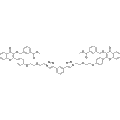
Ac22(Az8)2 is a selective inhibitor of the Breast Cancer Resistance Protein (BCRP), exhibiting an EC50 value of 1-2 nM. This compound effectively restores drug sensitivity in BCRP-overexpressing cells by inhibiting BCRP-ATPase activity, thereby blocking drug efflux and enhancing intracellular drug accumulation. Ac22(Az8)2 is a valuable tool for investigating BCRP-mediated mechanisms in multidrug-resistant cancers.
Out of stock
All 3 sizes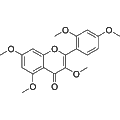
Synonyms: MRS923
Pentamethoxymorin is a selective inhibitor of the breast cancer resistance protein (BCRP/ABCG2), demonstrating significant potency with IC50 values of 5.98 μM and 5.94 μM in the Hoechst 33342 and Pheophorbide A assays, respectively. This compound showcases a preference for BCRP over other efflux transporters such as P-glycoprotein and MRP1. Pentamethoxymorin is valuable for research focusing on cancer resistance mechanisms and potential therapeutic interventions in breast cancer.
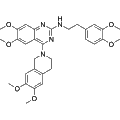
CP-100356 is a dual inhibitor of MDR1 (P-glycoprotein) and BCRP, exhibiting IC50 values of 0.5 µM and 1.5 µM, respectively, for the inhibition of MDR1-mediated Calcein-AM transport and BCRP-mediated Prazosin transport. Additionally, CP-100356 shows weak inhibition of the OATP1B1 transporter, with an IC50 of approximately 66 µM, while demonstrating minimal inhibition against MRP2 and major human P450 enzymes (IC50 > 15 µM). This compound is valuable for research applications targeting drug resistance mechanisms and transport protein interactions in pharmacology and toxicology studies.
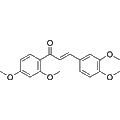
Butein tetramethyl ether is a selective inhibitor of the breast cancer resistance protein (BCRP/ABCG2) that demonstrates potent biological activity. It has been shown to inhibit BCRP in MCF-7 MX and MDCK cell lines, with IC50 values of 2.2 μM and 1.03 μM, respectively. This compound is a valuable tool for research investigating the mechanisms of cancer resistance and could provide insights into therapeutic strategies for overcoming drug resistance in cancer treatments.
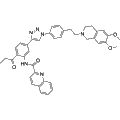
UR-MB108 is a selective inhibitor of ABCG2 (BCRP) with an IC50 value of 79 nM. This compound demonstrates high potency in inhibiting the efflux activity of the ABCG2 transporter. UR-MB108's stability in blood plasma enhances its potential for various biological applications, including studies on drug absorption and resistance in cancer research.
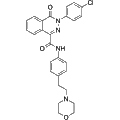
P-gp/BCRP-IN-1 is a potent inhibitor targeting P-glycoprotein (P-gp) and Breast Cancer Resistance Protein (BCRP). This compound is designed to reverse drug resistance by inhibiting the efflux activities of these pivotal transporters. P-gp/BCRP-IN-1 enhances the oral bioavailability of chemotherapeutic agents, such as Paclitaxel (PTX), making it a valuable tool in cancer research and therapeutic development. Its efficacy and oral activity suggest a promising utility in overcoming drug resistance in various cancer models.
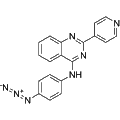
BCRP-IN-2 is a potent inhibitor of Breast Cancer Resistance Protein (BCRP), demonstrating enhanced inhibitory activity upon ultraviolet light activation. This compound serves as an effective probe for investigating the interactions of quinazolinamine derivatives with BCRP, facilitating ATP hydrolysis of the transport protein. BCRP-IN-2 significantly increases the accumulation of mitoxantrone in H460/MX20 cells, which exhibit BCRP overexpression, making it valuable for studies on multidrug resistance mechanisms in cancer research.
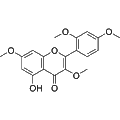
3,7,2',4'-Tetramethoxy-5-hydroxyflavone is a potent inhibitor of the breast cancer resistance protein (BCRP/ABCG2), exhibiting an IC50 value of 5.98 μM. This compound is significant for research into multidrug resistance mechanisms in breast cancer, providing insights into potential therapeutic strategies to overcome treatment resistance. Its ability to modulate BCRP activity makes it a valuable tool in cancer pharmacology studies.
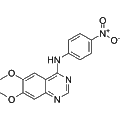
BCRP-IN-1 is a potent inhibitor of breast cancer resistance protein (BCRP), exhibiting IC50 values of 2.92 μM in the Hoechst 33342 assay and 2.46 μM in the Pheophorbide A assay. This compound is valuable for research applications targeting multidrug resistance in cancer cells, facilitating the study of therapeutic efficacy and drug transport mechanisms. Its selective inhibition of BCRP makes it an essential tool for understanding resistance pathways in oncology.
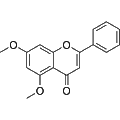
5,7-Dimethoxyflavone is a potent inhibitor of the Breast Cancer Resistance Protein (BCRP). It exhibits significant biological activities, including anti-obesity, anti-inflammatory, and antineoplastic effects. Additionally, this compound has been shown to inhibit cytochrome P450 (CYP) 3A enzymes, making it valuable for research applications focused on drug resistance and metabolic pathways in cancer therapy.