- Cat. No.
- A10491
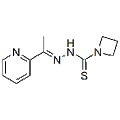
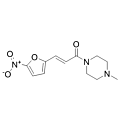
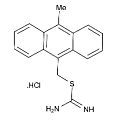
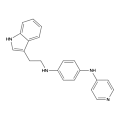
JNJ 26854165
JNJ-26854165 is one of p53-activating agents and synergizes with AraC or doxorubicin to induce p53-mediated apoptosis and may provide a novel therapeutic approach for the treatment of acute leukemias.
Search by product name, CAS, target or catalog number. Press Down Arrow to reach product suggestions, Tab to move between links, and Escape to close suggestions.
p53 activators and inhibitors act on the tumor suppressor p53, a transcription factor activated by cellular stress. In unstressed cells the ubiquitin ligase mouse double minute 2 (MDM2) keeps p53 levels low by promoting its degradation. RG7112 blocks the p53-MDM2 interaction, and SJ 172550 targets the related protein mouse double minute 4 (MDM4, also called MDMX). RITA binds p53 itself, while tenovin-1 and tenovin-6 raise cellular p53 levels. Tenovin-6 also inhibits the deacetylases sirtuin 1 and sirtuin 2 (SIRT1, SIRT2). Pifithrin-α hydrobromide works the other way, inhibiting p53-dependent transcription in cells exposed to genotoxic stress. Further compounds directed at MDM2 are listed in the neighboring MDM2 category.
JNJ-26854165 is one of p53-activating agents and synergizes with AraC or doxorubicin to induce p53-mediated apoptosis and may provide a novel therapeutic approach for the treatment of acute leukemias.
Synonyms: NSC652287; p53 Activator III
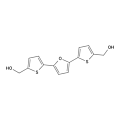
RITA, also referred to as NSC 652287, is a trycyclic thiophene derivative that binds to MDM2, disrupting the MDM2-p53 complex and subsequently activating p53 and inducing apoptosis.
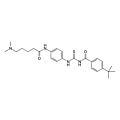
Tenovin-6 is a analog of tenovin-1. Tenovin-6 inhibits the protein deacetylase activities of purified human SIRT1, SIRT2, and SIRT3 in vitro with IC50 values of 21, 10, and 67 uM, respectively.
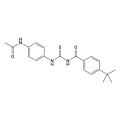
Tenovin-1 is a small molecule activator of p53 transcriptional activity that protects against MDM2-mediated p53 degradation.
NSC 319726 is a potent and selective activator of mutant p53R175
NSC59984 induces mutant p53 protein degradation via MDM2 and the ubiquitin-proteasome pathway. The EC50 of NSC59984 in most cancer cells is significantly lower than those of normal cells, with EC50 of 8.38 uM for p53-null HCT116 cells.
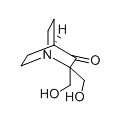
PRIMA-1 is a small molecule identified for its p53 reactivating effect.
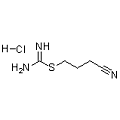
Synonyms: thioureidobutyronitrile
Kevetrin (thioureidobutyronitrile), is a water-soluble, small molecule and activator of the tumor suppressor protein p53, with potential antineoplastic activity.
MIRA-1 restores wild-type conformation, function and DNA binding activity to mutant p53. Induces p53 transcriptional transactivation of p21, MDM2 and PUMA.
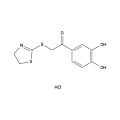
NSC 146109 hydrochloride is a cell-permeable, genotype-selective antitumor agent that activates p53-dependent transcription.
RETRA hydrochloride is an antitumor agent which inhibits tumor cell growth in a mutant p53- and p73-dependent manner in vitro and iin vivo.
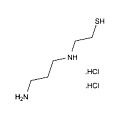
WR 1065, a dephosphorylated metabolite of amifostine (Ethyol), can protect against the immediate and delayed effects of radiation exposure.
PK11000 is an anti-p53 drug that stabilizes wild type and mutant p53 via selective alkylation of two surface-exposed cysteines without compromising its DNA binding activity. It exerts antitumor functions not only via reactivating p53 but also via other cellular mechanisms, such as increase of cellular ROS to toxic levels and activation of the UPR.
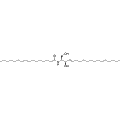
Synonyms: Palmitoyl Ceramide; N-Palmitoylsphingosine; N-acylsphingosine; C16 Ceramide (d18:1/16:0)
C16-Ceramide is a natural small molecule that acts as a p53 activator by directly and selectively binding to the protein. This compound is known to induce apoptosis in various cancer cell lines, making it a valuable tool for research in cancer biology and therapeutic development. Its ability to modulate p53 activity facilitates investigations into cellular stress responses and the mechanisms underlying tumor suppression.
PAWI-2 is a p53 activator and Wnt inhibitor that targets β3-KRAS signaling independently of KRAS. This compound selectively inhibits the phosphorylation of TBK1, resulting in the activation of apoptotic pathways, evidenced by increased caspase-3/7 activity and PARP cleavage. Additionally, PAWI-2 facilitates the translocation of optineurin into the nucleus and induces G2/M cell cycle arrest. It effectively reverses cancer stemness and overcomes drug resistance in integrin β3 KRAS-dependent human pancreatic cancer stem cells, demonstrating significant tumor growth inhibition in orthotopic xenograft mouse models.
Synonyms: XJZ-06-462
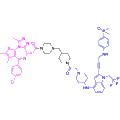
TRAP-1 is a selective p53Y220C transcriptional activator that engages with p53Y220C and BRD4 to form a ternary complex, leading to enhanced transcription of mutant p53 target genes. It effectively upregulates p21 and other p53 target genes in pancreatic cell lines harboring the p53Y220C mutation. Notably, TRAP-1 demonstrates significant antiproliferative effects, exhibiting IC50 values of 0.531 μM in BxPC-3 cells (p53Y220C) compared to 3.94 μM in A549 cells (p53WT). TRAP-1 is a valuable tool for investigating cancer associated with the p53Y220C mutation.
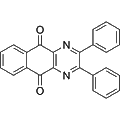
DPBQ is a potent p53 activator that promotes apoptosis specifically in polyploid cells. It induces the expression and phosphorylation of p53 without inhibiting topoisomerase or directly binding to DNA. This selective action makes DPBQ a valuable tool for research involving polyploidy and the modulation of p53 signaling pathways.
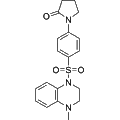
STIMA-1 is a p53 activator that stimulates mutant p53 DNA binding in vitro. This compound induces the expression of p53 target proteins and promotes apoptosis in human tumor cells expressing mutant p53. It serves as a valuable tool for researching p53-driven pathways and potential therapeutic strategies for cancers associated with p53 mutations.
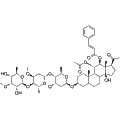
Condurango glycoside A is a potent p53 activator that initiates reactive oxygen species (ROS) generation and up-regulates p53 expression. This compound effectively induces apoptosis and promotes premature senescence associated with DNA damage in HeLa cells. Its biological activity makes it a valuable tool for research focused on cellular stress responses and cancer biology.
p53 Activator 14 is a potent activator of the p53 tumor suppressor pathway. This compound induces DNA damage, resulting in the activation of p53 and subsequent inhibition of proliferation in various cancer cell lines, with an IC50 of 7.21 μM in HCT116 cells. Additionally, it demonstrates the ability to inhibit cell adhesion, migration, and invasion, while also inducing cell cycle arrest and apoptosis. Its anti-angiogenic properties and antitumor efficacy have been validated using the chick chorioallantoic membrane (CAM) model, showcasing its potential for cancer research applications.
Out of stock
All 3 sizes
TDP-665759 is a p53 activator that functions by inhibiting the HDM2:p53 complex, thereby promoting p53 activity. It exhibits significant inhibition of the STAT3 signaling pathway with an EC50 of 5.90 μM and reduces cell viability in p53-expressing A549R cells, demonstrating an IC50 of 7.02 μM. TDP-665759 has also been shown to induce apoptosis in HepG2 cells and displays antitumor efficacy in mouse models, making it a valuable tool for cancer research and therapeutic development.
Out of stock
All 3 sizes
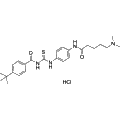
Tenovin-6 Hydrochloride is a p53 activator that enhances the transcriptional activity of the p53 tumor suppressor protein. This compound functions as a potent inhibitor of the protein deacetylase activities of human SIRT1, SIRT2, and SIRT3, with IC50 values of 21 μM, 10 μM, and 67 μM, respectively. Additionally, Tenovin-6 Hydrochloride inhibits dihydroorotate dehydrogenase (DHODH), making it valuable for research into cancer biology, cellular stress responses, and metabolic regulation.
Synonyms: PC14586
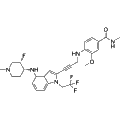
Rezatapopt (PC14586) is a small-molecule ligand that specifically targets the mutated TP53 protein, particularly the Y220C variant. By binding to a unique pocket formed by this mutation, Rezatapopt restores the structural integrity and tumor suppressor functions of p53. This compound has shown promising antitumor activity, leading to tumor inhibition and regression in mouse models with established human tumor xenografts featuring the TP53 Y220C mutation, making it a valuable tool for cancer research targeting p53 dysfunction.
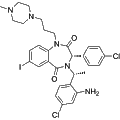
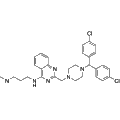
SCH529074 is a potent p53 activator that selectively binds to the DNA binding domain (DBD) of p53 in a conformation-dependent manner, exhibiting a Ki of 1-2 μM. By restoring the function of mutant p53 and inhibiting HDM2-mediated ubiquitination of wild-type p53, SCH529074 offers valuable insights into p53 signaling pathways. This compound is particularly relevant for research focused on non-small-cell lung carcinoma (NSCLC) and other conditions associated with p53 dysfunction.
Synonyms: WR-1065
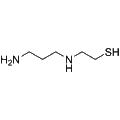
Amifostine thiol, an active metabolite of the cytoprotector Amifostine, serves as a radioprotector and p53 activator. This compound exerts cytoprotective properties by activating p53 via a JNK-dependent signaling pathway. Its biological activity makes Amifostine thiol suitable for research applications involving radiation protection and the study of p53-mediated cellular responses.