- Cat. No.
- A14302
ISRIB (trans-isomer)
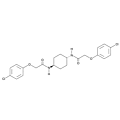
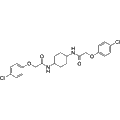
ISRIB is a potent and selective PERK inhibitor with IC50 of 5 nM.
Search by product name, CAS, target or catalog number. Press Down Arrow to reach product suggestions, Tab to move between links, and Escape to close suggestions.
PERK (Protein Kinase R-like Endoplasmic Reticulum Kinase) signaling is a critical pathway within the unfolded protein response (UPR), which is a cellular stress response related to the endoplasmic reticulum (ER). The ER is an essential organelle in cells, responsible for folding, modifying, and transporting proteins. When the ER becomes stressed due to the accumulation of unfolded or misfolded proteins, it activates the UPR to restore normal function.
ISRIB is a potent and selective PERK inhibitor with IC50 of 5 nM.
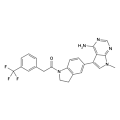
GSK2606414 is an orally available, potent, and selective PERK inhibitor with IC50 of 0.4 nM.
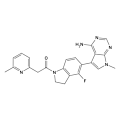
GSK2656157 is an ATP-competitive inhibitor of PERK enzyme activity with an IC(50) of 0.9 nmol/L. It is highly selective for PERK with IC(50) values >100 nmol/L against a panel of 300 kinases.
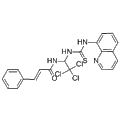
Salubrinal is a cell-permeable, selective inhibitor of cellular phosphatase complexes that dephosphorylate eukaryotic translation initiation factor 2 subunit α (eIF2α). Protects cells from endoplasmic reticulum stress-induced apoptosis (EC50 ~ 15 μM).
ISRIB (mix-isomer) is a potent and selective small molecule inhibitor of PERK signaling (IC50 ~5 nM) that can potently reverse the effects of eIF2α phosphorylation.
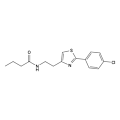
Azoramide is a small-molecule modulator of the unfolded protein response with antidiabetic activity.
Synonyms: TUDCA; UR 906; Taurolite
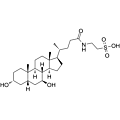
Tauroursodeoxycholate (TUDCA; UR 906; Taurolite) is an endoplasmic reticulum (ER) stress inhibitor.
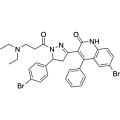
CCT020312 is a selective EIF2AK3/PERK activator. CCT020312 elicits EIF2A phosphorylation in cells.
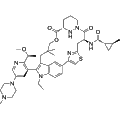
Synonyms: RAS-IN-2; RMC-6236
Daraxonrasib (RMC-6236) is an orally active, non-covalent RAS(ON) inhibitor that disrupts the interaction between wild-type or mutant RAS proteins and the RAS-binding domain of BRAF. It exhibits EC₅₀ values ranging from 28 to 220 nM across wild-type KRAS, NRAS, HRAS, and multiple oncogenic RAS variants. RMC-6236 inhibits pERK signaling and demonstrates anti-tumor activity in KRAS-mutant tumor models.
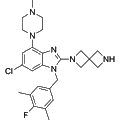
Synonyms: SOS1 activator 1
VUBI1 (SOS1 Activator 1) is a benzimidazole-derived small molecule that acts as a potent activator of the guanine nucleotide exchange factor SOS1, with a dissociation constant (Kᴅ) of 44 nM. It promotes RAS activation by enhancing RAS-GTP formation and modulates downstream ERK phosphorylation, thereby influencing RAS–MAPK signaling. In addition, VUBI1 serves as a functional ligand for the development of PROTAC-based degraders, such as PROTAC SOS1 Degrader-1, to induce targeted SOS1 degradation. VUBI1 is a valuable compound for studying RAS pathway regulation and its role in cancer biology.
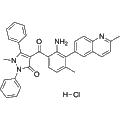
AMG PERK 44 is a highly selective inhibitor of the protein kinase PERK, exhibiting an IC50 of 6 nM. It demonstrates significant selectivity, being 1000-fold more potent than GCN2 (IC50 = 7300 nM) and 160-fold more selective over B-Raf (IC50 > 1000 nM). This compound has been shown to induce autophagy, making it a valuable tool for research into cellular stress responses and related metabolic pathways.
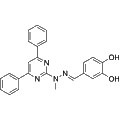
MK-28 is a potent and selective activator of the protein kinase PERK (PKR-like ER kinase). This compound demonstrates significant pharmacokinetic properties, with a notable ability to penetrate the blood-brain barrier in murine models. MK-28 is primarily used in research related to ER stress response and unfolded protein response pathways, providing valuable insights into cellular homeostasis and neurodegenerative diseases.
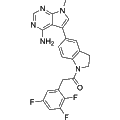
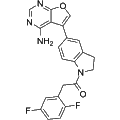
PERK-IN-2 is a highly potent inhibitor of the PERK (PKR-like ER kinase) pathway, exhibiting an IC50 of 0.2 nM. This compound effectively modulates unfolded protein response (UPR) signaling, making it valuable for studies investigating the roles of PERK in cellular stress responses and related diseases. Applications include research on cancer biology, neurodegeneration, and metabolic disorders.
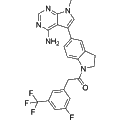
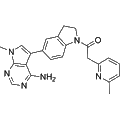
PERK-IN-4 is a highly selective inhibitor of the protein kinase R (PKR)-like endoplasmic reticulum kinase (PERK), demonstrating an IC50 of 0.3 nM. This compound effectively modulates the PERK pathway, which is activated in response to various endoplasmic reticulum stresses associated with numerous disease states. PERK-IN-4 is valuable for research applications focused on cellular stress responses and potential therapeutic strategies in diseases linked to the unfolded protein response.
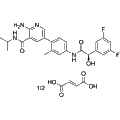
HC-5404-Fu is a potent and orally active inhibitor of the protein kinase PERK, exhibiting an IC50 of 0.001 μM against human PERK. By blocking PERK activation induced by VEGFR-TKIs, HC-5404-Fu disrupts the adaptive stress response that typically enhances tumor survival. This compound enhances anti-angiogenic effects by inhibiting the formation of both newly formed and mature tumor blood vessels, particularly in renal cell carcinoma models. HC-5404-Fu is suitable for research focused on tumor biology and angiogenesis in renal cell carcinoma.
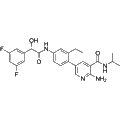
PERK-IN-5 is a highly potent inhibitor of PERK (Protein kinase RNA-like endoplasmic reticulum kinase), demonstrating IC50 values of 2 nM and 9 nM for PERK and phosphorylated eIF2α, respectively. This compound is selectively and orally bioavailable, making it an advantageous tool for in vivo studies. PERK-IN-5 has been shown to significantly inhibit tumor growth in the 786-O renal cell carcinoma xenograft model, positioning it as a valuable reagent for cancer research focusing on the UPR (unfolded protein response) pathway.
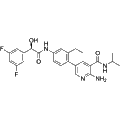
(S)-PERK-IN-5 is a selective inhibitor of the protein kinase PERK (PKR-like endoplasmic reticulum kinase), exhibiting an IC50 range of 0.101-0.250 μM. This compound plays a critical role in studies focused on the unfolded protein response and endoplasmic reticulum stress pathways. Its application is pertinent in exploring therapeutic strategies for diseases associated with protein misfolding and metabolic dysregulation.
PERK-IN-3 is a highly selective inhibitor of the Protein Kinase R (PKR)-like ER kinase (PERK) with an IC50 value of 7.4 nM. This compound effectively modulates the unfolded protein response, promoting cell survival under ER stress. It is primarily utilized in research investigating the role of PERK in cellular stress pathways, cancer biology, and neurodegenerative diseases.
PERK-IN-6 is a selective inhibitor of the Protein Kinase RNA-like Endoplasmic Reticulum Kinase (PERK), exhibiting an IC50 value of 2.5 nM. This compound inhibits PERK-mediated signaling pathways, making it a valuable tool for investigating the role of ER stress and unfolded protein response in various cellular processes. PERK-IN-6 is suitable for research applications in studying diseases associated with dysregulated PERK activity, including neurodegeneration and cancer.