
- Cat. No.
- A11901
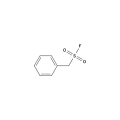
PMSF
Synonyms: Benzylsulfonyl fluoride
PMSF is an irreversible serine/cysteine protease inhibitor.
Search by product name, CAS, target or catalog number. Press Down Arrow to reach product suggestions, Tab to move between links, and Escape to close suggestions.
Buffers, detergents and protease inhibitors are basic reagents for preparing, lysing and stabilizing biological samples. Zwitterionic Good's buffers such as HEPES, MOPS, PIPES and MES hold pH steady in the physiological range, while Tris serves electrophoresis and general use. Detergents such as CHAPS, polysorbate 20 and sodium dodecyl sulfate (SDS) solubilize membranes and proteins. Dithiothreitol (DTT) keeps thiol groups reduced, and ethylenediaminetetraacetic acid (EDTA) chelates divalent metal ions. Protease inhibitors such as leupeptin, aprotinin, pepstatin A and E-64, with the phosphatase inhibitor sodium orthovanadate, protect proteins in cell lysates.
Synonyms: Benzylsulfonyl fluoride
PMSF is an irreversible serine/cysteine protease inhibitor.
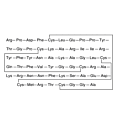
Synonyms: BPTI ,Bovine Pancreatic Trypsin Inhibitor
Aprotinin is a small protein serine protease inhibitor, used to reduce perioperative blood loss and transfusion.
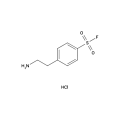
AEBSF HCl is a broad spectrum, irreversible serine protease inhibitor.
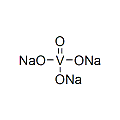
Sodium orthovanadate is the chemical compound Na3VO4. It is an inhibitor of protein tyrosine phosphatases, alkaline phosphatases and a number of ATPases, most likely acting as a phosphate analogue.
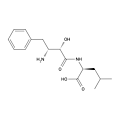
Synonyms: NK 421; Bestatin; NSC 265489
Ubenimex, also known as NK 421 and Bestatin, is a CD13 inhibitor. Ubenimex attenuates acquired sorafenib resistance in renal cell carcinoma by inhibiting Akt signaling in a lipophagy associated mechanism. Ubenimex synergistically enhances the effects of anticancer drugs in hepatocellular carcinoma. Ubenimex inhibits cell proliferation, migration and invasion by inhibiting the expression of APN and inducing autophagic cell death in prostate cancer cells.
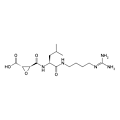
E-64 is an irreversible and selective cysteine protease inhibitor with IC50 of 9 nM for papain.
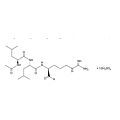
Leupeptin hemisulfate is a reversible inhibitor of trypsin-like and cysteine proteases such as calpain.
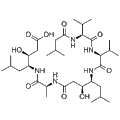
Synonyms: Pepstation-A
Pepstatin A is a potent aspartic protease inhibitor, and also inhibits HIV replication.
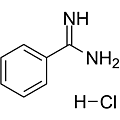
Benzamidine hydrochloride is an reversible competitive inhibitor of trypsin-like serine proteases, with Kis of 97 µM, 21 µM, 20 µM and 110 µM for uPA, trypsin, tryptase and factor Xa, respectively.
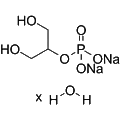
β-Glycerophosphate disodium salt pentahydrate is a bioactive endogenous metabolite and a widely used phosphatase inhibitor. It plays a critical role in promoting and sustaining osteoblast differentiation, supporting mineral metabolism, and modulating cellular signal transduction pathways. In tissue engineering and drug delivery, it is commonly utilized as a component in the formation of heat-sensitive hydrogels due to its thermoresponsive properties. Additionally, β-glycerophosphate disodium salt accelerates calcification in vascular smooth muscle cells, making it a valuable tool for studying vascular calcification and related pathologies.
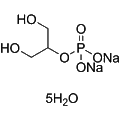
β-Glycerophosphate disodium salt pentahydrate is a potent phosphatase inhibitor that plays a crucial role in osteoblast differentiation, mineral metabolism, and signal transduction. This bioactive metabolite is instrumental in promoting the calcification of vascular smooth muscle cells and offers applications as a drug carrier for the development of heat-sensitive hydrogels. Its diverse biological activities make it valuable for research in bone biology and vascular health.
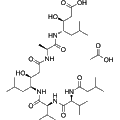
Synonyms: Pepstatin A acetate
Pepstatin acetate is a potent aspartic protease inhibitor derived from actinomycetes, exhibiting a range of IC50 values, including 4.5 nM for hemoglobin-pepsin and 6.2 nM for hemoglobin-proctase. It selectively inhibits various proteolytic activities, including those of casein-pepsin and HIV protease. This compound is valuable for studies investigating protease function and inhibition, with potential applications in enzyme regulation, cancer research, and HIV treatment.
Out of stock
All 3 sizes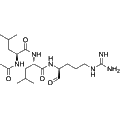
Leupeptin is a membrane-permeable broad-spectrum protease inhibitor that effectively targets serine, cysteine, and threonine proteases. This compound has been shown to inhibit the main protease of SARS-CoV-2 (Mpro) while also exhibiting anti-inflammatory properties. Leupeptin is valuable for research applications involving proteolytic processes and can aid in the study of viral infections and inflammatory responses.
Out of stock
All 3 sizes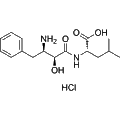
Synonyms: Ubenimex hydrochloride
Bestatin hydrochloride is an inhibitor of aminopeptidase N (CD13) and leukotriene A4 hydrolase. It plays a significant role in cancer research by modulating the enzymatic activities associated with tumor progression and inflammatory processes. This compound is valuable for studies investigating the implications of aminopeptidases in tumor microenvironments and immune responses.
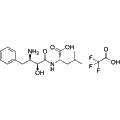
Synonyms: Ubenimex trifluoroacetate
Bestatin trifluoroacetate is a potent inhibitor of CD13 (Aminopeptidase N) and leukotriene A4 hydrolase. It plays a significant role in cancer research by modulating enzymatic activity associated with tumor progression and inflammation. With its capability to interfere with amino acid metabolism, Bestatin trifluoroacetate is valuable for studying the biological processes linked to these targets.
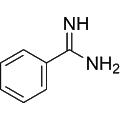
Benzamidine is a competitive protease inhibitor targeting enzymes such as plasmin, trypsin, and thrombin, effectively preventing the hydrolytic cleavage of glucagon. It is primarily employed to stabilize glucagon in human plasma and blood samples during collection, storage, and analysis, thereby ensuring accurate detection outcomes in research applications. While Benzamidine can induce slight single-strand DNA breaks at elevated concentrations, it demonstrates minimal overall genotoxicity. Additionally, it may interfere with certain glucagon antisera, although it does not significantly impact the affinity of key antigen-antibody interactions at specific concentrations.
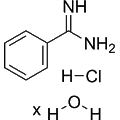
Synonyms: Benzenecarboximidamide hydrochloride hydrate
Benzamidine hydrochloride hydrate is a reversible competitive inhibitor of serine proteases, specifically targeting trypsin-like enzymes. It exhibits inhibitory constants (Kis) of 20 μM for Tryptase, 21 μM for Trypsin, 97 μM for uPA, 110 μM for Factor Xa, 320 μM for Thrombin, and 750 μM for tPA. This compound is widely utilized in biochemical research to study proteolytic processes and enzyme activity related to various physiological and pathological conditions.