- Cat. No.
- A11049
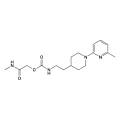
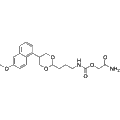
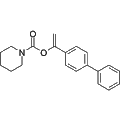
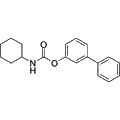
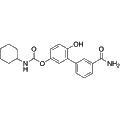
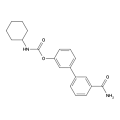
URB597
Synonyms: KDS-4103
URB597 is a relatively selective inhibitor of the enzyme fatty acid amide hydrolase (FAAH).
Search by product name, CAS, target or catalog number. Press Down Arrow to reach product suggestions, Tab to move between links, and Escape to close suggestions.
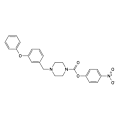
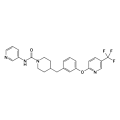
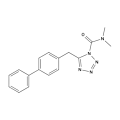
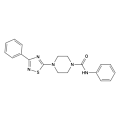
FAAH inhibitors act on fatty acid amide hydrolase (FAAH), a serine hydrolase that ends anandamide signaling. The enzyme was cloned in 1996 as a membrane protein that hydrolyzes oleamide, anandamide and related fatty acid amides. Inhibiting FAAH raises endogenous anandamide levels without directly binding cannabinoid receptors. In 2003, URB597 increased brain anandamide and produced anxiolytic-like effects in rats. PF-3845 and PF-04457845 are covalent FAAH inhibitors, and JNJ-42165279 and BIA 10-2474 extend the set. JZL195 inhibits both FAAH and monoacylglycerol lipase (MAGL) and also appears under Lipase. FP-Biotin is a biotinylated fluorophosphonate probe for activity-based profiling of serine hydrolases.
Synonyms: KDS-4103
URB597 is a relatively selective inhibitor of the enzyme fatty acid amide hydrolase (FAAH).
JZL195 is a selective and efficacious dual FAAH/MAGL inhibitor with IC50 of 13 nM and 19 nM for mouse brain FAAH and MAGL respectively.
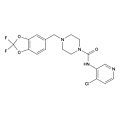
PF-3845 is a potent, selective, and irreversible inhibitor of FAAH (Ki = 0.23 μM). It reduces inflammatory pain via a cannabinoid receptor-dependent mechanism.
LY 2183240 acts both as a potent inhibitor of the reuptake of the endocannabinoid anandamide, and as an inhibitor of fatty acid amide hydrolase (FAAH), the primary enzyme responsible for degrading anandamide.
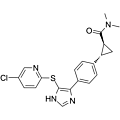
JNJ 1661010 is a selective and reversible inhibitor of fatty acid amide hydrolase (FAAH) (IC50 = 12nM).
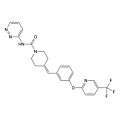
PF-04457845 is a potent and exquisitely selective inhibitor of FAAH, with an IC50 of 7.2 nM, and both analgesic and antiinflammatory effects in animal studies comparable to naproxen.
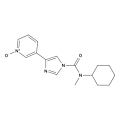
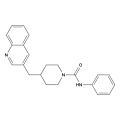
JNJ-42165279 is a potent and selective fatty acid amide hydrolase (FAAH) inhibitor.
BIA10-2474 is a long-acting reversible inhibitor of fatty acid amide hydrolase (FAAH) .
FAAH-IN-1 is a fatty acid amide hydrolase (FAAH) inhibitor, with IC50s of 145 nM and 650 nM for rat and human FAAH, respectively.
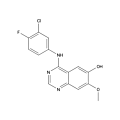
Synonyms: O-Desmorpholinopropyl Gefitinib
FAAH-IN-2 (O-Desmorpholinopropyl Gefitinib) is a potent FAAH(fatty acid amide hydrolase) inhibitor extracted from Patent WO/2008/100977A2.
PF 750 is a selective and covalent fatty acid amide hydrolase (FAAH) inhibitor, with IC50s varied from 16.2-595 nM in different pre-incubation times. Covalently modifies the enzyme’s active site serine nucleophile.
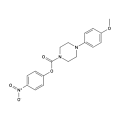
SA 47 is a selective and potent inhibitor of fatty acid amide hydrolase (FAAH) and carbamate.
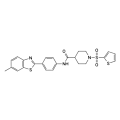
Synonyms: Benzothiazole analog 3
FAAH inhibitor 1 (Benzothiazole analog 3) is a potent fatty acid amide hydrolase (FAAH) inhibitor with an IC50 of 18±8 nM.
WWL-154 is an inhibitor of serine hydrolase (SH) and fatty acid amide hydrolase FAAH-4.
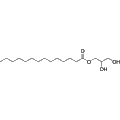
1-Monomyristin serves as a dual inhibitor of fatty acid amide hydrolase (FAAH) and monoacylglycerol lipase (MAGL), with IC50 values of 18 μM and 32 μM, respectively. It effectively inhibits the hydrolysis of 2-oleoylglycerol via MAGL, exhibiting antibacterial and antifungal activities against pathogens such as Staphylococcus aureus, Aggregatibacter actinomycetemcomitans, and Candida albicans. Additionally, 1-Monomyristin demonstrates lethality to brine shrimp and shows marginal cytotoxicity against prostate cancer cells. This reagent is suitable for research focused on bacterial and fungal infections, as well as various cancer types, including renal cancer, prostate adenocarcinoma, and pancreatic cancer.
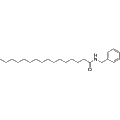
Synonyms: N-Benzylpalmitamide; N-Benzylhexadecanamide; Macamide 1
Macamide B is a selective inhibitor of fatty acid amide hydrolase (FAAH), derived from the plant Lepidium meyenii. This compound has been shown to enhance levels of endocannabinoids by inhibiting their degradation, thereby playing a crucial role in modulating pain and inflammation. Macamide B is primarily utilized in research focused on pain management, neuroprotection, and the therapeutic potential of endocannabinoids in various physiological processes.
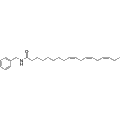
N-Benzyllinolenamide is a natural macamide derived from Lepidium meyenii and acts as an inhibitor of fatty acid amide hydrolase (FAAH) with an IC50 value of 41.8 μM. This compound is valuable for studying the modulation of endocannabinoid signaling pathways and investigating the role of FAAH in various physiological processes. Its ability to inhibit FAAH makes it a useful tool in research related to pain management, inflammation, and neuroprotection.
SA72 is a highly selective inhibitor of fatty acid amide hydrolase (FAAH), an enzyme crucial for the degradation of endocannabinoids. By inhibiting FAAH, SA72 modulates endocannabinoid levels, leading to potential therapeutic effects in pain management and inflammation. This compound serves as a valuable tool in research aimed at understanding the endocannabinoid system and its role in various physiological processes.
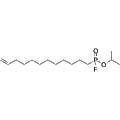
Synonyms: IDEFP
Isopropyl dodec-11-enylfluorophosphonate (IDEFP) is a potent inhibitor of the central cannabinoid receptor (CB1) and fatty acid amide hydrolase (FAAH), exhibiting similar inhibitory activities with IC50 values around 2 nM. It serves as a valuable tool for investigating cannabinoid signaling pathways and lipid metabolism in various biological contexts. Researchers utilize IDEFP to explore the therapeutic potential of modulating endocannabinoid systems in pain, inflammation, and neuroprotection studies.
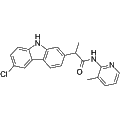
Carpro-AM1 is a dual-acting inhibitor targeting fatty acid amide hydrolase (FAAH) and selectively inhibiting cyclooxygenase (COX) enzymes. This compound exhibits an IC50 value of 94 nM for FAAH, demonstrating significant biological activity in regulating endocannabinoid signaling. Carpro-AM1 is suited for research applications focusing on pain management, inflammation, and the modulation of the endocannabinoid system.
Dual FAAH/sEH-IN-1 is a potent dual inhibitor of soluble epoxide hydrolase (sEH) and fatty acid amide hydrolase (FAAH), exhibiting IC50 values of 9.6 nM and 7 nM, respectively. This compound demonstrates significant antinociceptive effects during the inflammatory phase, making it a valuable tool for studying pain pathways and potential therapeutic interventions in pain management. Its ability to modulate lipid signaling pathways positions it for applications in neurobiology and pharmacology research.
ST4070 is a potent and selective reversible inhibitor of fatty acid amide hydrolase (FAAH). This compound elevates endocannabinoid levels in the brain, effectively counteracting neuropathic pain in preclinical animal models. Furthermore, ST4070 modulates endocannabinoid tone in brain regions associated with emotional regulation and produces significant anxiolytic-like effects in rodents. It is a valuable tool for research into neuropathic pain and anxiety disorders.
Out of stock
All 3 sizes
URB524 is an irreversible inhibitor of fatty acid amide hydrolase (FAAH) through the aminoformylation of Ser241. This compound demonstrates significant analgesic, antidepressant, and anxiolytic properties, making it valuable for research in pain management, mood disorders, and anxiety studies. Its ability to modulate endocannabinoid levels positions URB524 as a crucial tool in the investigation of cannabinoid-related pathways and therapeutics.
URB937 is a potent and peripherally restricted inhibitor of fatty acid amide hydrolase (FAAH), with an IC50 value of 26.8 nM. This compound effectively elevates anandamide levels, making it valuable for studies on endocannabinoid signaling. Due to its inability to cross the blood-brain barrier, URB937 is particularly useful for investigating peripheral FAAH activity and its implications in various biological processes and therapeutic applications.
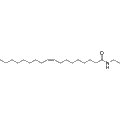
Synonyms: N-Ethyloleamide
Oleoyl ethyl amide is a selective fatty acid amide hydrolase (FAAH) inhibitor. This compound demonstrates potential in modulating bladder overactivity through its ability to enhance the endocannabinoid signaling pathway. Research applications include studies focused on urinary disorders and the broader investigation of endocannabinoid system effects on bladder function.
Out of stock
All 3 sizes