
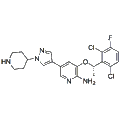
- Cat. No.
- A14291
(S)-crizotinib
(S)-crizotinib, the (S)-enantiomer of crizotinib, is a potent MTH1 (NUDT1) inhibitor with IC50 of 72 nM.
In stock
View Details
Search by product name, CAS, target or catalog number. Press Down Arrow to reach product suggestions, Tab to move between links, and Escape to close suggestions.
MTH1 inhibitors and degraders target nudix hydrolase 1 (NUDT1, also called MTH1), which removes oxidized nucleotides. MTH1 hydrolyzes oxidized precursors such as 8-oxo-2'-deoxyguanosine triphosphate (8-oxo-dGTP), which keeps them out of newly synthesized DNA. In 2014 TH588 and TH287 were introduced as MTH1 inhibitors that increase oxidative damage in cancer cell DNA. A second 2014 study showed that (S)-crizotinib, the enantiomer of the anaplastic lymphoma kinase (ALK) inhibitor crizotinib, binds MTH1 stereospecifically. Later selective inhibitors such as BAY-707 and IACS-4619 were used to reexamine whether MTH1 inhibition alone reduces cancer cell survival. SU0383 inhibits both MTH1 and 8-oxoguanine DNA glycosylase 1 (OGG1). aTAG 4531 and aTAG 2139 are MTH1-binding degraders used to remove MTH1-tagged fusion proteins in targeted degradation studies.
(S)-crizotinib, the (S)-enantiomer of crizotinib, is a potent MTH1 (NUDT1) inhibitor with IC50 of 72 nM.
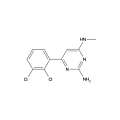
TH287 is a potent inhibitor of MTH1 (NUDT1) with an IC50 value of 0.8 nM, less potent for MTH2, NUDT5, NUDT12, NUDT14, and NUDT16,
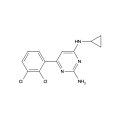
TH588 is first-in-class nudix hydrolase family inhibitor that potently and selectively engage and inhibit the MTH1(IC50= 5 nM) in cells,
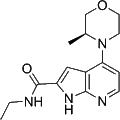
BAY-707 is a potent and selective inhibitor of MTH1 (NUDT1) that functions through a substrate-competitive mechanism with an IC50 of 2.3 nM. This compound exhibits a favorable pharmacokinetic profile compared to other MTH1 inhibitors and demonstrates good tolerability in mouse models. Although BAY-707 has shown effective inhibition of MTH1, it does not exhibit significant anticancer activity in either in vitro or in vivo studies, making it suitable for research into MTH1 function and related pathways.
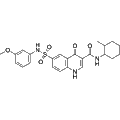
MTH1-IN-2 is an inhibitor of MutT homolog 1 (MTH1), a target implicated in cancer biology. This compound exhibits significant anti-tumor activity, making it a valuable tool for cancer research. MTH1-IN-2 can be utilized to investigate the mechanisms of tumorigenesis and to develop therapeutic strategies that exploit the MTH1 pathway.
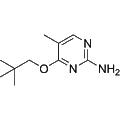
IACS-4619 is a highly selective inhibitor of the MTH1 enzyme (MutT homolog 1) with an IC50 of 0.2 nM. This 2-aminopyrimidine compound effectively blocks the hydrolysis of oxidized purine nucleotides, such as 8-oxo-dGTP, preventing the incorporation of these nucleotides into DNA. Notably, IACS-4619 demonstrates significant inhibition of endogenous MTH1 activity in MTH1-overexpressing U2OS cells without exhibiting antiproliferative or cytotoxic effects on various human cancer and normal cell lines. This reagent is applicable in oncology research targeting the MTH1 pathway.
Out of stock
All 3 sizes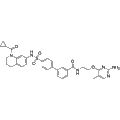
SU0383 is a dual inhibitor of MTH1 and OGG1, demonstrating IC50 values of 0.034 μM and 0.49 μM, respectively. This compound induces cytotoxicity in cancer cells and enhances their sensitivity to oxidative stress, while exhibiting minimal toxicity in normal cells. SU0383 is suitable for applications in cancer research, particularly in studies focused on oxidative stress responses and therapeutic strategies targeting DNA repair mechanisms.
Out of stock
All 3 sizes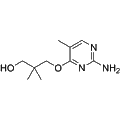
IACS-4759 is a potent and selective inhibitor of MTH1 (MutT homolog 1), with an IC50 value of 0.6 nM. This compound exhibits significant anti-cancer activity by disrupting the repair of damaged nucleotides, thereby inducing metabolic stress in cancer cells. IACS-4759 is useful for research applications focused on cancer metabolism and the development of targeted cancer therapies.
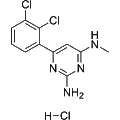
TH287 hydrochloride is a highly potent and selective inhibitor of MTH1, exhibiting an IC50 of 0.8 nM. It demonstrates significant selectivity for MTH1 over related enzymes, showing no relevant inhibition of MTH2, NUDT5, NUDT12, NUDT14, NUDT16, dCTPase, dUTPase, and ITPA at concentrations of 100 µM. This compound is valuable for cancer research, particularly in the exploration of novel chemotherapeutic strategies targeting MTH1's role in tumor metabolism.