
- Cat. No.
- A13761
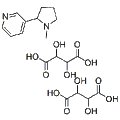
(-)-Nicotine ditartrate
(-)-Nicotine ditartrate is a potent agonist of AChR (nicotinic acetylcholine recepto).
Search by product name, CAS, target or catalog number. Press Down Arrow to reach product suggestions, Tab to move between links, and Escape to close suggestions.
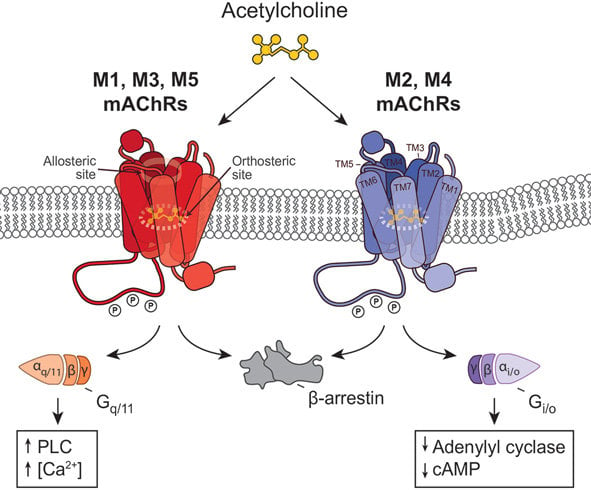
Muscarinic acetylcholine receptors (mAChRs) are a class of G protein-coupled receptors (GPCRs) found in the central and peripheral nervous systems, as well as in various other tissues and organs throughout the body. These receptors are named after muscarine, a natural alkaloid compound found in certain mushrooms, which was one of the first substances discovered to activate them.
There are five subtypes of muscarinic receptors, designated as M1 through M5, each with distinct tissue distribution and functions. Here's an overview of their roles:
Muscarinic receptors are activated by the neurotransmitter acetylcholine and play a vital role in regulating a wide range of physiological processes, including heart rate, smooth muscle contraction, glandular secretion, and neurotransmitter release. They are targets for various drugs, including anticholinergic agents, which block their activity, and drugs used to treat conditions like bradycardia and neurodegenerative disorders.
Understanding the functions and regulation of muscarinic acetylcholine receptors is essential for developing therapies that modulate their activity and for advancing our knowledge of how they contribute to various physiological and pathological processes in the body.
(-)-Nicotine ditartrate is a potent agonist of AChR (nicotinic acetylcholine recepto).
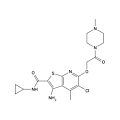
Synonyms: LY-2219620
LY2119620 is a specific, and allosteric agonist of human M2 and M4 muscarinic acetylcholine receptors.
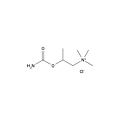
Bethanechol is a parasympathomimetic choline carbamate that selectively stimulates muscarinic receptors without any effect on nicotinic receptors.
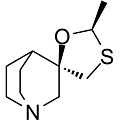
Synonyms: AF102B
Cevimeline (AF-102B) is a parasympathomimetic and muscarinic agonist, with particular effect on M3 receptors; used in the treatment of dry mouth associated with sjogren's syndrome.
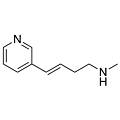
Synonyms: Rivanicline; RJR 2403
Metanicotine is a neuronal nicotinic receptor agonist, showing high selectivity for the α4β2 subtype (Ki=26 nM); > 1,000 fold selectivity than ??7 receptors(Ki= 36000 nM).
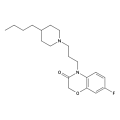
AC260584 is an M1 muscarinic receptor allosteric agonist with a pEC50 of 7.6.
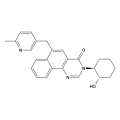
MK7622 is a muscarinic M1 receptor positive allosteric modulator.
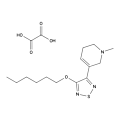
Synonyms: LY246708
Xanomeline oxalate is a potent agonist of muscarinic acetylcholine receptors (EC50 values are 0.3, 92.5, 5, 52, and 42 nM for M1, M2, M3, M4, and M5, respectively).
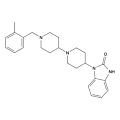
TBPB is an allosteric M1 mAChR agonist with EC50 value of 89 nM that regulates amyloid processing and produces antipsychotic-like activity in rats.
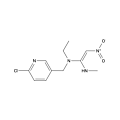
Nitenpyram is a nicotinic acetylcholine receptor (AchR) agonist.
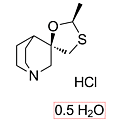
Synonyms: Evoxac
Cevimeline hydrochloride hemihydrate, a novel muscarinic receptor agonist, is a candidate therapeutic drug for xerostomia in Sjogren's syndrome.
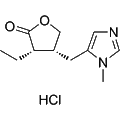
Synonyms: Pilocarpine HCl; NSC 5746 HCl; (+)-Pilocarpine hydrochloride
Pilocarpine Hydrochloride is a selective agonist for the M3 muscarinic acetylcholine receptor (mAChR). It plays a significant role in stimulating glandular secretion, particularly in the treatment of dry mouth and glaucoma. This compound is valuable in research focused on neuropharmacology, as well as studies investigating cholinergic signaling and its implications in various physiological processes.
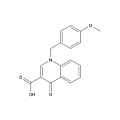
BQCA is a highly selective positive allosteric modulator of the M1 muscarinic acetylcholine receptor (mAChR).
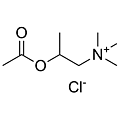
Synonyms: Acetyl-beta-methylcholine chloride; Provocholine; Mecholyl chloride; Amechol; Methapharma Brand of Methacholine Chloride; Provokit; Roche Brand of Methacholine Chloride
Methacholine chloride is a synthetic choline ester that acts as a non-selective muscarinic receptor agonist in the parasympathetic nervous system.
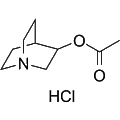
Synonyms: Quinuclidin-3-yl acetate hydrochloride
Aceclidine hydrochloride is a selective modulator of the M3 muscarinic acetylcholine receptor and an agonist of the M1 receptor (EC50: 40 μM). This compound exhibits cycloplegic properties, functioning as a surfactant and tonicity adjustor while optionally enhancing viscosity and providing antioxidant effects. Aceclidine hydrochloride is valuable in research pertaining to ocular disorders, including refractive errors, glaucoma, xerostomia, conjunctivitis, Sjogren's syndrome, lacrimal gland diseases, and esotropia.
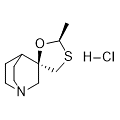
Synonyms: Evoxac; Cevimeline HCl
Cevimeline (Evoxac) Hcl is a parasympathomimetic and muscarinic agonist, with particular effect on M3 receptors; used in the treatment of dry mouth associated with sjogren's syndrome.
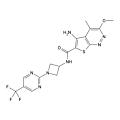
Synonyms: AZN00016130
VU6005806 (AZN-00016130) is a potent muscarnic acethylcholine receptor subtype 4 (M4) positive allosteric modulator (PAM), with EC50s of 94 nM, 28 nM, 87 nM and 68 nM for human, rat, dog and cyno M4, respectively. Used in the research of neuropsychiatric disorders.
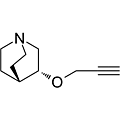
Talsaclidine is a muscarinic agonist with preferential neuron-stimulating properties. Talsaclidine is a full agonist at the M1 subtype, and as a partial agonist at the M2 and M3 subtypes.
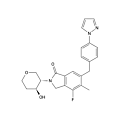
TAK-071 is a novel, potent and highly selective muscarinic acetylcholine receptor 1 (M1R) positive allosteric modulator. EC50 of TAK-071 M1R agonist activities is 520 nM.
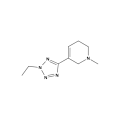
Synonyms: Lu 25-109
Alvameline (Lu25-109) is a partial M1 agonist and M2/M3 antagonist.
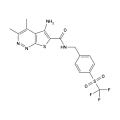
VU0467154 is a positive allosteric modulator of the M4 muscarinic acetylcholine receptor (mAChR), potentiating the response to ACh with pEC50s of 7.75, 6.2 and 6 for rat, human and cynomolgus monkey M4 receptor, respectively.
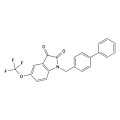
VU 0365114 is a mAChR M5 positive allosteric modulator, with an EC50 of 2.7 μM.
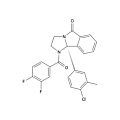
VU 6008667 is a selective negative allosteric modulator of M5 NAM with IC50s of 1.2 μM and 1.6 μM for human M5 and rat M5, respectively. High CNS penetration.
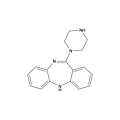
DREADD agonist 21 is a potent human muscarinic acetylcholine M3 receptors (hM3Dq) agonist(EC50=1.7 nM).
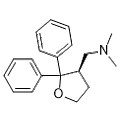
Synonyms: AE-37; AVex-73; Anavex-2-73
Blarcamesine, also known as AVex-73 and AE-37, is a muscarinic M1 agonist potentially for the treatment of Alzheimer's disease. It is an ς receptor ligand.