
- Cat. No.
- A12835
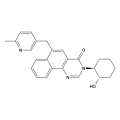
MK7622
MK7622 is a muscarinic M1 receptor positive allosteric modulator.
In stock
View Details
Search by product name, CAS, target or catalog number. Press Down Arrow to reach product suggestions, Tab to move between links, and Escape to close suggestions.
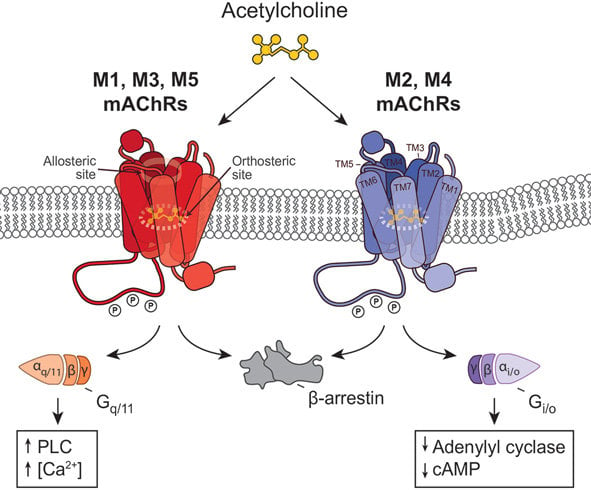
Muscarinic acetylcholine receptors (mAChRs) are a class of G protein-coupled receptors (GPCRs) found in the central and peripheral nervous systems, as well as in various other tissues and organs throughout the body. These receptors are named after muscarine, a natural alkaloid compound found in certain mushrooms, which was one of the first substances discovered to activate them.
There are five subtypes of muscarinic receptors, designated as M1 through M5, each with distinct tissue distribution and functions. Here's an overview of their roles:
Muscarinic receptors are activated by the neurotransmitter acetylcholine and play a vital role in regulating a wide range of physiological processes, including heart rate, smooth muscle contraction, glandular secretion, and neurotransmitter release. They are targets for various drugs, including anticholinergic agents, which block their activity, and drugs used to treat conditions like bradycardia and neurodegenerative disorders.
Understanding the functions and regulation of muscarinic acetylcholine receptors is essential for developing therapies that modulate their activity and for advancing our knowledge of how they contribute to various physiological and pathological processes in the body.
MK7622 is a muscarinic M1 receptor positive allosteric modulator.
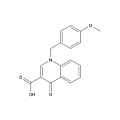
BQCA is a highly selective positive allosteric modulator of the M1 muscarinic acetylcholine receptor (mAChR).
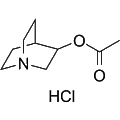
Synonyms: Quinuclidin-3-yl acetate hydrochloride
Aceclidine hydrochloride is a selective modulator of the M3 muscarinic acetylcholine receptor and an agonist of the M1 receptor (EC50: 40 μM). This compound exhibits cycloplegic properties, functioning as a surfactant and tonicity adjustor while optionally enhancing viscosity and providing antioxidant effects. Aceclidine hydrochloride is valuable in research pertaining to ocular disorders, including refractive errors, glaucoma, xerostomia, conjunctivitis, Sjogren's syndrome, lacrimal gland diseases, and esotropia.
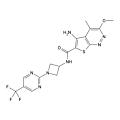
Synonyms: AZN00016130
VU6005806 (AZN-00016130) is a potent muscarnic acethylcholine receptor subtype 4 (M4) positive allosteric modulator (PAM), with EC50s of 94 nM, 28 nM, 87 nM and 68 nM for human, rat, dog and cyno M4, respectively. Used in the research of neuropsychiatric disorders.
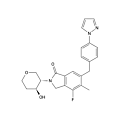
TAK-071 is a novel, potent and highly selective muscarinic acetylcholine receptor 1 (M1R) positive allosteric modulator. EC50 of TAK-071 M1R agonist activities is 520 nM.
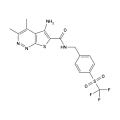
VU0467154 is a positive allosteric modulator of the M4 muscarinic acetylcholine receptor (mAChR), potentiating the response to ACh with pEC50s of 7.75, 6.2 and 6 for rat, human and cynomolgus monkey M4 receptor, respectively.
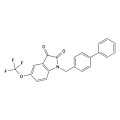
VU 0365114 is a mAChR M5 positive allosteric modulator, with an EC50 of 2.7 μM.
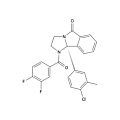
VU 6008667 is a selective negative allosteric modulator of M5 NAM with IC50s of 1.2 μM and 1.6 μM for human M5 and rat M5, respectively. High CNS penetration.
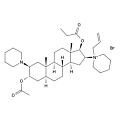
Synonyms: Org 9487
Rapacuronium bromide is an allosteric modulator of muscarinic acetylcholine receptor (mAChR).
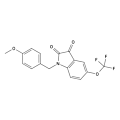
VU 0238429 is positive allosteric modulator of muscarinic acetylcholine receptor subtype 5 (mAChR5 or M5), with an EC50 of 1.16 μM.
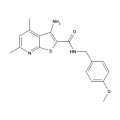
Synonyms: VU152100
VU0152100 is a potent and selective allosteric potentiator of M4 mAChR with an EC50 of 380 ± 93 nM.
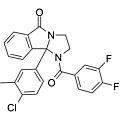
Synonyms: VU6008667
(Rac)-VU 6008667 is a selective negative allosteric modulator of muscarinic acetylcholine receptor subtype 5 (M5 NAM) (IC50=1.8 μM, pIC50= 5.75), has high CNS penetration.
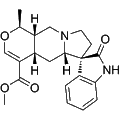
Isopteropodine is a positive modulator that selectively targets muscarinic acetylcholine receptors (mAChRs), exhibiting notable agonistic activity. It demonstrates an EC50 of 9.92 μM for acetylcholine and 14.5 μM for 5-hydroxytryptamine (5-HT), highlighting its potential in neuroscience research related to cognitive function. Additionally, Isopteropodine displays antibacterial efficacy against Gram-positive bacteria, with minimum inhibitory concentrations (MICs) of 150 μg/mL for Staphylococcus aureus and 250 μg/mL for Bacillus subtilis, making it suitable for studies in antimicrobial activity and cognitive impairment.
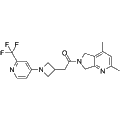
Synonyms: CVL-231
Emraclidine is a positive allosteric modulator of the muscarinic M4 receptor, designed to enhance receptor activity. This compound has shown potential in the study of neurological diseases, providing insights into cholinergic signaling pathways and their implications in various disorders. Researchers may utilize Emraclidine to explore novel therapeutic approaches targeting the M4 receptor in neuropharmacology.
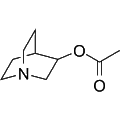
Synonyms: Quinuclidin-3-yl acetate
Aceclidine, a modulator of muscarinic acetylcholine receptors, primarily targets the M3 receptor while also acting as an M1 receptor agonist (EC50: 40 μM). This compound serves as a cycloplegic agent, surfactant, tonicity adjustor, and can enhance viscosity and provide antioxidant effects. It is applicable in research focusing on conditions such as refractive errors of the eye, xerostomia, Sjögren's syndrome, glaucoma, conjunctivitis, lacrimal gland disorders, and esotropia.
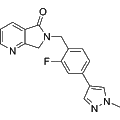
VU0453595 is a highly selective positive allosteric modulator (PAM) for the M1 muscarinic acetylcholine receptor, with an EC50 of 2140 nM. This compound has shown potential in modulating M1 receptor activity, making it a valuable tool for investigations into schizophrenia and related cognitive disorders. Its systemic activity enhances the understanding of M1 receptor function and its role in neuropsychiatric conditions.
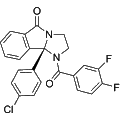
Synonyms: VU0483253
ML375 is a potent negative allosteric modulator (NAM) of the M5 muscarinic acetylcholine receptor. With IC50 values of 300 nM and 790 nM for human and rat M5 receptors respectively, ML375 exhibits high selectivity and significant brain penetration. Its ability to selectively inhibit M5 mAChR makes ML375 a valuable tool for research applications, particularly in studies exploring cholinergic signaling and neurological functions.
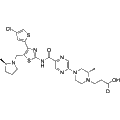
ASP8302 is a positive allosteric modulator of the muscarinic M3 receptor. It has demonstrated efficacy in enhancing voiding efficiency and decreasing residual urine volume in models of voiding dysfunction. ASP8302 is suitable for research applications focused on underactive bladder conditions.
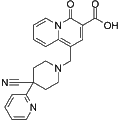
PQCA is a selective and potent positive allosteric modulator of the muscarinic M1 receptor. With EC50 values of 49 nM and 135 nM for the rhesus and human M1 receptors, respectively, PQCA demonstrates high specificity, showing inactivity towards other muscarinic receptors. This compound has significant potential in addressing cognitive deficits associated with Alzheimer's disease, making it a valuable tool for research into therapeutic strategies for neurodegenerative disorders.
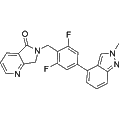
Synonyms: VU319
VU0467319 is a highly selective, orally active M1 positive allosteric modulator (PAM) with a blood-brain barrier permeability and an EC50 of 492 nM. It demonstrates significant selectivity over M2-5 (EC50 > 30 μM) in both human and rat models. This compound enhances cognitive function through central M1 muscarinic receptors, making it a promising candidate for research into Alzheimer's disease without causing cholinergic adverse reactions. VU0467319 holds potential for advancing understanding and treatment strategies in cognitive impairments associated with neurodegenerative disorders.
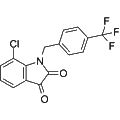
VU0238441 is a positive allosteric modulator targeting pan muscarinic acetylcholine receptors (mAChRs), demonstrating EC50 values of 3.2 μM, 2.8 μM, 2.2 μM, 2.1 μM for M1, M2, M3, and M5, respectively, while maintaining minimal activity against M4 (>10 μM). This compound enhances the receptor activity in a pharmacologically relevant manner and is valuable for exploring the role of mAChRs in neurological and cognitive research. Its applications include drug discovery and the study of receptor signaling pathways associated with cholinergic systems.
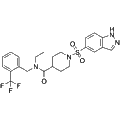
ML380 is a selective positive allosteric modulator (PAM) targeting the M5 muscarinic acetylcholine receptor (mAChR) with EC50 values of 190 nM for human and 610 nM for rat receptors. It demonstrates moderate selectivity over the M1 and M3 mAChR subtypes. By enhancing the affinity of acetylcholine for the M5 mAChR, ML380 may play a significant role in research focused on neurological and cognitive functions, offering potential avenues for the study of related disorders.
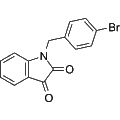
VU0119498 is a positive allosteric modulator of muscarinic acetylcholine receptors M1, M3, and M5, showing EC50 values of 6.04 µM, 6.38 µM, and 4.08 µM, respectively. This compound exhibits significant antidiabetic activity, making it a valuable tool for studying metabolic disorders and receptor signaling pathways related to glucose homeostasis. Its modulation of mAChR activity provides insights into therapeutic strategies for diabetes and other related conditions.
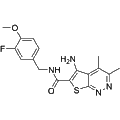
Synonyms: AZ13713945
VU0467485 is a potent and selective positive allosteric modulator of the muscarinic acetylcholine receptor 4 (M4). It enhances acetylcholine activity at M4 receptors, exhibiting EC50 values of 26.6 nM in rat and 78.8 nM in human systems. VU0467485 shows high selectivity for M4 over the other muscarinic receptor subtypes (M1, M2, M3, and M5) in both human and rat samples. This compound also demonstrates moderate to high central nervous system penetration and possesses antipsychotic-like properties, making it a valuable tool for the study of neurological disorders.
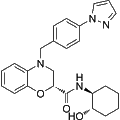
VU0486846 is a selective positive allosteric modulator of the M1 muscarinic acetylcholine receptor. This compound enhances receptor activity in a manner dependent on the presence of the endogenous ligand. VU0486846 is utilized in research to explore its potential therapeutic effects in cognitive disorders and neurodegenerative diseases. Its oral bioavailability makes it a valuable tool for in vivo studies of M1 modulation.