P2X Receptor

P2X receptor antagonists and modulators act on ion channels gated by extracellular adenosine triphosphate (ATP). Cloning of the P2X1 and P2X2 subunits in 1994 defined a new structural class of ligand-gated ion channels. Seven subunits, P2X1 to P2X7, assemble as trimers that pass sodium, potassium and calcium ions. P2X3 and P2X2/3 receptors on sensory neurons are studied in pain signaling, and P2X7 receptors in inflammation. In 1996 the cytolytic P2Z receptor of macrophages was identified as P2X7, which opens large pores during sustained ATP exposure. A-317491 sodium salt hydrate and AF-353 block P2X3 and P2X2/3 receptors. A 740003 and A 438079 hydrochloride are P2X7 antagonists, whereas NF 279 acts at P2X1.

7 Items

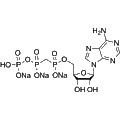
  • α,β-Methylene-ATP trisodium
    Cat. No.
    A67883

    α,β-Methylene-ATP trisodium

    α,β-Methylene-ATP trisodium is a potent agonist of P2X3 and P2X7 receptors, which facilitates significant biological responses through purinergic receptor activation. This compound is capable of traversing the blood-brain barrier, thereby influencing both peripheral and central nervous system pathways. It is instrumental in studying reflex cardiovascular responses and antinociceptive mechanisms mediated by noradrenergic neurons in the locus coeruleus. Researchers utilize α,β-Methylene-ATP trisodium for insights into neuropathic pain mechanisms and cardiovascular reflex regulation.

    1 mg
    $20.00
    5 mg
    $105.00
    All 4 sizes
  • 2-Methylthio-ATP tetrasodium
    Cat. No.
    A67902

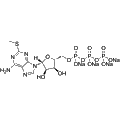
    2-Methylthio-ATP tetrasodium

    2-Methylthio-ATP tetrasodium is a non-specific P2-receptor agonist that modulates purinergic signaling pathways. It has been shown to cause noncompetitive inhibition of ADP-induced aggregation in human platelets. This reagent is valuable for studies investigating platelet function, receptor signaling, and related cardiovascular research applications.

    1 mg
    $175.00
    2.8 mg
    $205.00
    All 2 sizes
  • BzATP triethylammonium
    Cat. No.
    A67907

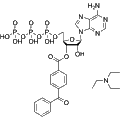
    BzATP triethylammonium

    Synonyms: Benzoylbenzoyl-ATP triethylammonium

    BzATP triethylammonium is a potent P2X receptor agonist that exhibits varying pEC50 values across multiple P2X receptor subtypes, including 8.74 for P2X1, 5.26 for P2X2, 7.10 for P2X3, 7.50 for P2X2/3, 6.19 for P2X4, and 6.31 for P2X7. It demonstrates significant activity at P2X7 receptors, with EC50 values of 3.6 μM for rat P2X7 and 285 μM for mouse P2X7. BzATP triethylammonium is valuable for research investigating purinergic signaling pathways and receptor pharmacology.

    1 mg
    $35.00
    5 mg
    $80.00
    All 5 sizes
  • 8-Bromo-ATP
    Cat. No.
    A67927

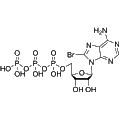
    8-Bromo-ATP

    Synonyms: 8-Bromoadenosine 5'-triphosphate; 8-Br-ATP

    8-Bromo-ATP, an ATP analogue, serves as a potent agonist for purinergic P2X receptors. This compound demonstrates cytotoxic effects on multiple myeloma cells, with an IC50 value of 23.1 μM, highlighting its potential for cancer research. 8-Bromo-ATP is useful in studies investigating purinergic signaling and its implications in tumor biology.

    5 mg
    $795.00
    All 1 sizes
  • α,β-Methylene-ATP
    Cat. No.
    A67933

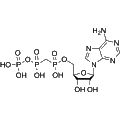
    α,β-Methylene-ATP

    α,β-Methylene-ATP is a selective agonist of the P2X1 and P2X3 receptors, capable of crossing the blood-brain barrier. Its activation of P2X receptors induces a reflex pressor response associated with the peripheral muscles and the central locus coeruleus, while engaging noradrenergic neurons that mediate antinociceptive effects. α,β-Methylene-ATP is a valuable tool for investigating neuropathic pain mechanisms, cardiovascular reflex regulation, and the central nervous system's antinociceptive pathways.

    25 mg
    $1,780.00
    50 mg
    $2,280.00
    All 3 sizes
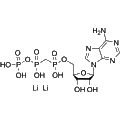
  • α,β-Methylene-ATP dilithium
    Cat. No.
    A67938

    α,β-Methylene-ATP dilithium

    α,β-Methylene-ATP dilithium is a selective agonist for P2X1 and P2X3 receptors, capable of crossing the blood-brain barrier. It induces a reflex pressor response by activating these receptors in peripheral muscles and the central locus coeruleus, with effects that can be inhibited by the P2X antagonist PPADS. Additionally, it stimulates noradrenergic neurons in the central locus coeruleus, contributing to antinociceptive effects that can be reduced by DSP-4. This compound is valuable for investigating the mechanisms underlying neuropathic pain, cardiovascular reflex regulation, and central nervous system analgesia.

    25 mg
    $3,260.00
    All 1 sizes
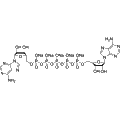
  • Diadenosine pentaphosphate (pentasodium)
    Cat. No.
    A71289

    Diadenosine pentaphosphate (pentasodium)

    Diadenosine pentaphosphate (pentasodium) is an agonist and negative modulator of the P2X1 receptor, an important endogenous purine dinucleotide primarily sourced from platelets. This compound is known to negatively regulate dendritic growth and branching by activating both homologous and heterologous P2X1 receptors, resulting in a modest transient increase in intracellular calcium levels in dendritic growth cones. Diadenosine pentaphosphate demonstrates selective inhibition of dendrite growth in cultured hippocampal neurons while leaving axon growth unaffected. Its presence in secretory vesicles such as platelets and brain synaptosomes highlights its biological relevance in neurophysiological studies.

    1 mg
    $115.00
    5 mg
    $355.00
    All 3 sizes

7 Items

Added to your cart

View Cart Checkout

    Loading...