
- Cat. No.
- A14983
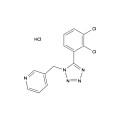
A 438079 hydrochloride
A 438079 Hcl is a competitive P2X7 receptor antagonist (pIC50 = 6.9 for the inhibition of Ca2+ influx in the human recombinant P2X7 cell line).
Search by product name, CAS, target or catalog number. Press Down Arrow to reach product suggestions, Tab to move between links, and Escape to close suggestions.
P2X receptor antagonists and modulators act on ion channels gated by extracellular adenosine triphosphate (ATP). Cloning of the P2X1 and P2X2 subunits in 1994 defined a new structural class of ligand-gated ion channels. Seven subunits, P2X1 to P2X7, assemble as trimers that pass sodium, potassium and calcium ions. P2X3 and P2X2/3 receptors on sensory neurons are studied in pain signaling, and P2X7 receptors in inflammation. In 1996 the cytolytic P2Z receptor of macrophages was identified as P2X7, which opens large pores during sustained ATP exposure. A-317491 sodium salt hydrate and AF-353 block P2X3 and P2X2/3 receptors. A 740003 and A 438079 hydrochloride are P2X7 antagonists, whereas NF 279 acts at P2X1.
A 438079 Hcl is a competitive P2X7 receptor antagonist (pIC50 = 6.9 for the inhibition of Ca2+ influx in the human recombinant P2X7 cell line).
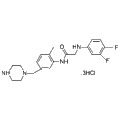
Synonyms: GW-791343
GW791343 HCl acts as a negative allosteric modulator of human P2X7 (pIC50 = 6.9 - 7.2) and a positive allosteric modulator of rat P2X7.
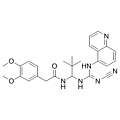
A 740003 is a novel competitive antagonist of P2X7 receptors (IC50 values = 40 nM for human and 18 nM for rat).
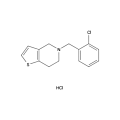
Ticlopidine is an adenosine diphosphate (ADP) receptor inhibitor. It inhibits platelet aggregation by altering the function of platelet membranes by blocking ADP receptors. This prevents the conformational change of glycoprotein IIb/IIIa which allows platelet binding to fibrinogen.
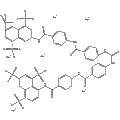
NF279 is a suramin analog that acts as a highly selective, competitive, and reversible ATP-antagonist of P2X receptor (IC50/KB ~ 1 μM in smooth muscle).
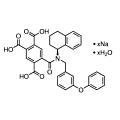
Synonyms: A317491
A-317491 sodium salt hydrate is a non-nucleotide P2X3 and P2X2/3 receptor antagonist, which inhibits calcium flux mediated by the receptors.
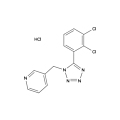
Synonyms: A-438079
A-438079 HCl is a competitive P2X7 receptor antagonist (pIC50 = 6.9 for the inhibition of Ca2+ influx in the human recombinant P2X7 cell line). Devoid of activity at other P2 receptors (IC50 >> 10 uM).
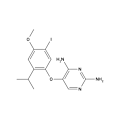
AF-353 is a novel, potent and orally bioavailable P2X3/P2X2/3 receptor antagonist, inhibits human and rat P2X3 (pIC50= 8.0).
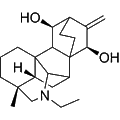
Bullatine A is a potent P2X7 antagonist with significant anti-inflammatory and anti-nociceptive properties. It effectively inhibits ATP-induced BV-2 cell apoptosis and modulates inflammatory responses mediated by P2X receptors. Bullatine A has demonstrated the ability to reduce glioma cell growth by targeting SIRT6, alleviate pain hypersensitivity in rodent models, and mitigate systemic inflammation via the ROS/JNK/NF-κB pathway. Additionally, it has shown potential in improving behavioral outcomes in models of chronic social defeat stress. This compound is valuable for research in inflammation, glioblastoma, and depression.
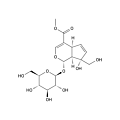
Gardenoside is a natural compound found in Gardenia fruits, with hepatoprotective properties. Gardenoside suppresses the pain of chronic constriction injury by regulating the P2X3 and P2X7 receptors. Gardenoside has an inhibitory effect on free fatty acids (FFA)-induced cellular steatosis.
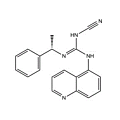
A-804598 is a P2X7 selective, competitive antagonist with the IC50s value for human, rat and mouse channels of 11, 10 and 9 nM, respectively.
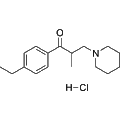
Synonyms: (±)-Eperisone hydrochloride
Eperisone hydrochloride primarily acts as a P2X7 receptor antagonist and is recognized for its antispastic and muscle relaxant properties. This compound is effective in alleviating muscle stiffness and pain, showcasing vasodilatory effects. In addition to its action on skeletal muscles, Eperisone hydrochloride also exhibits antagonistic effects on human P2X3 receptors, contributing to improved circulation and the suppression of myotonia-related pain reflexes, making it valuable for muscle-related research applications.
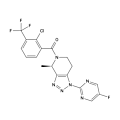
JNJ-54175446 is a potent and selective brain penetrant P2X7 receptor antagonist, with pIC50s of 8.46 and 8.81 for hP2X7 receptor and rP2X7 receptor, respectively.
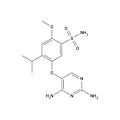
Synonyms: AF219; MK-7264
Gefapixant is an orally active P2X3 receptor (P2X3R) antagonist with IC50s of ~30 nM versus recombinant hP2X3 homotrimers and 100-250 nM at hP2X2/3 heterotrimeric receptors.
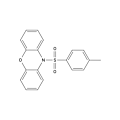
Synonyms: N-(p-Methylphenylsulfonyl)phenoxazine
PSB-12062 is a potent and selective P2X4 antagonist with an IC50 of 1.38 μM for human P2X4.
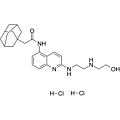
Synonyms: AZ 10606120
AZ10606120 dihydrochloride is a selective, high affinity antagonist for P2X7 receptor (P2X7R) at human and rat with an IC50 of ~10 nM.
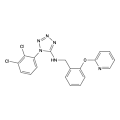
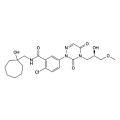
Synonyms: PF-04905428
CE-224535 is a selective P2X7 receptor antagonist.
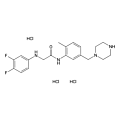
Synonyms: GW 791343
GW791343 3Hcl is a P2X7 allosteric modulator; exhibits species-specific activity and acts as a negative allosteric modulator of human P2X7 (pIC50 = 6.9 - 7.2).
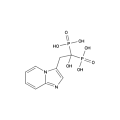
Synonyms: YM-529
Minodronic acid (YM-529) is an antagonist of purinergic P2X2/3 receptors involved in pain.
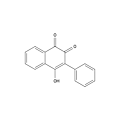
NSC 102533 is a potent antagonist of the purinergic P2X7 receptor, a ligand-gated ion channel involved in inflammation and immune regulation. It effectively inhibits ATP-induced dye uptake in HEK293 cells expressing human P2X7 receptors with an IC₅₀ of 22.4 nM. NSC 102533 also suppresses ATP-induced IL-1β secretion in human THP-1 monocytes and primary mouse peritoneal macrophages, with IC₅₀ values of 9.8 nM and 11.2 nM, respectively, demonstrating strong anti-inflammatory activity. In addition to its immunomodulatory effects, NSC 102533 exhibits antivenom potential by inhibiting Bothrops atrox venom proteolysis in a concentration-dependent manner. In in vivo studies, intradermal administration of NSC 102533 (3 mg/kg) significantly reduces skin hemorrhage induced by B. atrox and B. jararaca venom and attenuates carrageenan-induced paw edema in mice at doses between 0.01 and 1 mg/kg. These properties highlight NSC 102533 as a valuable pharmacological tool for studying P2X7 receptor–mediated inflammatory responses and venom-induced pathology.
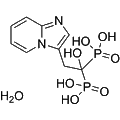
Synonyms: YM-529 hydrate
Minodronic acid hydrate is a third-generation bisphosphonate that acts as an antagonist of the purinergic P2X2/3 receptors. It demonstrates the ability to inhibit the proliferation of cancer cells, induce apoptosis, and restrict metastasis in various cancer types. This compound is particularly relevant in pain research, providing insights into its role in managing nociception associated with P2X2/3 receptor activity.
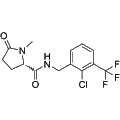
GSK-1482160 is a negative allosteric modulator of the P2X7 receptor (P2X7R), with high oral bioavailability and the ability to penetrate the blood-brain barrier. It has demonstrated a human pIC50 of 8.5 and a rat pIC50 of 6.5, effectively reducing ATP's efficacy at the receptor without altering its affinity, which subsequently inhibits IL-1β release. This compound serves as a valuable radioligand for P2X7R imaging using isotopes such as 11C or 18F and is applicable in research related to chronic joint pain and chronic constriction injury (CCI).
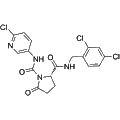
HEI3090 is a potent P2X7 receptor (P2X7R) activator. It effectively stimulates dendritic cells that express P2X7R to release IL-18, promoting the activation of Natural Killer cells and CD4 T cells. This cascade results in increased production of IFN-γ, thereby fostering a sustained antitumor immune response. HEI3090 is particularly beneficial in enhancing the efficacy of αPD-1 therapy for non-small cell lung cancer (NSCLC).
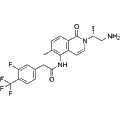
P2X7-IN-2 is a potent inhibitor of the P2X7 receptor, demonstrating an IC50 value of 0.01 nM for the inhibition of IL-1β release. This compound is valuable in research focusing on the mechanisms of autoimmunity, inflammation, and cardiovascular disease. Its selective action on the P2X7 receptor makes it a critical tool for studying inflammatory pathways and potential therapeutic interventions.