PI3K

Phosphoinositide 3-kinases (PI3Ks) are lipid kinases that catalyze the phosphorylation of phosphatidylinositol 4,5-bisphosphate (PI(4,5)P₂) to generate the second messenger phosphatidylinositol (3,4,5)-trisphosphate (PI(3,4,5)P₃). The production of PI(3,4,5)P₃ facilitates the recruitment and activation of pleckstrin homology (PH) domain–containing proteins at the plasma membrane, thereby initiating downstream signaling cascades essential for cellular proliferation, survival, and migration.

PI3Ks are divided into three major classes, among which Class I PI3Ks are most prominently implicated in cancer biology. Class I enzymes comprise four distinct catalytic isoforms: PI3Kα, PI3Kβ, PI3Kδ, and PI3Kγ.

Class IA PI3Ks, the subclass most commonly associated with oncogenic signaling, function as heterodimeric lipid kinases composed of a catalytic p110 subunit (p110α, p110β, or p110δ, encoded by PIK3CA, PIK3CB, and PIK3CD, respectively) and a regulatory p85 subunit.

The PI3K signaling pathway plays a central role in diverse biological processes, including cell cycle progression, cellular growth, survival, actin cytoskeletal rearrangement, migration, and intracellular vesicular trafficking.

Frequently Asked Questions
Phosphoinositide 3-kinases (PI3Ks) are a family of lipid kinases that phosphorylate phosphatidylinositol lipids to regulate cell growth, survival, metabolism, and immune signaling. PI3K activation leads to downstream AKT and mTOR pathway signaling. Aberrant PI3K signaling is frequently observed in cancer due to PIK3CA mutations, PTEN loss, or receptor tyrosine kinase activation.
Class I PI3Ks include four catalytic isoforms: PI3Kα (PIK3CA) PI3Kβ (PIK3CB) PI3Kδ (PIK3CD) PI3Kγ (PIK3CG) PI3Kα and β are broadly expressed, while PI3Kδ and γ are enriched in leukocytes and play critical roles in immune regulation. Isoform selectivity is an important consideration in drug development due to toxicity and immune effects.
PI3K inhibitors can be classified as: Pan-PI3K inhibitors Isoform-selective inhibitors (α, β, δ, γ) Dual PI3K/mTOR inhibitors Irreversible inhibitors Selectivity influences therapeutic window and toxicity profile.
While PI3K inhibitors block upstream lipid kinase activity, mTOR inhibitors act downstream at the level of mTORC1 or mTORC2. Dual PI3K/mTOR inhibitors target both nodes of the pathway and may achieve broader pathway suppression.

Items 201-225 of 369

  • PI3Kα-IN-7
    Cat. No.
    A32265

    PI3Kα-IN-7

    PI3Kα-IN-7 is a potent inhibitor of the PI3Kα isoform, with additional inhibitory effects on PI3Kβ. This compound is known to reduce mitochondrial membrane potential in cancer cells, leading to the induction of apoptosis. It is valuable for research applications focused on cancer biology and therapeutic development targeting the PI3K signaling pathway.

    25 mg
    $1,275.00
    50 mg
    $1,625.00
    All 3 sizes
  • PI3K-IN-35
    Cat. No.
    A32271

    PI3K-IN-35

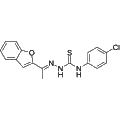
    PI3K-IN-35 is a selective inhibitor of phosphoinositide 3-kinases (PI3Ks) with IC50 values of 13.98, 7.22, and 10.94 μM for PI3K-α, PI3K-β, and PI3K-δ, respectively. This compound effectively induces cell cycle arrest at the G2/M phase and promotes apoptosis, making it a valuable tool for studies in leukemia research. Investigators can utilize PI3K-IN-35 to explore the role of PI3K signaling in cancer progression and therapeutic responses.

    25 mg
    $1,800.00
    50 mg
    $2,285.00
    All 3 sizes
  • Fimepinostat mesylate
    Cat. No.
    A32281

    Fimepinostat mesylate

    Synonyms: CUDC-907 mesylate

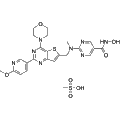
    Fimepinostat mesylate is a potent dual inhibitor targeting class I phosphoinositide 3-kinases (PI3Ks) and histone deacetylases (HDACs). It exhibits IC50 values of 19 nM for PI3Kα, 54 nM for PI3Kβ, 39 nM for PI3Kδ, and 1.7 nM for HDAC1, 5.0 nM for HDAC2, 1.8 nM for HDAC3, and 2.8 nM for HDAC10. This compound is valuable for research applications focusing on cancer biology, epigenetic regulation, and cellular signaling pathways.

    25 mg
    $1,275.00
    50 mg
    $1,625.00
    All 3 sizes
  • WNY1613
    Cat. No.
    A32308

    WNY1613

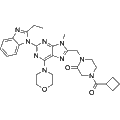
    WNY1613 is a potent and selective inhibitor of phosphoinositide 3-kinase delta (PI3Kδ) featuring a piperazinone-containing purine scaffold. This compound effectively induces apoptosis in cancer cells and inhibits the phosphorylation of downstream components of the PI3K signaling pathway in non-Hodgkin lymphoma (NHL) cell lines. WNY1613 demonstrates significant anti-NHL activity both in vitro and in vivo, making it a valuable tool for cancer research and therapeutic investigations.

    25 mg
    $1,275.00
    50 mg
    $1,625.00
    All 3 sizes
  • XJTU-L453
    Cat. No.
    A32388

    XJTU-L453

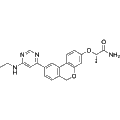
    XJTU-L453 is a selective inhibitor of PI3Kα, exhibiting an IC50 of 0.4 nM. It effectively suppresses the proliferation of breast cancer cell lines, T47D and MCF7, with IC50 values of 0.2 μM and 0.5 μM, respectively. By inhibiting the PI3K pathway, XJTU-L453 induces cell cycle arrest and promotes apoptosis, demonstrating significant antitumor activity in MCF7 xenograft models. This compound is valuable for research in cancer biology and therapeutic development targeting the PI3K signaling pathway.

    25 mg
    $1,405.00
    50 mg
    $1,790.00
    All 3 sizes
  • PI3Kα-IN-27
    Cat. No.
    A32422

    PI3Kα-IN-27

    PI3Kα-IN-27 is a potent inhibitor of the PI3K-α enzyme, exhibiting an IC50 value of 40 nM. This compound effectively targets and inhibits key signaling proteins, including PAK3, p110α, phospho-mTOR, and phospho-ERK1/2, leading to the induction of early apoptosis. Its significant anticancer activity has been demonstrated in various cancer models, including pancreatic, lung, and breast cancers, making it a valuable tool for research in cancer biology and targeted therapies.

    Out of stock

    All 3 sizes
  • Antiproliferative agent-32
    Cat. No.
    A32510

    Antiproliferative agent-32

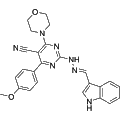
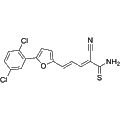
    Antiproliferative agent-32 is a potent inhibitor of the PI3K/Akt/mTOR signaling pathway, serving as an effective anticancer agent. This compound demonstrates significant antiproliferative activity by inhibiting the growth of Huh7 and SK-Hep-1 hepatocellular carcinoma cells, promoting apoptosis and inducing mitochondrial dysfunction. Antiproliferative agent-32 is valuable for research related to hepatocellular carcinoma and its underlying mechanisms.

    25 mg
    $1,275.00
    50 mg
    $1,625.00
    All 3 sizes
  • PI3Kα-IN-14
    Cat. No.
    A32678

    PI3Kα-IN-14

    PI3Kα-IN-14 is a selective inhibitor of the phosphoinositide 3-kinase alpha (PI3Kα) isoform, demonstrating a potent IC50 value of 0.14 nM. This compound effectively reduces mitochondrial membrane potential, leading to cell cycle arrest in the G1 phase and initiating apoptosis in U87-MG glioma cells. PI3Kα-IN-14 exhibits significant anti-proliferative effects across a range of tumor-derived cell lines, including PC-3 (IC50 of 0.28 μM), HCT-116 (IC50 of 0.57 μM), and U87-MG (IC50 of 1.37 μM), making it a valuable tool in cancer research and therapeutic studies targeting PI3K signaling pathways.

    Out of stock

    All 3 sizes
  • TYM-3-98
    Cat. No.
    A32847

    TYM-3-98

    TYM-3-98 is a selective inhibitor of PI3Kδ, demonstrating an IC50 of 7.1 nM. This compound effectively inhibits the proliferation of B-lymphoma cells and disrupts the PI3K/AKT/mTOR signaling pathway, leading to the induction of apoptosis. Additionally, TYM-3-98 shows favorable pharmacokinetic properties and exhibits antitumor efficacy in mouse and rat models, while exhibiting minimal toxicity.

    1 mg
    $55.00
    5 mg
    $135.00
    All 5 sizes
  • PI3Kα-IN-8
    Cat. No.
    A32857

    PI3Kα-IN-8

    PI3Kα-IN-8 is a selective inhibitor of PI3Kα, exhibiting an IC50 of 0.012 μM. This compound increases intracellular levels of reactive oxygen species, reduces mitochondrial membrane potential, and effectively induces apoptosis. It is valuable in research applications focused on cancer biology and therapeutics targeting the PI3K signaling pathway.

    Out of stock

    All 3 sizes
  • PI3K/VEGFR2-IN-1
    Cat. No.
    A32888

    PI3K/VEGFR2-IN-1

    PI3K/VEGFR2-IN-1 is a highly effective dual inhibitor of PI3K and VEGFR2, exhibiting IC50 values of 2.21 μM and 68 μM, respectively. This compound has been shown to induce apoptosis in various cancer cell lines. It is suitable for research applications focused on cancer biology and therapy development targeting the PI3K/VEGFR2 signaling pathways.

    Out of stock

    All 3 sizes
  • PIK-C98
    Cat. No.
    A33080

    PIK-C98

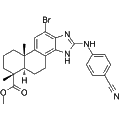
    PIK-C98 is a potent and selective inhibitor of phosphoinositide 3-kinases (PI3K), exhibiting IC50 values of 0.59, 1.64, 3.65, and 0.74 μM for the α, β, δ, and γ isoforms, respectively. This compound effectively inhibits all class I PI3Ks while leaving AKT and mTOR activity unaffected. PIK-C98 operates by disrupting the ATP-binding sites of PI3Ks, forming hydrogen bonds and arene-H interactions with target amino acid residues. Its capacity to induce apoptosis via PI3K inhibition makes PIK-C98 a valuable tool for research into multiple myeloma and other related conditions.

    25 mg
    $1,275.00
    50 mg
    $1,625.00
    All 3 sizes
  • Ramentaceone
    Cat. No.
    A33145

    Ramentaceone

    Synonyms: 7-Methyljuglon

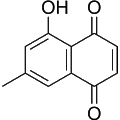
    Ramentaceone (7-Methyljuglon) is a naphthoquinone that selectively inhibits phosphoinositide 3-kinase (PI3K) activity. This compound effectively reduces PI3K protein expression and decreases Akt protein phosphorylation in breast cancer cells, thereby inducing apoptosis. Ramentaceone's mechanism of action makes it a valuable tool for research in cancer biology and therapeutic development targeting the PI3K/Akt signaling pathway.

    25 mg
    $1,530.00
    50 mg
    $1,950.00
    All 3 sizes
  • MTX-216
    Cat. No.
    A33147

    MTX-216

    MTX-216 is a dual ATP-competitive inhibitor targeting PI3K and EGFR. It effectively cosuppresses Ki-67 and phosphorylation of ribosomal S6, leading to apoptosis in NF1LOF cells. Additionally, MTX-216 inhibits SYK kinase activity with an IC50 of 281 nM. This compound is primarily utilized in research related to melanoma.

    Out of stock

    All 3 sizes
  • JMC14
    Cat. No.
    A34614

    JMC14

    JMC14 is a selective PI3Kδ and CSF1R inhibitor, exhibiting IC50 values of 12 nM and 143 nM, respectively. This compound preferentially disrupts PI3Kδ-mediated signaling within cells, demonstrating significant antitumor activity against B-cell lymphomas and triple-negative breast cancer (TNBC) in both in vitro and in vivo models. JMC14 is an important tool for research into antitumor immunity and the mechanisms of cancer progression.

    Out of stock

    All 3 sizes
  • SB02024
    Cat. No.
    A36505

    SB02024

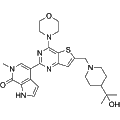
    SB02024 is a potent inhibitor of Vps34, a kinase involved in autophagy and cellular trafficking. This compound effectively inhibits Vps34 activity and has been shown to induce the expression of chemokines CCL5 and CXCL10 through the STAT1/IRF7 signaling pathway. Additionally, SB02024 exhibits anticancer properties, making it a valuable tool for research in cancer biology and autophagy-related studies.
    1 mg
    $120.00
    5 mg
    $370.00
    All 6 sizes
  • D-87503
    Cat. No.
    A36751

    D-87503

    D-87503 is a potent inhibitor of the PI3K/Akt/mTOR signaling pathway, exhibiting IC50 values of 62 nM for PI3K and 0.76 μM for Erk2. This compound effectively attenuates the activity of downstream substrates, including Akt and Rsk1, making it a valuable tool for studying cellular processes regulated by this pathway. D-87503 has applications in cancer research and investigates the role of PI3K signaling in various physiological conditions.

    25 mg
    $1,275.00
    50 mg
    $1,625.00
    All 3 sizes
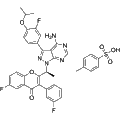
  • Umbralisib tosylate
    Cat. No.
    A36905

    Umbralisib tosylate

    Synonyms: TGR-1202 tosylate; RP5264 tosylate

    Umbralisib tosylate is a potent and selective dual inhibitor of PI3Kδ and casein kinase-1-ε (CK1ε), exhibiting an EC50 of 22.2 nM and 6.0 μM, respectively. This compound demonstrates significant immunomodulatory effects on T cells from chronic lymphocytic leukemia (CLL) patients. Umbralisib tosylate is primarily utilized in research focused on hematological malignancies to elucidate its therapeutic potential and mechanisms of action.

    25 mg
    $1,275.00
    50 mg
    $1,625.00
    All 3 sizes
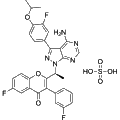
  • Umbralisib sulfate
    Cat. No.
    A36906

    Umbralisib sulfate

    Synonyms: TGR-1202 sulfate; RP-5264 sulfate

    Umbralisib sulfate is a potent and selective dual inhibitor of PI3Kδ and casein kinase-1-ε (CK1ε), with EC50 values of 22.2 nM and 6.0 μM, respectively. This compound demonstrates notable immunomodulatory effects on T cells in chronic lymphocytic leukemia (CLL). Umbralisib sulfate is a valuable tool for research into hematological malignancies, facilitating studies on cell signaling pathways and potential therapeutic strategies.

    25 mg
    $1,275.00
    50 mg
    $1,625.00
    All 3 sizes
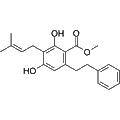
  • DMBP
    Cat. No.
    A39437

    DMBP

    DMBP is a VPS41 inhibitor that targets late endosomal and autophagosomal fusion with lysosomes. This compound induces methuosis and effectively inhibits autophagy in cancer cells, demonstrating significant potential in cancer research. Notably, DMBP has shown efficacy in reducing metastasis in a mouse model of metastatic melanoma, making it a valuable tool for studying melanoma progression and treatment.

    1 mg
    $200.00
    5 mg
    $615.00
    All 3 sizes
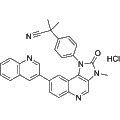
  • Dactolisib hydrochloride
    Cat. No.
    A39512

    Dactolisib hydrochloride

    Synonyms: BEZ235 hydrochloride; NVP-BEZ235 hydrochloride

    Dactolisib hydrochloride is a potent dual inhibitor of class I phosphoinositide 3-kinases (PI3K) and the mammalian target of rapamycin (mTOR), specifically targeting p110α, p110γ, p110δ, and p110β with IC50 values of 4 nM, 5 nM, 7 nM, 75 nM, and 20.7 nM, respectively. This compound effectively inhibits both mTORC1 and mTORC2, making it a valuable tool for studying the PI3K/mTOR signaling pathway. Its applications include cancer research, drug development, and exploring therapeutic strategies for various diseases associated with dysregulated PI3K/mTOR signaling.

    10 mg
    $65.00
    25 mg
    $135.00
    All 4 sizes
  • PI3Kδ/BET-IN-1
    Cat. No.
    A40402

    PI3Kδ/BET-IN-1

    PI3Kδ/BET-IN-1 is a selective inhibitor targeting both PI3Kδ and the bromodomain BRD4-BD1. With an IC50 of 112 nM for PI3Kδ and 19 nM for BRD4-BD1, this compound demonstrates potent antiproliferative effects in diffuse large B-cell lymphoma (DLBCL) cells. Its dual inhibition mechanism makes it a valuable tool for research into cancer biology and therapeutic development.

    Out of stock

    All 3 sizes
  • JRN73958
    Cat. No.
    A40811

    JRN73958

    Synonyms: Reduced scytonemin

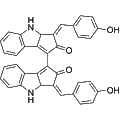
    JRN73958 is a potent inhibitor of the PI3K/Akt, MAPK, and NF-κB signaling pathways. This compound effectively reduces LPS/IFNγ-induced activation of these pathways, making it a valuable tool for investigating their roles in cancer biology, particularly in leukemia research. Additionally, JRN73958 acts as an Nrf2/ARE activator, further expanding its utility in studies related to oxidative stress and cell survival mechanisms.

    25 mg
    $1,530.00
    50 mg
    $1,950.00
    All 3 sizes
  • PI3K/PIKK-IN-1
    Cat. No.
    A41088

    PI3K/PIKK-IN-1

    PI3K/PIKK-IN-1 is a potent inhibitor of phosphoinositide 3-kinases (PI3K) and PI3-kinase-related kinases (PIKK). This compound is utilized in the development of antibody-drug conjugates (ADCs), making it valuable for therapeutic applications. It is particularly relevant in the research of various cancers, including breast cancer, multiple myeloma, Burkitt lymphoma, diffuse large B-cell lymphoma, and non-small cell lung cancer, aiding in the exploration of targeted cancer therapies.

    Out of stock

    All 3 sizes
  • PI3Kα-IN-16
    Cat. No.
    A44243

    PI3Kα-IN-16

    PI3Kα-IN-16 is a selective PI3Kα inhibitor with an IC50 value of 4.28 μM. It effectively suppresses PI3K-mediated colorectal cancer growth and migration, demonstrating its potential as a therapeutic agent. Additionally, PI3Kα-IN-16 inhibits the Wnt signaling pathway, making it a valuable tool for research in cancer biology and signaling pathways.

    Out of stock

    All 3 sizes

Items 201-225 of 369

Added to your cart

View Cart Checkout

    Loading...