
- Cat. No.
- A10731
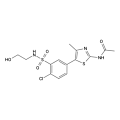
PIK-93
PIK 93 selectively inhibits the type III PI 4-kinase enzyme, and small interfering RNA-mediated down-regulation of the individual PI 4-kinase enzymes.
Search by product name, CAS, target or catalog number. Press Down Arrow to reach product suggestions, Tab to move between links, and Escape to close suggestions.
PI4K inhibitors block phosphatidylinositol 4-kinases (PI4Ks), which make a key Golgi membrane lipid. Their product, phosphatidylinositol 4-phosphate (PI4P), marks Golgi and plasma membranes and is the precursor of phosphatidylinositol 4,5-bisphosphate. Mammalian cells have four PI4Ks, the type II enzymes PI4KIIα and PI4KIIβ and the type III enzymes PI4KIIIα and PI4KIIIβ. Many positive-strand RNA viruses, including enteroviruses, recruit PI4KIIIβ to build their replication membranes. PI4KIIIbeta-IN-10 and T-00127_HEV1 inhibit this isoform, while PIK-93 also acts on several phosphoinositide 3-kinases (PI3Ks). In 2013, Plasmodium PI4K was identified as the target of antimalarial imidazopyrazines such as KDU691. MMV390048 and UCT943 also inhibit the parasite enzyme and are used in malaria parasite models.
PIK 93 selectively inhibits the type III PI 4-kinase enzyme, and small interfering RNA-mediated down-regulation of the individual PI 4-kinase enzymes.
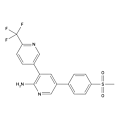
MMV390048 is a representative of a new chemical class of Plasmodium PI4K inhibitor (Kdapp=0.3 µM).
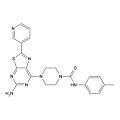
PI4KIII beta inhibitor 3 is a novel and high effective PI4KIII beta inhibitor with IC50 of 5.7 nM.
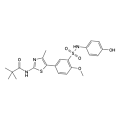
PI4KIIIbeta-IN-10 is the most potent PI4KIIIbeta inhibitor currently reported, with very minor off-target inhibition of PI4KIIIbeta related lipid kinases (IC50 = 3.6 nM).
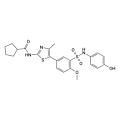
PI4KIIIbeta-IN-9 is a potent PI4KIIIbeta inhibitor (IC50 of 7 nM) and is >140-fold selective over PI3Kgamma and >20-fold selective over PI3Kδ, and shows no inhibition of vps34 at concentrations up to 20 uM.
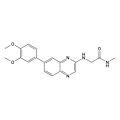
Synonyms: NVP-BQR695
BQR-695, also known as NVP-BQR695, is a PI4KIIIβ inhibitor with IC50s of 80 and 3.5 nM for human PI4KIIIβ and Plasmodium variant of PI4KIIIβ, respectively.
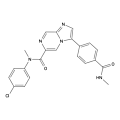
KDU691 is a plasmodium PI4K inhibitor (IC50 values of 0.18 μM and 0.061 μM against hypnozoite forms and liver schizontsm, respectively).
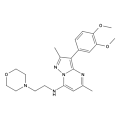
Synonyms: T00127-HEV1; PI4KIIIβ Inhibitor II
T-00127_HEV1 is a phosphatidylinositol 4-kinase III beta (PI4KB) inhibitor with an IC50 of 60 nM.
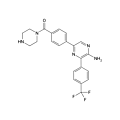
UCT943 is a next-generation Plasmodium falciparum PI4K inhibitor. UCT943 inhibits the P. vivax PI4K (PvPI4K) enzyme with an IC50 of 23 nM.
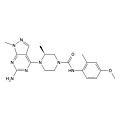
UCB9608 is a potent, selective and orally active PI4KIIIβ inhibitor, with an IC50 of 11 nM, selective over PI3KC2 α, β, and γ lipid kinases.
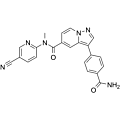
KDU731, an orally active C. parvum PI4K inhibitor with an IC50 value of 25 nM, blocks Cryptosporidium infection in vitro and in vivo.
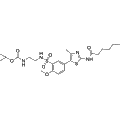
PI4KIII beta inhibitor 4 is a highly selective inhibitor of PI4KIIIβ, exhibiting an IC50 of 0.005 μM. This compound effectively induces apoptosis in tumor cells, mediates cell cycle arrest, and promotes autophagy through inhibition of the PI3K/AKT signaling pathway. Its key biological activities make it a valuable tool for cancer research and therapeutic investigations.
Out of stock
All 3 sizes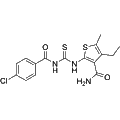
PI-273 is a selective inhibitor of phosphatidylinositol 4-kinase II alpha (PI4KIIα), with an IC50 value of 0.47 μM. This compound demonstrates efficacy in inhibiting breast cancer cell proliferation, disrupting the cell cycle, and inducing apoptosis. PI-273 serves as a valuable tool for investigating the role of PI4KIIα in cancer biology and developing targeted therapeutic strategies.
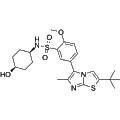
PI4K-IN-2 is a highly selective inhibitor of phosphatidylinositol 4-kinase β (PI4KB) with an IC50 of 0.015 μM. This compound demonstrates significant inhibitory activity and is particularly relevant for research involving human rhinovirus (HRV). Its potential applications extend to studies focusing on the role of PI4KB in viral replication and related signaling pathways.
Out of stock
All 3 sizes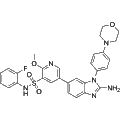
GSK-A1 is a selective inhibitor of type III phosphatidylinositol 4-kinase PI4KIIIα, exhibiting a pIC50 of 8.5-9.8. It effectively inhibits the resynthesis of PtdIns(4,5)P2 with an IC50 of approximately 3 nM, leading to a potent decrease in PtdIns(4)P levels without significantly affecting PtdIns(4,5)P2. GSK-A1 serves as a valuable tool in research aimed at understanding its potential role in anti-hepatitis C virus (HCV) applications.
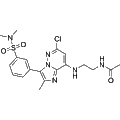
MI 14 is a selective inhibitor of phosphatidylinositol 4-kinase III beta (PI4KIIIβ), demonstrating an IC50 of 54 nM for this target, while exhibiting limited activity against PI4KIIIα and PI4KIIα with IC50s greater than 100 μM. This compound displays notable antiviral efficacy against hepatitis C virus (HCV) genotype 1b, Coxsackievirus B3 (CVB3), human rhinovirus (HRV), and HCV genotype 2a. MI 14 serves as a valuable tool for research focused on viral pathogenesis and therapeutic interventions targeting lipid kinase signaling pathways.
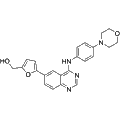
AL-9 is a potent inhibitor of phosphatidylinositol 4-kinase III alpha (PI4KIIIα) with an IC50 of 0.57 μM. It effectively disrupts hepatitis C virus (HCV) replication, making it a valuable tool for studying viral pathogenesis and potential antiviral strategies. Its selective targeting of PI4KIIIα highlights its relevance in research applications focused on HCV infection and related therapeutic developments.
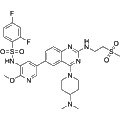
PI4KA-IN-1 is a potent inhibitor of phosphatidylinositol 4-kinase alpha (PI4KA). This compound is valuable for studying the role of PI4KA in cellular processes and its implications in hepatitis C virus infection. By downregulating PI4KA activity, PI4KA-IN-1 can aid in elucidating the mechanisms of viral replication and pathogenesis, making it a useful tool for related therapeutic research and development.
Out of stock
All 3 sizes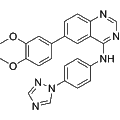
Synonyms: A-831
AZD2836 is a selective inhibitor of the host cell kinase PI4KIIIα. By targeting this kinase, AZD2836 disrupts the metabolism of phosphatidylinositol 4-phosphate (PI4P), a crucial component for the replication of hepatitis C virus (HCV). In studies using HCV subgenomic replicon cell lines, AZD2836 demonstrated effective antiviral activity, exhibiting EC50 values of 270 nM for genotype 1b (Con1 strain) and 550 nM for genotype 1a (Lemon strain). This compound serves as a valuable tool for researching viral replication mechanisms and assessing therapeutic options for HCV.
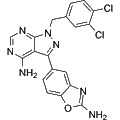
PI4Kβ/PKG-IN-2 is a potent dual inhibitor targeting Plasmodium phosphatidylinositol 4-kinase beta (PI4Kβ) and cGMP-dependent protein kinase (PKG). This compound demonstrates significant inhibitory activity against Plasmodium, making it a valuable tool for investigating malaria pathogenesis and potential therapeutic strategies. Its oral bioavailability further supports its use in preclinical studies aimed at understanding malaria biology.
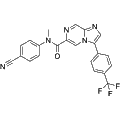
KAI-407 is an orally active inhibitor targeting Plasmodium PI4K kinase, effectively disrupting multiple stages of the parasite lifecycle. It demonstrates EC50 values of 81 nM against the blood stages of malignant Plasmodium and 88 nM for liver schizonts of P. yoelii. Additionally, KAI-407 exhibits IC50 values of 0.64 μM and 0.69 μM for liver schizonts and dormant bodies of P. cynomolgi, respectively. This compound is valuable for investigating vivax malaria and assessing potential therapeutic strategies against Plasmodium berghei infections.
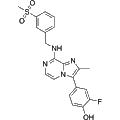
BF738735 is a selective inhibitor of phosphatidylinositol 4-kinase III beta (PI4KIIIβ), exhibiting an IC50 of 5.7 nM. This compound effectively modulates lipid metabolism and signaling pathways involved in cellular processes. BF738735 is leveraged in research to investigate PI4KIIIβ's role in various diseases, including cancer and viral infections, highlighting its potential for therapeutic development.
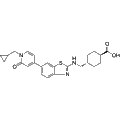
PI4K-IN-1 is a potent inhibitor of phosphatidylinositol 4-kinase III (PI4KIII) isoforms, exhibiting pIC50 values of 9.0 for PI4KIIIα and 6.6 for PI4KIIIβ. In addition, it demonstrates inhibitory activity against PI3K isoforms α, β, γ, and δ, with pIC50 values of 4.0,
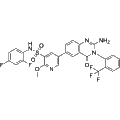
GSK-F1 is a potent inhibitor of phosphoinositide 4-kinase alpha (PI4KA), exhibiting a pIC50 value of 8.0 against PI4KA, along with significant activity against other phosphoinositide kinases. This compound is primarily utilized in research related to hepatitis C virus (HCV) infection, providing insights into the role of PI4KA in viral replication and pathogenesis. GSK-F1 serves as a valuable tool for understanding PI4K pathway modulation and its implications in viral infections.
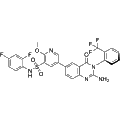
(R)-GSK-F1 is the R-isomer of GSK-F1, a selective inhibitor of phosphatidylinositol 4-kinase alpha (PI4KA). It exhibits potent inhibitory activity with pIC50 values of 8.0, 5.9, 5.8, 5.9, 5.9, and 6.4 against PI4KA, PI4KB, PI3KA, PI3KB, PI3KG, and PI3KD, respectively. This compound is primarily utilized in research related to hepatitis C virus (HCV) infection, making it a valuable tool for studying PI4K signaling pathways and their implications in viral pathogenesis.
Out of stock
All 3 sizes