Protein Kinase C (PKC)

Protein kinase C (PKC) inhibitors and activators act on a family of lipid-regulated serine/threonine kinases. Conventional PKC isoforms require calcium and diacylglycerol, novel isoforms need only diacylglycerol, and atypical isoforms respond to neither. Tumor-promoting phorbol esters mimic diacylglycerol and were shown in 1982 to activate PKC directly. 12-O-tetradecanoyl phorbol-13-acetate (TPA) is the standard activator of this kind, and ingenol mebutate also activates several isoforms. Staurosporine was first described as a PKC inhibitor but blocks a wide range of protein kinases. Enzastaurin is selective for PKCβ, while GO6983 and Ro 31-8220 mesylate inhibit multiple conventional and novel isoforms.

Items 101-125 of 212

  • Protein kinase inhibitor 9
    Cat. No.
    A46160

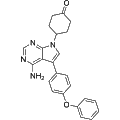
    Protein kinase inhibitor 9

    Protein Kinase Inhibitor 9 is a potent inhibitor of serine/threonine and tyrosine kinase activity. It demonstrates significant anti-proliferative effects, making it valuable for cancer research and the study of hyperproliferative disorders. Additionally, this compound can be applied in investigations related to rheumatoid arthritis, immune system dysfunctions, transplant rejections, and inflammatory disorders.

    1 mg
    $85.00
    5 mg
    $180.00
    All 6 sizes
  • Bisindolylmaleimide III
    Cat. No.
    A46161

    Bisindolylmaleimide III

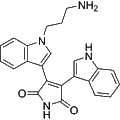
    Bisindolylmaleimide III is a selective inhibitor of protein kinase C alpha (PKCα), effectively disrupting its activity. This compound selectively engages with PKCα or ribosomal S6 protein kinase 1 following their activation, making it a valuable tool in dissecting PKC-related signaling pathways. It is widely utilized in cancer research and studies investigating cell growth and differentiation.

    5 mg
    $60.00
    10 mg
    $95.00
    All 5 sizes
  • PKCTheta-IN-2
    Cat. No.
    A46162

    PKCTheta-IN-2

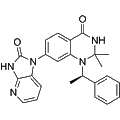
    PKCTheta-IN-2 is a highly potent and selective inhibitor of protein kinase C theta (PKCθ) with an IC50 value of 0.25 nM. This compound demonstrates exceptional selectivity for PKCθ over more than 30 other kinases within the PKC subfamily. PKCTheta-IN-2 effectively inhibits interleukin-2 (IL-2) production in murine models, exhibiting an IC50 of 682 nM. Its use in research is particularly relevant for studies involving T cell signaling and autoimmune disorders.

    1 mg
    $25.00
    5 mg
    $50.00
    All 6 sizes
  • Sphingosine (d14:1)
    Cat. No.
    A46163

    Sphingosine (d14:1)

    Synonyms: Tetradecasphing-4-enine

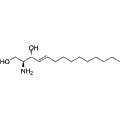
    Sphingosine (d14:1), also known as Tetradecasphing-4-enine, is a selective inhibitor of Protein Kinase C (PKC). This sphingolipid disrupts the interaction between PKC and sn-1,2-diacylglycerol (DAG) or phorbol esters, thereby modulating signaling pathways. Sphingosine (d14:1) is primarily utilized in research investigating cellular processes regulated by PKC, including cell proliferation, differentiation, and apoptosis.

    1 mg
    $100.00
    5 mg
    $455.00
    All 2 sizes
  • Sapintoxin D
    Cat. No.
    A46164

    Sapintoxin D

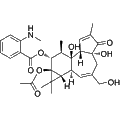
    Sapintoxin D is a fluorescent phorbol ester that activates protein kinase C (PKC) in a calcium-dependent manner. This compound is instrumental for studying PKC's role in various cellular processes and signal transduction pathways. Its fluorescent properties facilitate real-time monitoring of PKC activity, making it valuable for research applications in cancer biology and neurobiology.

    1 mg
    $170.00
    5 mg
    $430.00
    All 6 sizes
  • 1,2-Didecanoyl-Sn-glycerol
    Cat. No.
    A46165

    1,2-Didecanoyl-Sn-glycerol

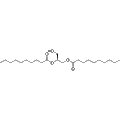
    1,2-Didecanoyl-sn-glycerol is a potent activator of protein kinase C (PKC), serving as an analog of the second messenger diacylglycerol (DAG). This compound is anticipated to elicit biological activities akin to those of 1,2-dioctanoyl-sn-glycerol, making it valuable for investigating PKC signaling pathways. Researchers can utilize 1,2-didecanoyl-sn-glycerol in studies focused on cellular processes influenced by PKC activation, contributing to the understanding of various physiological and pathological conditions.

    25 mg
    $95.00
    50 mg
    $175.00
    All 3 sizes
  • O-Desmethyl Midostaurin
    Cat. No.
    A46166

    O-Desmethyl Midostaurin

    Synonyms: CGP62221; O-Desmethyl PKC412

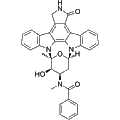
    O-Desmethyl Midostaurin is the active metabolite of Midostaurin, produced through cytochrome P450 liver enzyme metabolism. This compound serves as a valuable biomarker for assessing Midostaurin metabolism in vivo. Additionally, Midostaurin itself is known for being a multi-targeted protein kinase inhibitor, demonstrating IC50 values ranging from 22-500 nM. O-Desmethyl Midostaurin can be utilized in various biological studies concerning drug metabolism and pharmacokinetics.

    1 mg
    $760.00
    5 mg
    $2,460.00
    All 2 sizes
  • Bisindolylmaleimide XI hydrochloride
    Cat. No.
    A46167

    Bisindolylmaleimide XI hydrochloride

    Synonyms: Ro 32-0432; Ro 31-8830 hydrochloride

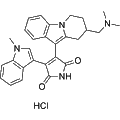
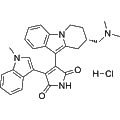
    Bisindolylmaleimide XI hydrochloride is a potent and selective inhibitor of protein kinase C (PKC) with IC50 values of 9 nM, 28 nM, 31 nM, 37 nM, and 108 nM for PKCα, PKCβI, PKCβII, PKCγ, and PKCε, respectively. This compound is orally active, making it a valuable tool for exploring the role of PKC in various cell signaling pathways. Its application spans cancer research, neurobiology, and cardiovascular studies, providing insights into PKC-mediated processes and potential therapeutic targets.

    1 mg
    $170.00
    5 mg
    $440.00
    All 4 sizes
  • Psychosine-d5
    Cat. No.
    A46168

    Psychosine-d5

    Synonyms: Galactosylsphingosine-d5

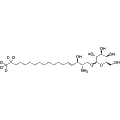
    Psychosine-d5 is a deuterium-labeled analog of Psychosine, a substrate for the galactocerebrosidase (GALC) enzyme. This stable isotope serves as a potential biomarker for Krabbe disease and is utilized in research to study the disease's pathophysiology. As a highly cytotoxic lipid, Psychosine can induce cell death across various cell types, making Psychosine-d5 valuable for investigations into cell toxicity and lipid metabolism.

    0.1 mg
    $415.00
    0.5 mg
    $840.00
    All 3 sizes
  • (Rac)-Anemonin
    Cat. No.
    A46169

    (Rac)-Anemonin

    Synonyms: (Rac)-Pulsatilla camphor; (Rac)-Anemonine

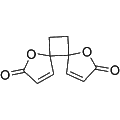
    (Rac)-Anemonin is a dual inhibitor targeting inducible nitric oxide synthase (iNOS) and protein kinase C theta (PKC-θ). It selectively inhibits iNOS while also reducing the stability of the PKC-θ protein, showcasing significant biological activity. Research indicates that (Rac)-Anemonin can alleviate symptoms in dextran sodium sulfate-induced acute ulcerative colitis in murine models, making it valuable for studying inflammation-related diseases.

    1 mg
    $155.00
    5 mg
    $320.00
    All 7 sizes
  • Ruboxistaurin mesylate
    Cat. No.
    A46170

    Ruboxistaurin mesylate

    Synonyms: LY333531 mesylate

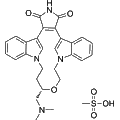
    Ruboxistaurin mesylate is a selective and ATP-competitive inhibitor of protein kinase C-beta (PKCβ) with IC50 values of 4.7 nM and 5.9 nM for the PKCβI and PKCβII isoforms, respectively. This compound shows potential in the study of several pathological conditions, including eye disorders, heart failure, and diabetes. Its specific inhibition of PKCβ can facilitate investigations into the underlying mechanisms of these diseases and the development of targeted therapeutic strategies.

    1 mg
    $75.00
    5 mg
    $170.00
    All 6 sizes
  • N-Desmethyltamoxifen
    Cat. No.
    A46171

    N-Desmethyltamoxifen

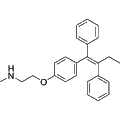
    N-Desmethyltamoxifen, a potent protein kinase C (PKC) inhibitor, is the primary metabolite of tamoxifen in humans. It demonstrates significantly enhanced PKC inhibitory activity, being ten-fold more potent than its precursor. Additionally, N-Desmethyltamoxifen effectively regulates ceramide metabolism in human acute myeloid leukemia (AML) cells, influencing ceramide glycosylation, hydrolysis, and sphingosine phosphorylation, making it a valuable tool for cancer research and therapeutic studies.

    5 mg
    $30.00
    10 mg
    $50.00
    All 5 sizes
  • SAMβA
    Cat. No.
    A46172

    SAMβA

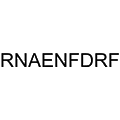
    SAMβA is a selective inhibitor targeting the interaction between mitofusin 1 and βIIPKC. This compound is conjugated to the cell-permeable peptide TAT47-57, facilitating its penetration into cells. SAMβA has demonstrated potential in enhancing heart failure outcomes in rat models, making it a valuable tool for investigating mitochondrial dynamics and associated pathophysiological processes in cardiac research.

    5 mg
    $65.00
    10 mg
    $110.00
    All 3 sizes
  • 4α-TPA
    Cat. No.
    A46173

    4α-TPA

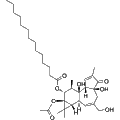
    Synonyms: α-TPA

    4α-TPA is an inactive analog of TPA, serving as a negative control in TPA-mediated experiments. This reagent is critical for distinguishing specific TPA-activated events from non-specific responses in biological assays. It aids researchers in validating experimental outcomes related to TPA signaling pathways and discerning the effects of TPA on various cellular processes.

    1 mg
    $135.00
    All 1 sizes
  • NPC-15437 dihydrochloride
    Cat. No.
    A46174

    NPC-15437 dihydrochloride

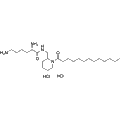
    NPC-15437 dihydrochloride is a selective and reversible inhibitor of protein kinase C (PKC), demonstrating an IC50 value of 19 μM. This compound has been shown to impact the mechanisms associated with memory consolidation, making it a valuable tool for studying cognitive processes and neurobiology. Its penetrative properties enable effective investigation in various biological systems.

    1 mg
    $135.00
    5 mg
    $325.00
    All 5 sizes
  • PKCε (85-92)
    Cat. No.
    A46175

    PKCε (85-92)

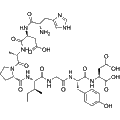
    PKCε (85-92) is a bioactive peptide that selectively activates epsilon protein kinase C (e-PKC). This peptide effectively induces MARCKS phosphorylation in wild-type cells, demonstrating its role in signaling pathways related to cellular function. However, it does not influence MARCKS phosphorylation in cells derived from knockout mice, indicating its specificity. PKCε (85-92) is valuable for research applications focused on PKC signaling and the study of related cellular processes.

    1 mg
    $25.00
    5 mg
    $55.00
    All 7 sizes
  • Flosequinan
    Cat. No.
    A46176

    Flosequinan

    Synonyms: BTS 49465; Flosequinon

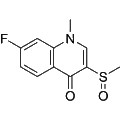
    Flosequinan is a balanced vasodilator that effectively reduces systemic vascular resistance while simultaneously decreasing the left ventricular afterload and arterial wave reflection. Its unique mechanism aids in alleviating the beating component of left ventricular afterload, making it a valuable tool for research in acute heart failure. This compound offers insight into the hemodynamic changes associated with various cardiovascular conditions, facilitating the study of potential therapeutic interventions.

    1 mg
    $155.00
    5 mg
    $360.00
    All 7 sizes
  • (S)-Ro 32-0432
    Cat. No.
    A46177

    (S)-Ro 32-0432

    (S)-Ro 32-0432 is a selective, orally active inhibitor of protein kinase C (PKC), exhibiting ATP-competitive properties. Its IC50 values demonstrate high potency against various PKC isoforms, including PKCα (9.3 nM) and PKCβI (28 nM). Additionally, (S)-Ro 32-0432 acts as an inhibitor of G protein-coupled receptor kinase 5 (GRK5). This compound is valuable for investigating T-cell activation mechanisms and is relevant for research in chronic inflammatory and autoimmune diseases.

    1 mg
    $465.00
    All 1 sizes
  • SC-9
    Cat. No.
    A46178

    SC-9

    Synonyms: NCM 119

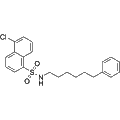
    SC-9 is a potent activator of protein kinase C (PKC) in the presence of calcium ions (Ca2+). This compound is instrumental in studying the Ca2+-dependent signaling pathways regulated by PKC. Its ability to modulate these pathways makes SC-9 valuable for research applications related to cell proliferation, differentiation, and various disease models.

    1 mg
    $105.00
    5 mg
    $140.00
    All 3 sizes
  • N-myristoyl-RKRTLRRL
    Cat. No.
    A46179

    N-myristoyl-RKRTLRRL

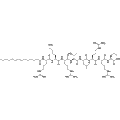
    N-myristoyl-RKRTLRRL is a potent inhibitor of Protein Kinase C (PKC), specifically targeting the binding of PKC substrates. This compound effectively inhibits calcium- and phosphatidylserine-dependent histone phosphorylation, demonstrating an IC50 of 5 µM. It serves as a valuable tool for research into PKC-related signaling pathways and the mechanisms of histone modification in various biological contexts.

    1 mg
    $25.00
    5 mg
    $50.00
    All 3 sizes
  • Ingenol 3-monobenzoate
    Cat. No.
    A46180

    Ingenol 3-monobenzoate

    Synonyms: Ingenol 3-benzoate

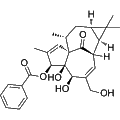
    Ingenol 3-monobenzoate is an aversion inducer that selectively activates protein kinase C (PKC) with a Ki of 0.14 nM. This compound inhibits the expression of phosphoenolpyruvate carboxykinase, leading to reduced gluconeogenesis and elevated cortisol levels, which collectively contribute to induced food aversion. Ingenol 3-monobenzoate is valuable for research into behavioral responses to aversive stimuli and the underlying metabolic mechanisms.

    5 mg
    $410.00
    10 mg
    $670.00
    All 3 sizes
  • Ruboxistaurin-d6 hydrochloride
    Cat. No.
    A46181

    Ruboxistaurin-d6 hydrochloride

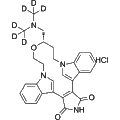
    Ruboxistaurin-d6 hydrochloride is a deuterated form of Ruboxistaurin hydrochloride, a selective inhibitor of protein kinase C (PKC) beta. Exhibiting ATP-dependent competitive inhibition, it demonstrates significant potency with a Ki of 2 nM and an IC50 of 4.7 nM for PKC beta I and 5.9 nM for PKC beta II. This stable isotope is valuable for research applications involving metabolic tracing, pharmacokinetics, and the study of PKC-related cellular signaling pathways.

    Out of stock

    All 3 sizes
  • 1-Stearoyl-2-Arachidonoyl-d8-sn-Glycerol
    Cat. No.
    A46182

    1-Stearoyl-2-Arachidonoyl-d8-sn-Glycerol

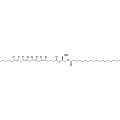
    1-Stearoyl-2-Arachidonoyl-d8-sn-Glycerol is a deuterium-labeled derivative of 1-Stearoyl-2-arachidonoyl-sn-glycerol, a diacylglycerol (DAG) that includes polyunsaturated fatty acids. This compound is known to activate protein kinase C (PKC) and enhance the activity of nonselective cation channels (NSCC). It serves as a valuable tool for studying lipid signaling pathways and the regulation of cellular processes in various research applications.

    Out of stock

    All 3 sizes
  • Bryostatin 3
    Cat. No.
    A46183

    Bryostatin 3

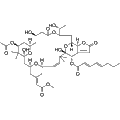
    Bryostatin 3 is a macrocyclic lactone that serves as a potent protein kinase C (PKC) activator, exhibiting a Ki value of 2.75 nM. This compound has been shown to inhibit the effects of 12-O-tetradecanoylphorbol-13-acetate (TPA) on cell proliferation while maintaining TPA-stimulated cell-substratum adhesion. Bryostatin 3 is widely utilized in research applications focusing on the modulation of PKC activity and its implications in cancer biology and cell signaling pathways.

    0.01 mg
    $515.00
    25 mg
    $1,275.00
    All 2 sizes
  • PKC-IN-4
    Cat. No.
    A46184

    PKC-IN-4

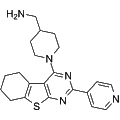
    PKC-IN-4 is a selective inhibitor of atypical protein kinase C (aPKC) with an IC50 of 0.52 µM. This compound effectively inhibits TNF-α-induced NF-κB signaling in vitro, making it a valuable tool for studies involving inflammatory responses. Additionally, PKC-IN-4 has been shown to block VEGF- and TNF-α-induced permeability across the retinal vasculature, highlighting its potential in retinal disease research and vascular permeability exploration.

    25 mg
    $1,800.00
    50 mg
    $2,285.00
    All 3 sizes

Items 101-125 of 212

Added to your cart

View Cart Checkout

    Loading...