
- Cat. No.
- A13350
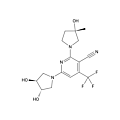
KHK-IN-2
KHK-IN-2 is a potent and selective ketohexokinase (KHK) inhibitor with an IC50 of 0.45 μM.
In stock
View Details
Search by product name, CAS, target or catalog number. Press Down Arrow to reach product suggestions, Tab to move between links, and Escape to close suggestions.
Ketohexokinase (KHK) inhibitors support research on sugar metabolism and cellular energy balance. Also called fructokinase, KHK catalyzes a phosphorylation step that channels a dietary sugar into downstream metabolic pathways. Its activity is studied in the liver, small intestine and kidney in relation to energy use and lipid metabolism. PF-06835919, KHK-IN-2 and LY3522348 are assigned to this category. These compounds provide options for examining KHK-related metabolism, with the enzyme and model details specified in the individual product information.
KHK-IN-2 is a potent and selective ketohexokinase (KHK) inhibitor with an IC50 of 0.45 μM.
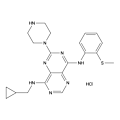
KHK-IN-1 hydrochloride is a potent ketohexokinase (KHK) inhibitor with IC50 of 12 nM, interacts with Asp-27B in the ATP-binding region of KHK.
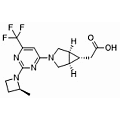
PF-06835919, also known as MDK1846, is a potent ketohexokinase (KHK) inhibitor.
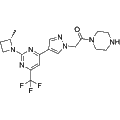
Synonyms: KHK-IN-3
LY3522348 is a ketohexokinase (KHK) inhibitor that targets the enzyme’s role in fructose metabolism. By inhibiting KHK, it has potential applications in studying metabolic disorders such as nonalcoholic steatohepatitis (NASH), diabetes, kidney disease, and heart failure. KHK plays a pivotal role in the phosphorylation of fructose to fructose-1-phosphate (FIP), influencing pathways that lead to lipogenesis, gluconeogenesis, and increased oxidative phosphorylation.
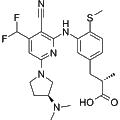
BI-9787 is a zwitterionic inhibitor of ketohexokinase (KHK) with an IC50 of 12 and 12.8 nM for human KHK-A and KHK-C, respectively. This compound demonstrates significant metabolic stability in rat hepatocytes, coupled with favorable pharmacokinetic properties in rat models. BI-9787 serves as a valuable tool for investigating the role of KHK in metabolic disorders and can aid in the development of therapeutic strategies targeting this enzyme.
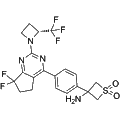
GS-1291269 is a selective inhibitor of ketohexokinase (KHK), exhibiting potent inhibitory activity with IC50 values of 0.38 nM for KHK-C and 2.1 nM for KHK-A. This compound effectively reduces fructose-1-phosphate (F1P) levels in liver and kidney tissues during fructose challenge studies in rats. GS-1291269 is a valuable tool for investigating mechanisms underlying kidney disease and metabolic dysfunction-related steatotic liver disease (MASLD).
Out of stock
All 3 sizes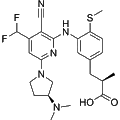
(αR)-BI-9787 is the epimer of BI-9787, a zwitterionic inhibitor targeting ketohexokinase. This compound is primarily used in research to investigate metabolic pathways involving fructose metabolism and its implications in various metabolic disorders. The inhibition of ketohexokinase by (αR)-BI-9787 allows for the exploration of its biological effects and potential therapeutic applications.
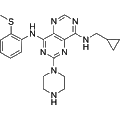
KHK-IN-1 is a selective inhibitor of ketohexokinase (KHK), exhibiting an IC50 of 12 nM and a membrane permeability suitable for cellular applications. It effectively reduces the production of fructose-1-phosphate (F1P) in HepG2 cell lysates, with an inhibition threshold greater than 400 nM. This compound offers valuable insights for research focused on the pathophysiology of diabetes and obesity.
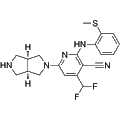
KHK-IN-5 is a potent KHK (Ketohexokinase) inhibitor that serves as an important tool in metabolic research. This compound demonstrates significant biological activity in the context of nonalcoholic fatty liver disease (NAFLD), nonalcoholic steatohepatitis (NASH), and type 2 diabetes (T2DM). KHK-IN-5 facilitates studies into the underlying mechanisms of these metabolic disorders and assists in the evaluation of potential therapeutic interventions.
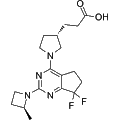
KHK-IN-4 is a potent inhibitor of ketohexokinase (KHK), an enzyme critical for fructose metabolism. This compound is instrumental in studying fructose metabolic disorders and related metabolic pathways. Researchers can utilize KHK-IN-4 to explore its effects on KHK activity and its potential implications in metabolic disease research.
Out of stock
All 3 sizes