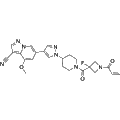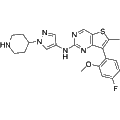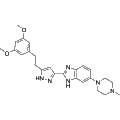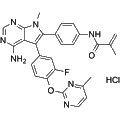
FGFR

Fibroblast growth factor receptor (FGFR) inhibitors act on FGFR1 to FGFR4, four receptor tyrosine kinases. FGFR signaling controls cell proliferation, migration and differentiation in development and angiogenesis. Amplifications, activating mutations and gene fusions of FGFR genes have been found in many tumor types. PD173074 was crystallized with the FGFR1 kinase domain in 1998, which showed how it occupies the adenosine triphosphate (ATP) pocket. Infigratinib and fexagratinib are FGFR-focused inhibitors used to study cells that depend on FGFR signaling. Nintedanib and pazopanib HCl inhibit FGFR together with vascular endothelial growth factor receptors (VEGFRs) and platelet-derived growth factor receptors (PDGFRs). Kinases outside the FGFR family are covered by sibling categories such as VEGFR and PDGFR.

Items 76-100 of 164

  • HDAC-IN-50
    Cat. No.
    A32642

    HDAC-IN-50

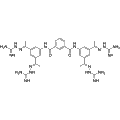
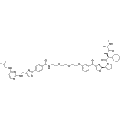
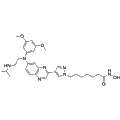
    HDAC-IN-50 is a potent dual inhibitor targeting FGFR and HDAC with IC50 values of 0.18 nM for FGFR1, 1.2 nM for FGFR2, 0.46 nM for FGFR3, 1.4 nM for FGFR4, and varying inhibitory effects on HDAC isoforms such as HDAC1 (1.3 nM), HDAC2 (1.6 nM), HDAC6 (2.6 nM), and HDAC8 (13 nM). This compound effectively induces apoptosis and causes cell cycle arrest at the G0/G1 phase. Additionally, HDAC-IN-50 decreases the expression of phosphorylated forms of FGFR1, ERK, and STAT3, indicating its potential applications in cancer research and therapy.

    25 mg
    $1,530.00
    50 mg
    $1,950.00
    All 3 sizes
  • TCB-32
    Cat. No.
    A33461

    TCB-32

    TCB-32 is a potent FGFR1 agonist with an EC50 of 0.88 μM, effectively activating the FGFR1 signaling pathway to enhance cell proliferation, notably through the ERK 1/2 cascade. This compound exhibits excellent thermal stability and can serve as a substitute for bFGF in serum-free cell culture environments. TCB-32 is applicable in research related to tissue repair and wound healing, making it suitable for studies investigating conditions such as psoriasis and eczema.

    1 mg
    $335.00
    5 mg
    $860.00
    All 4 sizes
  • 2,4,3',4',6'-Penta-O-(3-methylbutanoyl)sucrose
    Cat. No.
    A33462

    2,4,3',4',6'-Penta-O-(3-methylbutanoyl)sucrose

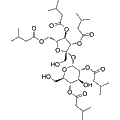
    2,4,3',4',6'-Penta-O-(3-methylbutanoyl)sucrose functions as a selective binder for Fibroblast Growth Factor Receptor 3 (FGFR3) and BRAF, playing a pivotal role in modulating pathways associated with cancer progression. Derived from Atractylodes japonica, this compound exhibits low cytotoxicity towards cancer cell lines, making it a suitable candidate for research applications focused on targeted cancer therapies and signaling pathway studies. Its unique structural characteristics enhance its potential for further exploration in drug development and therapeutic interventions.

    5 mg
    $605.00
    All 1 sizes
  • bFGF (119-126)
    Cat. No.
    A33464

    bFGF (119-126)

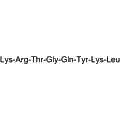
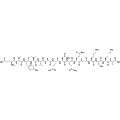
    bFGF (119-126) is a peptide ligand that selectively targets FGFR1, disrupting the bFGF-FGFR1 interaction, which leads to inhibition of FGFR1 phosphorylation and subsequent downstream signaling pathways. This results in the promotion of apoptosis and suppression of cell proliferation, migration, angiogenesis, and metastasis. Additionally, when conjugated with a carrier, bFGF (119-126) enhances cellular uptake through FGFR-mediated endocytosis, serving as an effective FGFR-targeting agent. Its applications extend to research in various cancers, including lung cancer, breast cancer, glioblastoma, and ovarian cancer, particularly when combined with ultrasound and Doxorubicin to potentiate antitumor effects.

    5 mg
    $115.00
    10 mg
    $190.00
    All 2 sizes
  • Dabogratinib
    Cat. No.
    A33469

    Dabogratinib

    Synonyms: TYRA-300

    Dabogratinib is a selective inhibitor of FGFR3, displaying an IC50 of 11 nM. It demonstrates significant antitumor activity against urothelial carcinoma and various solid tumors by downregulating FGFR3 and ERK1/2 signaling pathways, leading to tumor growth inhibition and regression in FGFR3-altered xenograft models. Additionally, Dabogratinib enhances chondrocyte proliferation and differentiation, promotes endochondral bone formation, and improves craniofacial and spinal morphology. This compound is valuable for research into metastatic urothelial carcinoma, achondroplasia, and hypochondroplasia.

    1 mg
    $315.00
    5 mg
    $595.00
    All 6 sizes
  • FGFR2-IN-2
    Cat. No.
    A33470

    FGFR2-IN-2

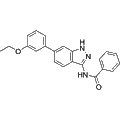
    FGFR2-IN-2 is a selective inhibitor of fibroblast growth factor receptor 2 (FGFR2), demonstrating inhibitory potency with an IC50 value of 29 nM against FGFR2, and 389 nM and 758 nM for FGFR1 and FGFR3, respectively. This compound exhibits potential in the study of FGFR-related signaling pathways and can be utilized in research focused on cancer therapeutics, particularly in tumors with aberrant FGFR2 activity.

    1 mg
    $55.00
    5 mg
    $125.00
    All 6 sizes
  • FIIN-1
    Cat. No.
    A33472

    FIIN-1

    Synonyms: FGFR irreversible inhibitor-1

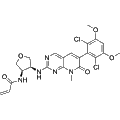
    FIIN-1 is a selective, irreversible inhibitor of fibroblast growth factor receptors (FGFR1, FGFR2, FGFR3, and FGFR4). It exhibits potent binding affinity, with Kd values of 2.8 nM for FGFR1, 6.9 nM for FGFR2, 5.4 nM for FGFR3, and 120 nM for FGFR4, alongside Kd values of 32 nM and 120 nM for Flt1 and Flt4, respectively. With biochemical IC50 values of 9.2 nM for FGFR1, 6.2 nM for FGFR2, 11.9 nM for FGFR3, and 189 nM for FGFR4, FIIN-1 is valuable for research applications focused on FGFR-related pathways in cancer and developmental biology.

    1 mg
    $60.00
    2 mg
    $85.00
    All 8 sizes
  • Efimosfermin alfa
    Cat. No.
    A33473

    Efimosfermin alfa

    Synonyms: BOS-580; LLF580

    Efimosfermin alfa is a genetically modified variant of FGF21 that activates the FGFR1c/β-Klotho complex. This compound plays a critical role in metabolic regulation, specifically in the context of metabolic dysfunction-associated steatohepatitis, obesity, and mild hypertriglyceridemia. Its unique mechanism of action makes it a valuable tool for research exploring metabolic disorders and their associated pathways.

    1 mg
    $600.00
    5 mg
    $1,845.00
    All 3 sizes
  • FGFR1 inhibitor-10
    Cat. No.
    A33475

    FGFR1 inhibitor-10

    FGFR1 inhibitor-10 is a potent FGFR1 inhibitor with an IC50 value of 28 nM. It effectively inhibits the phosphorylation of FGFR1, leading to significant anti-angiogenic, anti-invasive, and anti-tumor activities. This compound is valuable for research applications focused on understanding FGFR1 signaling pathways and developing therapies for cancers characterized by aberrant FGFR1 activity.

    5 mg
    $355.00
    10 mg
    $570.00
    All 5 sizes
  • FGFR3-IN-5
    Cat. No.
    A33477

    FGFR3-IN-5

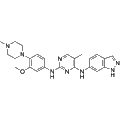
    FGFR3-IN-5 is a potent and selective inhibitor of Fibroblast Growth Factor Receptor 3 (FGFR3), exhibiting IC50 values of 3 nM for FGFR3, 44 nM for FGFR2, and 289 nM for FGFR1. This compound demonstrates effective inhibition of FGFR3 signaling pathways, making it a valuable tool for cancer research. FGFR3-IN-5 is suitable for studies investigating the role of FGFR3 in tumorigenesis and therapeutic response.

    1 mg
    $295.00
    5 mg
    $655.00
    All 6 sizes
  • MAX-40279
    Cat. No.
    A33478

    MAX-40279

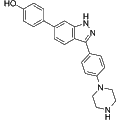
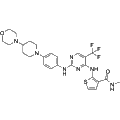
    MAX-40279 is a dual inhibitor targeting FLT3 and FGFR kinases, exhibiting potent activity against both wild-type and FLT3 mutants, including FLT3D835Y. This compound effectively inhibits NDRG1 phosphorylation at Ser330 and suppresses endothelial-to-mesenchymal transition (EndMT). MAX-40279 is valuable for research applications in acute myelogenous leukemia (AML), particularly in studying resistance mechanisms to existing therapies.

    5 mg
    $245.00
    10 mg
    $405.00
    All 5 sizes
  • CPL304110
    Cat. No.
    A33479

    CPL304110

    CPL304110 is a selective inhibitor of fibroblast growth factor receptors FGFR1-3, demonstrating potent activity with IC50 values of 0.75 nM, 0.5 nM, and 3.05 nM for each receptor, respectively. This orally active compound is valuable in research applications aimed at understanding FGFR signaling pathways and their role in various cancers and pathological conditions. Its efficacy in modulating FGFR activity makes it a valuable tool for investigating therapeutic strategies targeting fibroblast growth factor receptor-mediated processes.

    5 mg
    $180.00
    10 mg
    $295.00
    All 5 sizes
  • Lirafugratinib hydrochloride
    Cat. No.
    A33480

    Lirafugratinib hydrochloride

    Synonyms: RLY-4008 hydrochloride

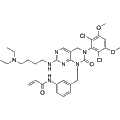
    Lirafugratinib hydrochloride is an orally active, irreversible inhibitor specifically targeting FGFR2 with an IC50 of 3 nM. It covalently binds to the cysteine residue Cys491, effectively addressing FGFR2 primary alterations and resistance mutations. This compound is designed to induce tumor regression while exhibiting minimal impact on other FGFR family members, making it valuable for research in cancer therapeutics focused on FGFR-dependent malignancies.

    5 mg
    $215.00
    10 mg
    $320.00
    All 5 sizes
  • SNIPER(TACC3)-11
    Cat. No.
    A33481

    SNIPER(TACC3)-11

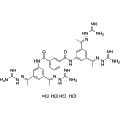
    SNIPER(TACC3)-11 is a potent degrader of the FGFR3-TACC3 fusion protein, utilizing targeted protein degradation to reduce its levels within cells. This compound effectively suppresses the proliferation of cancer cells that express the FGFR3-TACC3 fusion, making it a valuable tool for research related to targeting oncogenic protein fusions in cancer therapy. Its potential applications include studies in cancer biology and the development of novel therapeutic strategies against FGFR3-TACC3-positive tumors.

    1 mg
    $440.00
    5 mg
    $1,130.00
    All 5 sizes
  • FGFR2-IN-1
    Cat. No.
    A33482

    FGFR2-IN-1

    FGFR2-IN-1 is a selective inhibitor of Fibroblast Growth Factor Receptor 2 (FGFR2), exhibiting an IC50 of 140 nM. This compound effectively modulates FGFR2 activity, demonstrating significant biological activity relevant to cancer research. It is utilized in various studies focusing on tumorigenesis and the role of FGFR signaling pathways in malignancies.

    2 mg
    $30.00
    5 mg
    $50.00
    All 6 sizes
  • FGFR4-IN-5
    Cat. No.
    A33486

    FGFR4-IN-5

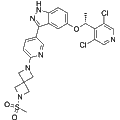
    FGFR4-IN-5 is a selective covalent inhibitor of fibroblast growth factor receptor 4 (FGFR4) with an IC50 of 6.5 nM. It demonstrates significant anti-tumor activity in vivo, making it a valuable tool for research focused on hepatocellular carcinoma. This compound is ideal for studies investigating FGFR4-mediated signaling pathways and therapeutic strategies in cancer treatment.

    5 mg
    $370.00
    10 mg
    $605.00
    All 5 sizes
  • CYY292
    Cat. No.
    A33487

    CYY292

    CYY292 is an FGFR1 inhibitor that targets the FGFR1/AKT/Snail signaling pathway, demonstrating significant effects in glioblastoma (GBM) cells. This compound effectively inhibits cancer cell proliferation and reduces epithelial-mesenchymal transition, stemness, invasion, and migration in a dose-dependent manner. CYY292 is a valuable reagent for research applications aimed at understanding the molecular underpinnings of GBM and exploring potential therapeutic strategies.

    5 mg
    $180.00
    10 mg
    $295.00
    All 4 sizes
  • FGFR2-IN-3
    Cat. No.
    A33489

    FGFR2-IN-3

    FGFR2-IN-3 is a selective inhibitor of fibroblast growth factor receptor 2 (FGFR2). It exhibits strong binding affinity, facilitating critical interactions and inducing conformational alterations in the receptor. This compound is primarily utilized in cancer research, particularly in investigations focused on tumor biology and signaling pathways involving FGFR2.

    5 mg
    $260.00
    10 mg
    $430.00
    All 4 sizes
  • Lucitanib dihydrochloride
    Cat. No.
    A33492

    Lucitanib dihydrochloride

    Lucitanib dihydrochloride is a selective dual inhibitor targeting VEGFR and FGFR, demonstrating potent inhibition of VEGFR1, VEGFR2, VEGFR3, FGFR1, and FGFR2 with IC50 values of 7 nM, 25 nM, 10 nM, 17.5 nM, and 82.5 nM, respectively. This inhibitor plays a critical role in regulating angiogenesis and tumor growth, making it valuable for research in cancer biology and therapeutic development. Lucitanib dihydrochloride is suitable for studies focused on vascular endothelial growth factor signaling pathways and fibroblast growth factor signaling, contributing to the understanding of tumor microenvironment interactions.

    5 mg
    $90.00
    10 mg
    $150.00
    All 2 sizes
  • TYRA-200
    Cat. No.
    A33493

    TYRA-200

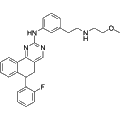
    TYRA-200 is an orally active inhibitor of FGFR1, FGFR2, and FGFR3. This compound demonstrates dose-dependent tumor regression in mice models expressing both wild-type and mutant FGFR2. TYRA-200 serves as a valuable tool for investigating advanced or metastatic intrahepatic cholangiocarcinoma and other solid tumors driven by FGFR2 mutations in preclinical research.

    1 mg
    $95.00
    5 mg
    $245.00
    All 6 sizes
  • DGY-09-192
    Cat. No.
    A33495

    DGY-09-192

    DGY-09-192 is a PROTAC degrader targeting FGFR1 and FGFR2, demonstrating DC50 values of 4.35 nM and 70 nM, respectively. This compound selectively degrades both wild-type FGFR1/2 and various FGFR2 fusion proteins, such as FGFR2-PHGDH and FGFR2-OPTN. By suppressing downstream FGFR signaling, DGY-09-192 effectively reduces the phosphorylation of key targets including FRS2 Y196 and ERK1/2 T202/Y204, making it a valuable tool for investigating FGFR-driven malignancies in both in vitro and in vivo studies.

    1 mg
    $800.00
    5 mg
    $2,190.00
    All 4 sizes
  • FGL peptide
    Cat. No.
    A33497

    FGL peptide

    FGL peptide is a fibroblast growth factor receptor (FGFR) activator that effectively penetrates the blood-brain barrier. It initiates NCAM-FGFR and FGFR1 signaling pathways, which modulate the expression of genes involved in apoptosis, signal transduction, and metabolic regulation. FGL peptide is primarily utilized in research focused on traumatic brain injury, offering insights into its underlying molecular mechanisms and potential therapeutic targets.

    5 mg
    $85.00
    10 mg
    $140.00
    All 5 sizes
  • TCB-32 hydrochloride
    Cat. No.
    A33498

    TCB-32 hydrochloride

    TCB-32 hydrochloride is an FGFR1 agonist with an EC50 of 0.88 μM. This compound effectively enhances cell proliferation by activating the FGFR1 signaling pathway, notably promoting downstream ERK 1/2 activity. With excellent thermal stability, TCB-32 hydrochloride serves as a viable replacement for bFGF in serum-free cell culture media. Its applications extend to tissue repair and the study of wound healing in diseases such as psoriasis and eczema.

    1 mg
    $335.00
    5 mg
    $860.00
    All 5 sizes
  • Derazantinib Racemate
    Cat. No.
    A33499

    Derazantinib Racemate

    Synonyms: ARQ-087 Racemate

    Derazantinib Racemate is an ATP-competitive inhibitor targeting fibroblast growth factor receptors (FGFR1-3). This compound demonstrates potent inhibitory activity in chondrocytes, with IC50 values of 4.5 nM for FGFR1, 1.8 nM for FGFR2, and 4.5 nM for FGFR3. It is suitable for research applications focused on FGFR-related signaling pathways and their implications in various cancers and diseases.

    1 mg
    $250.00
    2 mg
    $385.00
    All 4 sizes
  • MAX-40279 hemiadipate
    Cat. No.
    A33500

    MAX-40279 hemiadipate

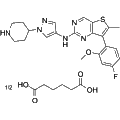
    MAX-40279 hemiadipate is a dual inhibitor of FLT3 and FGFR kinases, exhibiting oral bioactivity. This compound effectively targets multiple FLT3 mutants, including FLT3D835Y, and has the potential to overcome resistance against existing treatments. Inhibition of NDRG1 phosphorylation at Ser330 and suppression of endothelial-to-mesenchymal transition (EndMT) further characterize its biological activity. MAX-40279 hemiadipate is a valuable tool for research into acute myelogenous leukemia (AML).

    5 mg
    $245.00
    10 mg
    $405.00
    All 5 sizes

Items 76-100 of 164

Added to your cart

View Cart Checkout

    Loading...