- Cat. No.
- A11926
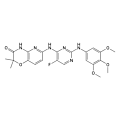
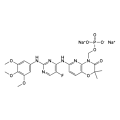
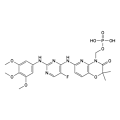
Fostamatinib (R788)
Synonyms: R-788
R788 (Fostamatinib) is an important spleen tyrosine kinase (Syk) inhibitor, showing efficacy against kinase-mediated IgG Fc gamma receptor signaling.
Search by product name, CAS, target or catalog number. Press Down Arrow to reach product suggestions, Tab to move between links, and Escape to close suggestions.
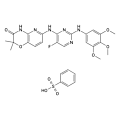
Syk inhibitors act on spleen tyrosine kinase (Syk), a cytoplasmic kinase of immunoreceptor signaling. Syk was cloned from porcine tissue in 1991 as a 72 kDa protein-tyrosine kinase sensitive to proteolysis. The kinase binds phosphorylated immunoreceptor tyrosine-based activation motifs (ITAMs) of B cell receptors and Fc receptors. Its signaling also contributes to platelet activation, osteoclast function and innate recognition of fungi, as reviewed in 2010. Tamatinib and R406 besylate are forms of R406, the active metabolite released from the prodrug fostamatinib. Entospletinib and BAY 61-3606 are further Syk inhibitors, and the natural stilbene piceatannol inhibits Syk among other kinases.
Synonyms: R-788
R788 (Fostamatinib) is an important spleen tyrosine kinase (Syk) inhibitor, showing efficacy against kinase-mediated IgG Fc gamma receptor signaling.
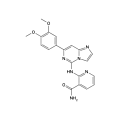
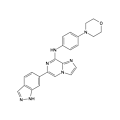
BAY 61-3606 is a cell-permeable imidazopyrimidine compound that acts as a potent, ATP-competitive, reversible, and highly selective inhibitor of Syk tyrosine kinase activity with no inhibitory effect against Btk, Fyn, Itk, Lyn, and Src.
Synonyms: R-406
R406 is an orally available spleen tyrosine kinase inhibitor with an IC50 of 41 nM.
Synonyms: PRT062607; BIIB057
P505-15 (also known as PRT062607) is a novel, highly selective, and orally bioavailable small molecule SYK inhibitor (SYK IC(50) = 1 nM) with anti-SYK activity that is at least 80-fold greater than its affinity for other kinases.
Synonyms: R-406
R406 is an orally available spleen tyrosine kinase inhibitor with an IC50 of 41 nM.
Synonyms: R-935788; R788
R935788 (Fostamatinib disodium) is a potent orally available inhibitor of Syk that inhibits tumor growth in the Eμ- TCL1 transgenic mouse model of CLL by blocking antigen-dependent B-cell receptor signaling.
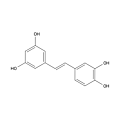
Piceatannol is an anti-inflammatory, immunomodulatory and antiproliferative agent. Inhibits p56lck and syk protein tyrosine kinases and inhibits TNF-induced NF-κB activation and gene expression.
Synonyms: P505-15; PRT2607; PRT-062607; BIIB057
PRT2607, also known as PRT062607, P505-15, and BIIB057, is a novel, highly selective, and orally bioavailable small molecule SYK inhibitor (SYK IC(50) = 1 nM) with anti-SYK activity that is at least 80-fold greater than its affinity for other kinases.
Synonyms: GS-9876
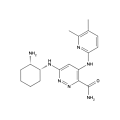
Lanraplenib (GS-9876) is a highly selective and orally active SYK inhibitor (IC50=9.5 nM) in development for the treatment of inflammatory diseases.
Synonyms: GS9973
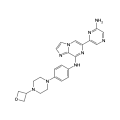
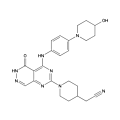
GS-9973 is an oral inhibitor of spleen tyrosine kinase (Syk), with potential antineoplastic activity.
Synonyms: PRT2070; PRT-062070
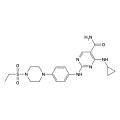
PRT062070 is a novel, oral, dual spleen tyrosine kinase (Syk) and janus kinase (JAK) inhibitor. Cerdulatinib preferentially inhibited JAK1 and JAK3 dependent cytokine mediated signaling and functional responses in various cell types.
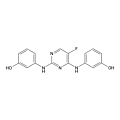
R112 is a Syk inhibitor. R112 inhibited degranulation induced by anti-IgE cross-linking in mast cells and also blocked leukotriene C4 production and all proinflammatory cytokines tested.
Synonyms: BAY61-3606
BAY 61-3606 is a potent (Ki = 7.5 nM) and selective inhibitor of Syk kinase.
Synonyms: PRT318; P142–76.
PRT-060318 is a novel selective inhibitor of the tyrosine kinase Syk, as an approach to HIT treatment.
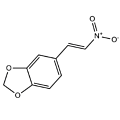
Synonyms: NSC 170724; 5-(2-Nitrovinyl)benzodioxole
MNS is a potent and selective inhibitor of Src and Syk tyrosine kinases.
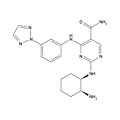
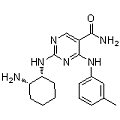
RO9021 is an orally bioavailable, novel ATP-competitive inhibitor of SYK, with an average IC50 of 5.6 nM.
Synonyms: ASN-002
Gusacitinib (ASN-002) is a potent dual inhibitor of spleen tyrosine kinase (SYK) and janus kinase (JAK) with IC50 values of 5-46 nM.
TAK-659 is a highly potent, selective, reversible and orally available dual inhibitor of spleen tyrosine kinase (SYK) and fms related tyrosine kinase 3 (FLT3), with an IC50 of 3.2 nM and 4.6 nM for SYK and FLT3, respectively.
Synonyms: R788 (disodium hexahydrate); R 788
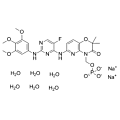
Fostamatinib disodium hexahydrate (R788 disodium hexahydrate), a prodrug of the active metabolite R406, is a potent Syk inhibitor with IC50 of 41 nM.
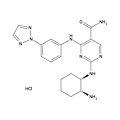
TAK-659 hydrochloride is a potent, selective and orally available spleen tyrosine kinase (Syk) inhibitor with an IC50 of 3.2 nM.
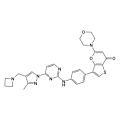
SRX3207 is an orally active and first-in-class dual Syk/PI3K inhibitor, with IC50 values of 10.7 nM and 861 nM for Syk and PI3Kα, respectively. SRX3207 relieves tumor immunosuppression.
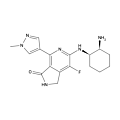
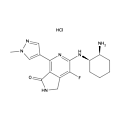
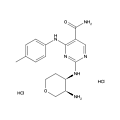
GSK143 dihydrochloride is an orally active and highly selective inhibitor of spleen tyrosine kinase (SYK), exhibiting a pIC₅₀ of 7.5. It also inhibits phosphorylated ERK (pErk) with a pIC₅₀ of 7.1, indicating its ability to modulate downstream signaling pathways involved in immune responses. In preclinical models, GSK143 dihydrochloride effectively reduces inflammation and prevents the recruitment of immune cells to the intestinal muscularis, highlighting its potential as a therapeutic agent for inflammatory diseases, particularly those involving the gastrointestinal tract.
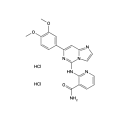
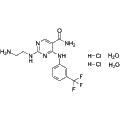
Syk Inhibitor II dihydrochloride dihydrate is a selective and ATP-competitive inhibitor of Syk with an IC50 of 41 nM. This compound effectively inhibits 5-HT release from RBL cells, demonstrating an IC50 of 460 nM. With reduced potency against other kinases, it holds potential for applications in treating allergic responses and exploring the role of Syk in various immunological processes.
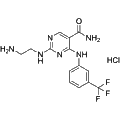
Syk Inhibitor II hydrochloride is a highly selective ATP-competitive inhibitor of Syk kinase, exhibiting an IC50 of 41 nM. This compound effectively inhibits serotonin release from RBL cells, with an IC50 of 460 nM. Syk Inhibitor II hydrochloride demonstrates reduced potency against other kinases, making it a valuable tool for investigating Syk-mediated signaling pathways and exploring its anti-allergic properties in research applications.
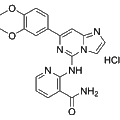
BAY 61-3606 hydrochloride is a highly selective Syk inhibitor that acts in an ATP-competitive manner with a Ki of 7.5 nM and an IC50 of 10 nM. It effectively reduces ERK1/2 and Akt phosphorylation in neuroblastoma cells and significantly decreases Syk phosphorylation in K-rn cell lysates. Additionally, BAY 61-3606 hydrochloride enhances TRAIL-induced apoptosis in breast cancer cells by downregulating Mcl-1, making it a valuable tool for investigating Syk-related pathways in cancer research.