Ribonucleotide Reductase

Ribonucleotide reductase (RNR) inhibitors block the enzyme that converts ribonucleotides into deoxyribonucleotides. RNR provides the only de novo route to the deoxyribonucleoside triphosphates (dNTPs) needed for DNA replication and repair. The mammalian enzyme combines the catalytic subunit M1 (RRM1) with the regulatory subunit M2 (RRM2), which holds a tyrosyl radical required for catalysis. Triapine, a heterocyclic thiosemicarbazone characterized in 2000, inhibits RNR activity and is widely used as a reference inhibitor. Didox, amidox and trimidox are polyhydroxy-substituted benzohydroxamic acid and benzamidoxime derivatives that act on the same enzyme. Tezacitabine is a deoxycytidine analog that inhibits RNR after intracellular phosphorylation. COH29 and COH1 are further small-molecule RNR inhibitors for studies of nucleotide metabolism and replication stress.

1 Item

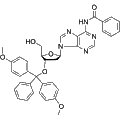
  • N6-Benzoyl-2'-deoxy-3'-O-DMT-adenosine
    Cat. No.
    A56696

    N6-Benzoyl-2'-deoxy-3'-O-DMT-adenosine

    N6-Benzoyl-2'-deoxy-3'-O-DMT-adenosine is a nucleoside analog that functions as an activator of ribonucleotide reductase. This enzyme is crucial for catalyzing the conversion of ribonucleosides into deoxyribonucleosides, thereby playing a vital role in nucleotide metabolism and DNA synthesis. Its ability to modulate ribonucleotide reductase activity makes it a valuable tool for studying cellular proliferation and the regulation of nucleotide pools in various biological contexts.

    25 mg
    $70.00
    50 mg
    $105.00
    All 5 sizes

1 Item

Added to your cart

View Cart Checkout

    Loading...