
- Cat. No.
- A11614
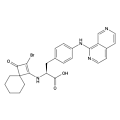
Zaurategrast (CDP323)
Synonyms: CDP-323
CDP323 is a small-molecule prodrug antagonist of the vascular cell adhesion molecule 1 binding to ??4-integrins
Search by product name, CAS, target or catalog number. Press Down Arrow to reach product suggestions, Tab to move between links, and Escape to close suggestions.
Integrin inhibitors block the heterodimeric adhesion receptors that link the extracellular matrix to the cytoskeleton. Each integrin pairs one alpha and one beta subunit, and signals pass across the membrane in both directions. Many integrins recognize the arginine-glycine-aspartate (RGD) sequence, first identified as the cell attachment site of fibronectin. RGD (Arg-Gly-Asp) Peptides and the cyclic peptide cilengitide compete for this site on αvβ3 and αvβ5. Firategrast antagonizes α4β1 and α4β7, integrins involved in leukocyte trafficking. Tirofiban hydrochloride hydrate blocks the platelet integrin αIIbβ3, also known as glycoprotein IIb/IIIa. Obtustatin, a snake venom disintegrin, selectively inhibits the collagen receptor α1β1.
Synonyms: CDP-323
CDP323 is a small-molecule prodrug antagonist of the vascular cell adhesion molecule 1 binding to ??4-integrins
Synonyms: SB-683699
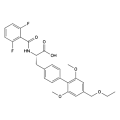
Firategrast is an orally bioavailable alpha4 beta1/alpha4 beta7 integrin antagonist designed to reduce trafficking of lymphocytes into the central nervous system (CNS).
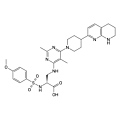
GLPG0187 is a broad spectrum integrin receptor antagonist with antitumor activity; inhibits αvβ1-integrin with an IC50 of 1.3 nM.
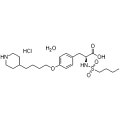
Tirofiban, Hydrochloride Hydrate is a specific nonpeptide platelet fibrinogen receptor (GPIIb/IIIa) antagonist.
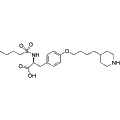
Synonyms: L700462; MK383
Tirofiban is a selective and reversible antagonist of the Gp IIb/IIIa receptor, primarily functioning to inhibit fibrinogen binding. This compound exhibits significant antithrombotic activity, making it valuable in studies focused on platelet aggregation and thrombus formation. Additionally, Tirofiban has been shown to promote endothelial cell proliferation and migration through increased production of vascular endothelial growth factor (VEGF). Its capabilities extend to reducing myocardial no-reflow and ischemia-reperfusion injury by improving microvascular structure and endothelial function in ischemic tissues.
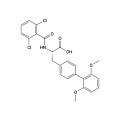
TR-14035 is a dual antagonist of α4β7 and α4β1 integrins.
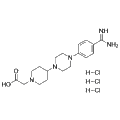
Synonyms: GR144053
GR 144053 trihydrochloride is a potent and selective platelet fibrinogen receptor glycoprotein IIb/IIIa (GpIIb/IIIa) antagonist.
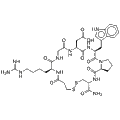
Eptifibatide is a potent glycoprotein IIb/IIIa antagonist (GPIIb/IIIa; Kd = 120 nM) that inhibits platelet aggregation.
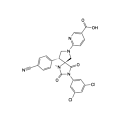
BMS-688521 is a small molecule antagonist of leukocyte function associated antigen-1 (LFA-1).
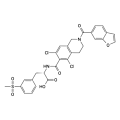
Synonyms: SAR-1118; brand name: Xiidra.
Lifitegrast (SAR 1118) is an integrin lymphocyte function-associated antigen-1 (LFA-1) antagonist; inhibits Jurkat T cell attachment to ICAM-1 with an IC50 of 2.98 nM.
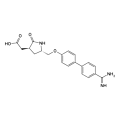
Synonyms: BIBU-52
Fradafiban is a nonpeptide platelet glycoprotein IIb/IIIa antagonist, which binds to the human platelet GP IIb/IIIa complex with a Kd value of 148 nM.
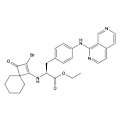
Synonyms: CDP323; UCB1184197
Zaurategrast ethyl ester (CDP323), the ethyl ester prodrug of CT7758, is a α4β1/α4β7 integrin antagonist used for the treatment of inflammatory and autoimmune disorders.
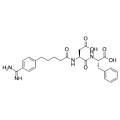
SC-52012 is an orally active fibrinogen receptor antagonist, with antiplatelet activities.
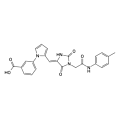
Integrin Antagonists 27 is a small molecule integrin αvβ3 antagonist with binding affinity of 18 nM, as s novel anticancer agent.
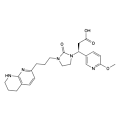
Synonyms: L-000845704
MK-0429 (L-000845704) is an orally active, potent, selective and nonpeptide αvβ3 integrin antagonist with an IC50 of 80 nM.
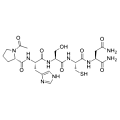
ATN-161 is a novel integrin α5β1 antagonist, which inhibits angiogenesis and growth of liver metastases in a murine model.
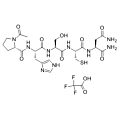
Synonyms: ATN-161 TFA salt; ATN161
ATN-161 trifluoroacetate salt is a novel integrin α5β1 antagonist, which inhibits angiogenesis and growth of liver metastases in a murine model.
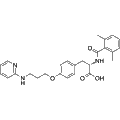
K34c is a potent and selective antagonist of the α5β1 integrin. By inhibiting this integrin, K34c effectively reduces chemotherapy-induced premature senescence and enhances apoptosis. This compound is particularly valuable for research in glioblastoma and provides insights into the modulation of tumor cell dynamics.
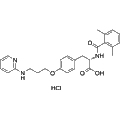
K34c hydrochloride is a selective antagonist of the α5β1 integrin, which plays a significant role in cell adhesion and migration. This compound effectively mitigates chemotherapy-induced premature senescence and enhances apoptosis in cellular models. K34c hydrochloride is particularly applicable in glioblastoma research, providing insights into tumor cell behavior and therapeutic responses.
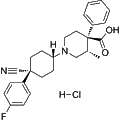
Synonyms: R 50547 hydrochloride
Levocabastine hydrochloride is a selective VLA-4 antagonist that effectively interferes with eosinophil infiltration in allergic conjunctivitis. Its primary mechanism involves blocking the binding of VLA-4, thereby reducing inflammatory responses in allergic conditions. Additionally, Levocabastine is noted for its high affinity for the neurotensin receptor subtype 2 (NTR2), making it a valuable tool in research focused on histamine-related pathways and allergy mechanisms. This compound is useful in the study of inflammatory diseases and the development of targeted therapies for allergy treatment.
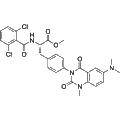
Synonyms: AJM300
Carotegrast methyl is a selective antagonist of the α4 integrin, acting to inhibit its interactions. This compound, along with its active metabolite HCA2969, functions as a dual antagonist of both α4β1 and α4β7 integrins. Carotegrast methyl has demonstrated efficacy in preventing the development of colitis in murine models, making it a valuable tool for research in inflammatory diseases and integrin-related pathways.
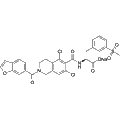
Synonyms: SAR 1118 sodium; SHP-606 sodium
Lifitegrast sodium is a potent integrin antagonist that disrupts the interaction between intercellular adhesion molecule 1 (ICAM-1) and lymphocyte function-associated antigen 1 (LFA-1). By blocking this binding, Lifitegrast sodium interrupts the T cell-mediated inflammatory response. It demonstrates significant inhibitory action on Jurkat T cell attachment to ICAM-1, with an IC50 of 2.98 nM. This reagent is primarily utilized in research related to dry eye disease and other inflammatory conditions.
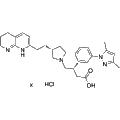
GSK 3008348 hydrochloride is a small molecule antagonist of the integrin αvβ6, with IC50 values of 1.50 nM for αvβ6 and varying degrees of activity against αvβ1, αvβ3, αvβ5, and αvβ8. This compound effectively inhibits TGF-β activation, which is crucial in the progression of fibrosis. Additionally, GSK 3008348 hydrochloride blocks the interaction of foot-and-mouth disease virus (FMDV) with the αvβ6 receptor, preventing viral entry into host cells. Its applications extend to the study of pulmonary fibrosis and diverse cancer research, making it a valuable tool in therapeutic development.
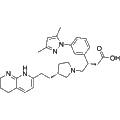
GSK 3008348 is a potent small molecule antagonist of integrin αvβ6, exhibiting IC50 values of 1.50 nM for αvβ6 and varying affinities for other integrins including αvβ1 (2.83 nM) and αvβ3 (12.53 nM). This compound effectively inhibits TGF-β activation, contributing to the reduction of the fibrotic process. Additionally, GSK 3008348 blocks the entry of foot-and-mouth disease virus (FMDV) by preventing its binding to the αvβ6 integrin receptor on host cells. It serves as a valuable tool for research into pulmonary fibrosis and cancer biology.
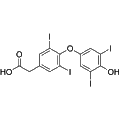
Synonyms: Tetraiodothyroacetic acid; 3,3',5,5'-Tetraiodothyroacetic acid
Tetrac (Tetraiodothyroacetic acid) acts as an integrin antagonist by selectively inhibiting the interaction of thyroid hormones, L-thyroxine (T4) and 3,5,3'-triiodo-L-thyronine (T3), with integrin αvβ3 receptors. This blockade disrupts downstream signaling pathways, leading to significant anti-angiogenic and anti-tumor effects. Tetrac is valuable for research in cancer biology and therapeutic approaches targeting tumor vascularization.