- Cat. No.
- A19233
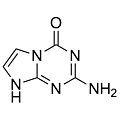
5-Aza-7-deazaguanine
5-Aza-7-deazaguanine is a substrate for wild-type (WT) E. coli purine nucleoside phosphorylase and its Ser90Ala mutant in the synthesis of base-modified nucleosides.
Search by product name, CAS, target or catalog number. Press Down Arrow to reach product suggestions, Tab to move between links, and Escape to close suggestions.
Nucleoside analogs and antimetabolites are modified nucleosides resembling the natural building blocks of DNA and RNA. Changes to the base or the sugar let them interfere with nucleotide metabolism and nucleic acid synthesis. After phosphorylation in cells, many are incorporated into DNA or RNA, or inhibit polymerases and cause chain termination. Cytarabine hydrochloride, which carries an arabinose sugar, is used to study inhibition of DNA synthesis. Zalcitabine, a dideoxynucleoside, is used in research on viral reverse transcriptase. The category also covers naturally modified nucleosides such as 3-methylcytidine and N6,N6-dimethyladenosine. These serve as reference compounds in studies of RNA modification and DNA damage.
5-Aza-7-deazaguanine is a substrate for wild-type (WT) E. coli purine nucleoside phosphorylase and its Ser90Ala mutant in the synthesis of base-modified nucleosides.
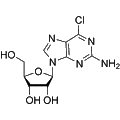
Synonyms: 6-Chloroguanosine
6-Chloroguanineriboside is a purine nucleoside analog that serves as a substrate for various nucleoside kinases. It demonstrates low affinity for guanosine binding sites, with a Ki value of 253.1 μM in rat brain tissues. This compound can be utilized in research related to nucleoside metabolism and the pharmacological effects of purine analogs in neurological studies.
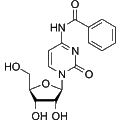
N-Benzoylcytidine is a cytidine analogue that acts as a substrate for uracil-cytidine kinases (UCK1 and UCK2). It is integral to the synthesis of 2-OH protective groups for solid-phase RNA synthesis and is utilized in the production of synthetic oligonucleotides. This compound has applications in UV induction and targeted gene silencing in zebrafish embryos, making it a valuable tool in molecular biology research.
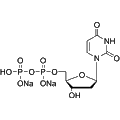
dUDP disodium is a nucleotide that serves as a key precursor for the synthesis of dTTP. Composed of a uracil base, ribose, and two phosphate groups, dUDP disodium is utilized as a substrate for deoxyuridine triphosphate nucleotide hydrolase, facilitating the conversion of dUDP to dUMP, the direct precursor for dTTP synthesis. This compound is integral to DNA synthesis and is applicable in diverse biochemical analyses and research applications focused on nucleotide metabolism.
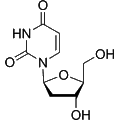
2'-Deoxy-β-L-uridine is a nucleoside analogue that serves as a specific substrate for the viral enzyme, demonstrating no stereospecificity against herpes simplex virus type 1 (HSV1) thymidine kinase. This compound exhibits antiviral activity through the interaction of its 5'-triphosphate form with viral DNA polymerase, thereby inhibiting viral replication. It is a valuable tool in studying HSV1 and other viral infections, as well as in developing antiviral therapies.
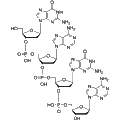
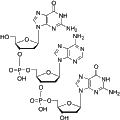
DNA-GAGA is a specific substrate for Ricin toxin A-chain (RTA), exhibiting a slow depurination rate. Upon interaction, RTA cleaves a single adenylate at the GAGA stem-loop region of eukaryotic 28S RNA, highlighting its role as a potent ribosome-inactivating toxin. This compound is valuable for studying the mechanisms of RNA targeting and the toxic effects of ricin in cellular models.
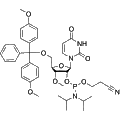
5'-O-DMTr-3'-O-methyl uridine-3'-CED-phosphoramidite is a uridine analog that serves as a key substrate for nucleic acid synthesis. This compound exhibits potential anticonvulsant and anxiolytic properties, making it useful for studies in epilepsy and anxiety disorders. Additionally, its unique structure supports research focused on the development of novel antihypertensive agents.
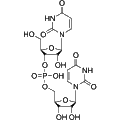
Synonyms: (3′,5′)-Uridylyluridine
UU ((3′,5′)-Uridylyluridine) is a dinucleotide derivative primarily involved in RNA-related processes. This compound serves as a substrate or building block in the synthesis and analysis of RNA, facilitating research in areas such as RNA folding, stability, and enzymatic activity. Its unique structure enables investigation into the biochemical roles of ribonucleotides in cellular functions and molecular interactions.
Out of stock
All 3 sizes
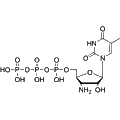
3'-NH2-TTP is a nucleotide analogue featuring an amino modification at the 3' end of thymidine triphosphate (TTP). This compound can serve as a substrate for DNA polymerases, enabling the study of nucleic acid synthesis and editing processes. Its incorporation into DNA can be used to investigate the effects of amino group modifications on nucleic acid structure and function, making it a valuable tool in molecular biology and genetic research applications.
Out of stock
All 3 sizes
DNA-GAG is a specialized substrate for Ricin toxin A-chain (RTA), functioning as a slow-reacting compound. It facilitates the depurination of a specific adenylate within the GAGA stem-loop structure of eukaryotic 28S RNA, highlighting RTA's mechanism of action. This substrate is valuable in studying the biochemical pathways and toxicological effects associated with ricin exposure, aiding research in molecular biology and therapeutic applications.
Out of stock
All 3 sizes
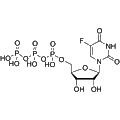
Synonyms: 5-Fluorouridine-5'-triphosphate
5-F-UTP (5-Fluorouridine-5'-triphosphate) is a nucleoside analog that functions as a substrate for RNA polymerases during nucleic acid synthesis. This compound is utilized in research applications involving RNA synthesis, allowing for the incorporation of fluorine into RNA molecules, which can aid in the study of RNA structure and function. Its unique properties make it valuable for developing RNA-based therapeutics and molecular probes.
Out of stock
All 3 sizes
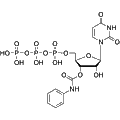
3′-Phenylcarbamate-UTP is a nucleotide analog derived from uridine triphosphate (UTP) through phenylcarbamate modification. This compound can serve as a substrate for RNA polymerases, facilitating studies in RNA synthesis and turnover. Its unique structural modifications make it a valuable tool in exploring nucleotide interactions and the effects of chemical modifications on nucleic acid biochemistry. Researchers may utilize 3′-Phenylcarbamate-UTP in various applications, including the development of RNA-based therapeutics and the investigation of ribonucleotide metabolism.
Out of stock
All 3 sizes
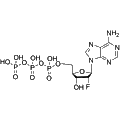
Synonyms: 2'-Fluoro dATP
2'-Deoxy-2'-fluoroadenosine-5'-O-triphosphate (2'-Fluoro dATP) is a nucleoside analog that serves as a substrate for DNA synthesis. This compound incorporates a fluorine atom at the 2' position, enhancing its stability and resistance to degradation by nucleases. It is widely utilized in various applications, including in vitro DNA synthesis, molecular cloning, and the study of nucleotide metabolism.
Out of stock
All 3 sizes
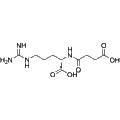
N2-Succinyl-L-arginine is a nucleoside metabolite that serves as a substrate for various enzymatic reactions. This compound is involved in the metabolic pathways of arginine and contributes to the regulation of nitric oxide synthesis. Its activity is important for studies related to vascular biology, cancer research, and metabolic disorders, making it a valuable reagent for investigating cellular signaling and metabolic processes.
Out of stock
All 3 sizes
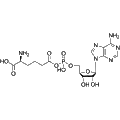
L-2-Aminoadipate adenylate is a nucleoside metabolite that plays a critical role in amino acid biosynthesis and metabolism. This compound is involved in cellular energy processes and can serve as a substrate in ATP-dependent reactions. Its applications extend to studies in metabolic pathways and the regulation of amino acid availability, making it valuable for research in biochemistry and molecular biology.
Out of stock
All 3 sizes
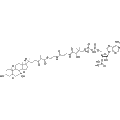
(25R)-3Alpha,7alpha-dihydroxy-5beta-cholestanoyl-CoA is a coenzyme A derivative that serves as an important substrate in lipid metabolism. Its primary mechanism involves the formation of acyl-CoA thioesters, which play a critical role in fatty acid synthesis and degradation. This compound can be utilized in research focused on lipid biochemistry, metabolic pathway studies, and the regulation of cholesterol homeostasis.
Out of stock
All 3 sizes
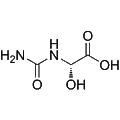
(S)-Ureidoglycolic acid is a substrate for the enzyme ureidoglycolate dehydrogenase, playing a critical role in purine metabolism pathways. As a member of the n-carbomoyl-α-amino acid class, it is essential for studies focused on nucleotide biosynthesis and related metabolic processes. This compound serves as a valuable research tool for understanding the biochemical intricacies of purine metabolism and its implications in various physiological contexts.
Out of stock
All 3 sizes
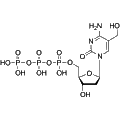
2'-Deoxy-5-hydroxymethyl-CTP is a nucleoside metabolite that serves as a key substrate in nucleic acid synthesis and metabolism. Its unique hydroxymethyl modification imparts distinctive biochemical properties that can influence enzymatic activity. This compound is valuable for research into nucleoside analogs, metabolic pathways, and the synthesis of modified nucleotides for therapeutic applications.
Out of stock
All 3 sizes
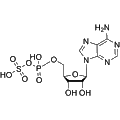
Adenosine 5'-phosphosulfate serves as a substrate for bifunctional 3'-phospho-adenosine-5'-phosphosulfate synthases and related enzymes. This compound plays a critical role in sulfate activation and the synthesis of phosphoadenosine phosphosulfate, which is essential for sulfonate group transfers in biological systems. Its application in research includes studies on cellular sulfate metabolism and enzyme kinetics, providing insights into the regulation of various biochemical pathways.
Out of stock
All 3 sizes
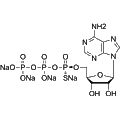
Rp-ATPαS tetrasodium is a nucleoside analog that serves as a critical substrate in nucleic acid synthesis. This compound is utilized for various biotechnological applications, including the study of RNA synthesis and enzymatic functions in nucleotide metabolism. Its unique properties facilitate research into biochemical pathways and nucleic acid interactions, making it a valuable tool for molecular biology studies.
Out of stock
All 3 sizes
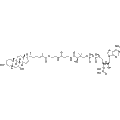
(24E)-3α,7α-Dihydroxy-5β-cholest-24-enoyl-CoA is a nucleoside metabolite that plays a critical role in cholesterol metabolism. It serves as a substrate for various enzymatic reactions involved in lipid biosynthesis and has potential applications in studying cellular pathways related to lipid synthesis and degradation. This compound is valuable for researchers investigating metabolic disorders and cholesterol-related diseases.
Out of stock
All 3 sizes
3α,7α-Dihydroxy-24-oxo-5β-cholestan-26-oyl-CoA is a coenzyme A (CoA) analog that plays a crucial role in bile acid biosynthesis. This compound serves as a substrate in enzymatic reactions involved in the metabolic pathway of bile acids, facilitating important biological processes. Its applications extend to biochemical studies focused on cholesterol metabolism and liver function, offering insights into lipid homeostasis and related disorders.
Out of stock
All 3 sizes
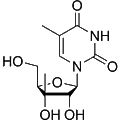
3’-beta-C-Methyl-5-methyluridine is a thymidine analogue that acts as a nucleotide substrate. This compound exhibits insertional activity towards replicated DNA, making it useful for labeling cells and investigating DNA synthesis dynamics. It has potential applications in molecular biology and cancer research, facilitating studies on nucleic acid behavior and cellular proliferation.
Out of stock
All 3 sizes
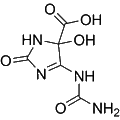
2-Oxo-4-hydroxy-4-carboxy-5-ureidoimidazoline functions primarily as a substrate in the hydrolysis of 5-hydroxyisourate. This compound is involved in biochemical pathways leading to the production of (S)-allantoin through stereoselective decarboxylation, mediated by 2-Oxo-4-hydroxy-4-carboxy-5-ureidoimidazoline decarboxylase. Its biological activity is essential for research applications in purine metabolism and nitrogenous waste elimination pathways in various organisms.
Out of stock
All 3 sizes
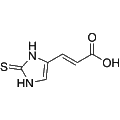
Thiourocanic acid is a metabolite resulting from the enzymatic activity of ergothionase on the substrate ergothioneine. This compound has been studied for its potential biological activities, including antioxidant properties. It serves as a useful tool in research exploring the metabolic pathways of thiol compounds and their roles in cellular protection and oxidative stress responses.
Out of stock
All 3 sizes